Page contents
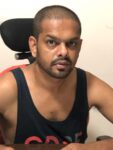
Pictured is the artist Paribartana Mohanty, an Indian man with buzzed hair, and a trimmed mustache, and a beard. He wears a black tank top and sits on a computer chair against a white wall.Pictured is the artist Paribartana Mohanty, an Indian man with buzzed hair, and a trimmed mustache, and a beard. He wears a black tank top and sits on a computer chair against a white wall.

Portrait of Eyebeam alum artist 2021, Paribartana Mohanty. Courtesy of the artist.

With Paribartana Mohanty
Pronouns
He/him
Date and place of birth
b. 1982, Orissa, India
Current location
New Delhi, India
Year(s) of residency and/or fellowship
2021, VH Award Resident

How do you characterize the media you work in?

I was trained as a printmaker and specialized in silkscreen, woodcut, and etching in my B.F.A. Once I came to Delhi for my Master’s degree, I was exposed to video art and performance, what was then perceived as “new media.” In Delhi, I began to experiment in video, performance-lecture, and storytelling. As part of an artist collective, WALA, I have also been working with public performance and guided tours in Delhi. These days, I’m also working with data from social media, web-based projects, and machine learning technology.

How does your practice engage with technology?

In the socioeconomic background I come from, the question of “technology” boils down to ecosystems of access and freedom, which relate to factors like class and caste. First you enable access, which allows for scope; then there’s the possibility of expanding the technology from a human perspective. Through the VH Award grant, I immersed myself in this field and learned about AI, machine learning, and VR, but I am also interested in issues like access to electricity and mobile phones, data mining, surveillance, and the democratizing potential of social media.
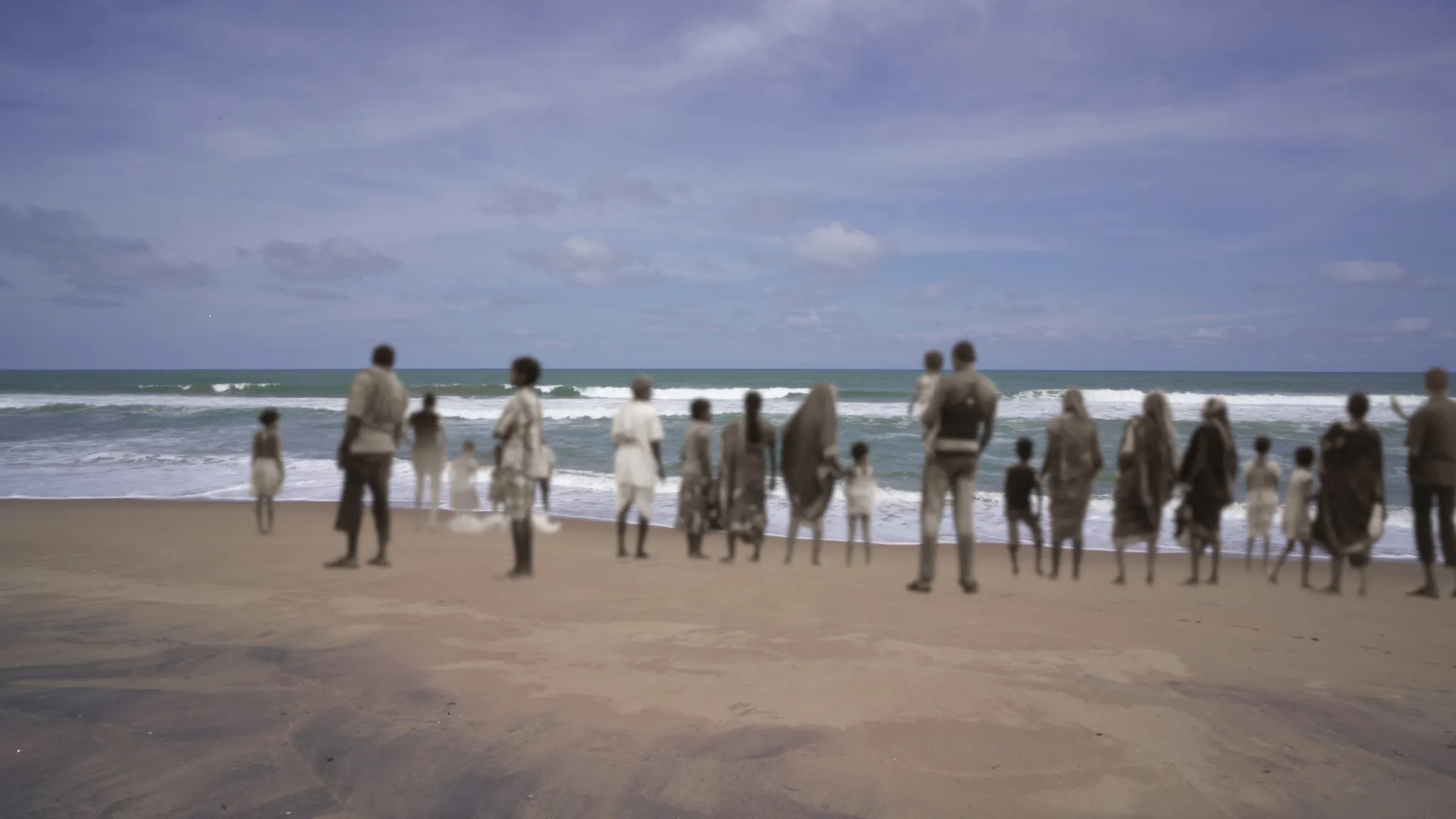
A still from the film, Rice Hunger Sorrow. A group of people standing on the sand, looking over at the waves of the Chilika Lake.

Still from ଭାତ ଭୋକ ଦୁଃଖ (Rice Hunger Sorrow), Single Screen Video, commissioned by Hyundai ArtLab for the 4th VH Award and Eyebeam, 20 Min 25 Sec, 2021.

You were a finalist for the 4th VH Award. Can you tell me about the work that garnered you this honor?

I wanted to talk about the environmental crisis in Odisha, not only in scientific terms, but also by bringing in references to poetry, mythologies, and rituals. In my video Rice Hunger Sorrow (2021) I adapted a story from Mahabharata—about the death of Lord Krishna and destruction of his family and how the city of Dwarika is drowned—to a contemporary context. I brought in references from new anthropogenic disaster landscapes that are evolving on the coast of the Bay of Bengal. The video was shot in Odisha, where there are recurring tsunamis, super cyclones, and land erosion constantly changing geopolitics, culture and landscapes. The work addresses the nature of technologies in suburban and rural areas of Odisha and how technology impacts climate crises today.

ଭାତ ଭୋକ ଦୁଃଖ (Rice Hunger Sorrow), Single Screen Video, commissioned by Hyundai ArtLab for the 4th VH Award and Eyebeam, 20 Min 25 Sec, 2021.

What was your focus during your time at Eyebeam? Was there a culminating project?

As I worked on Rice Hunger Sorrow while at Eyebeam, I traveled around the coast, met people in small villages, and had intense conversations about livelihood, displacement, migration, etc. I met folk Daskathia folk singers and dancers, who make music with two sticks and sing the glory of God. I collaborated with them and wrote new songs to perform.

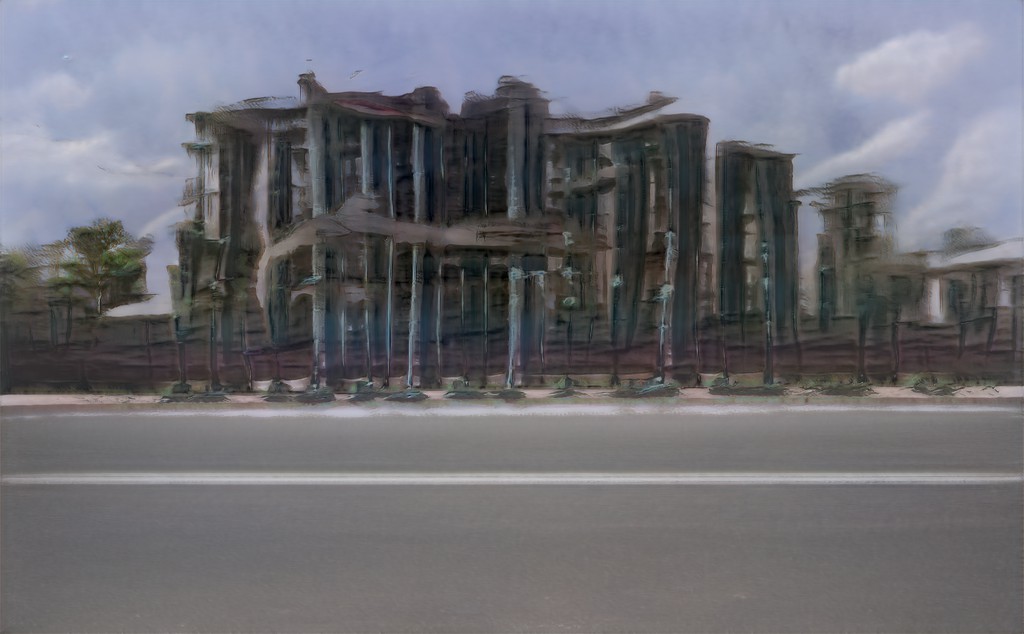
A painting of what looks like a dilapidated grouping of grey buildings or a blur of tall dark grey and brown trees without leaves swaying. Overcast skies. Foreground, smooth asphalt, bitumous road with a white marking line. On the left you can see smaller trees, with larger green fronds, the flora of Odisha.

AI Painting, Immersive Sky Experience, 2022-24, Credit: paribartana Mohanty.

How has dialogue or collaboration with Eyebeam artists and alumni factored into your work?

In our meetings there was a lot of discussion about how we incorporate technology into our practices, how much of it is technological, how much of it is new media, and how to approach the social engagement process and collaboration. While I was looking at environment disaster landscapes, I had conversations about the sky, particularly in a one-on-one meeting with Kemi Sijuwade-Ukadike. This inspired me to work on my current AI forecasting project “Immersive Sky Experience.”

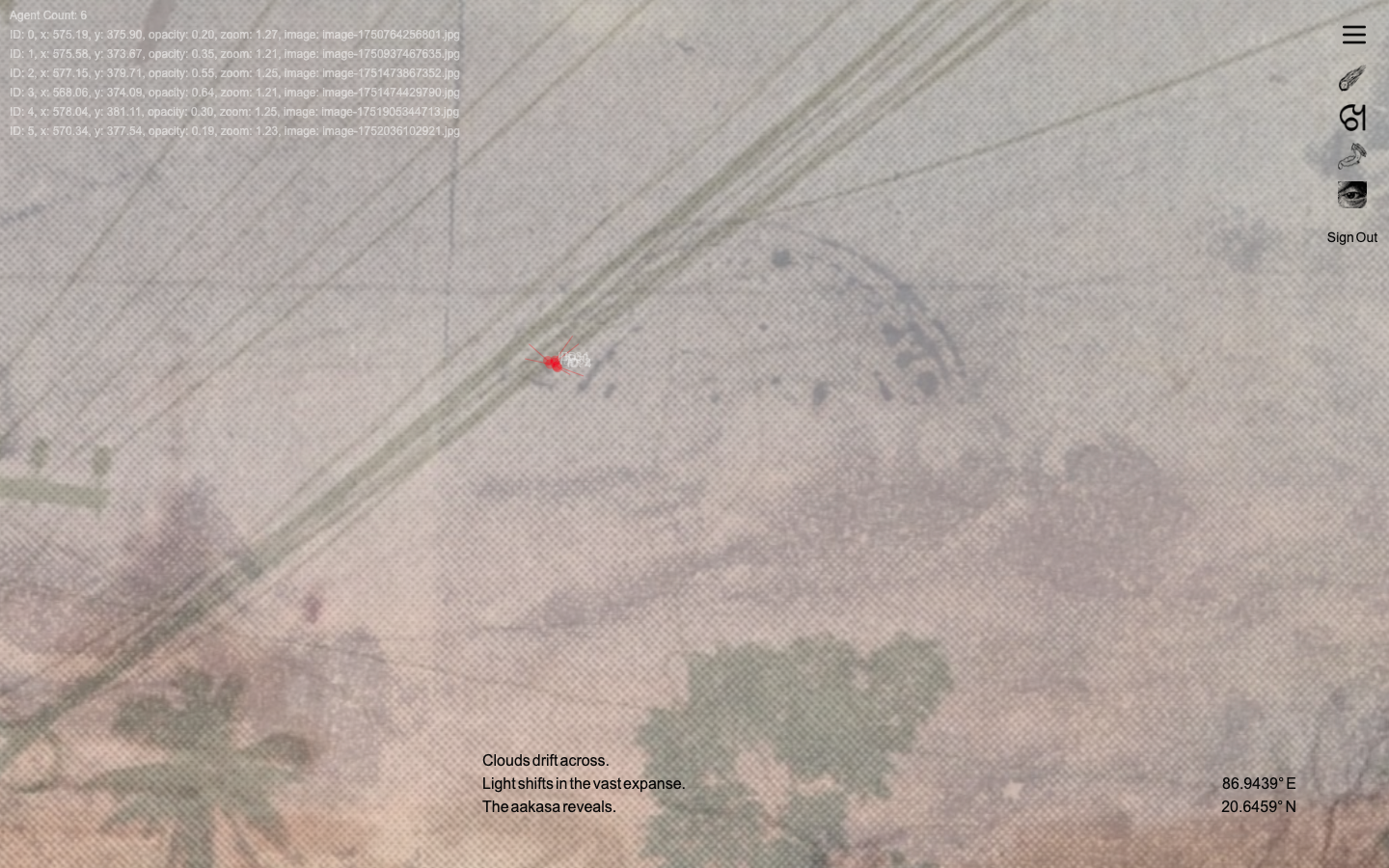
A screen still from the web-based app ‘Immersive Sky Experience.’ An image of the semicloudy sky, a telephone pole, wires, and trees jut out from the bottom left corner. The image is flourished with translucent halftone filter and textured effects that make the image seem like an artifact of a distant past, like foxed paper or faded paper currency. The longitude and latitude: 86.9439 degrees East, 20.6459 degrees North, are on the bottom right corner. And a poetic image description of the sky is generated: “Clouds drift across. Lights in the vast expanse. The aakasa reveals.”

Immersive Sky Experience, AI Mediated Web-Based Interactive Platform, 2025. Conceptualised and Created by Paribartana Mohanty. Technical Assistance: Francis Burger, with assistance from Theron Burger. Research assistance: Gita Ballava Nandan Dash and Jyoti Ranjan Sahoo. Supported by Sharjah Art Foundation Production Grant, 2022, and the Prince Claus Mentorship Award for Cultural & Artistic Responses to Environmental Change, 2023.

How do you think about the role of the artist in society?

It’s a difficult and complex question for me. I’ve been cultivating a storytelling practice where I engage with artists, friends, and others. I try to tell stories that matter to humans—these days focusing on climate change and migration stories, suffering of marine Nolia fishers and coastal farmers—but also more broadly look at the ways in which the environment shapes human narrative. Each artist has to define for themselves how they want to engage with society, in what contexts, and what authority or responsibility they take on in the process. In the context of my practice, I want to tell stories.

Eyebeam models a new approach to artist-led creation for the public good; we are a non-profit that provides significant professional support and money to exceptional artists for the realization of important ideas that wouldn’t exist otherwise. Nobody else is doing this.

Donate today