Page contents
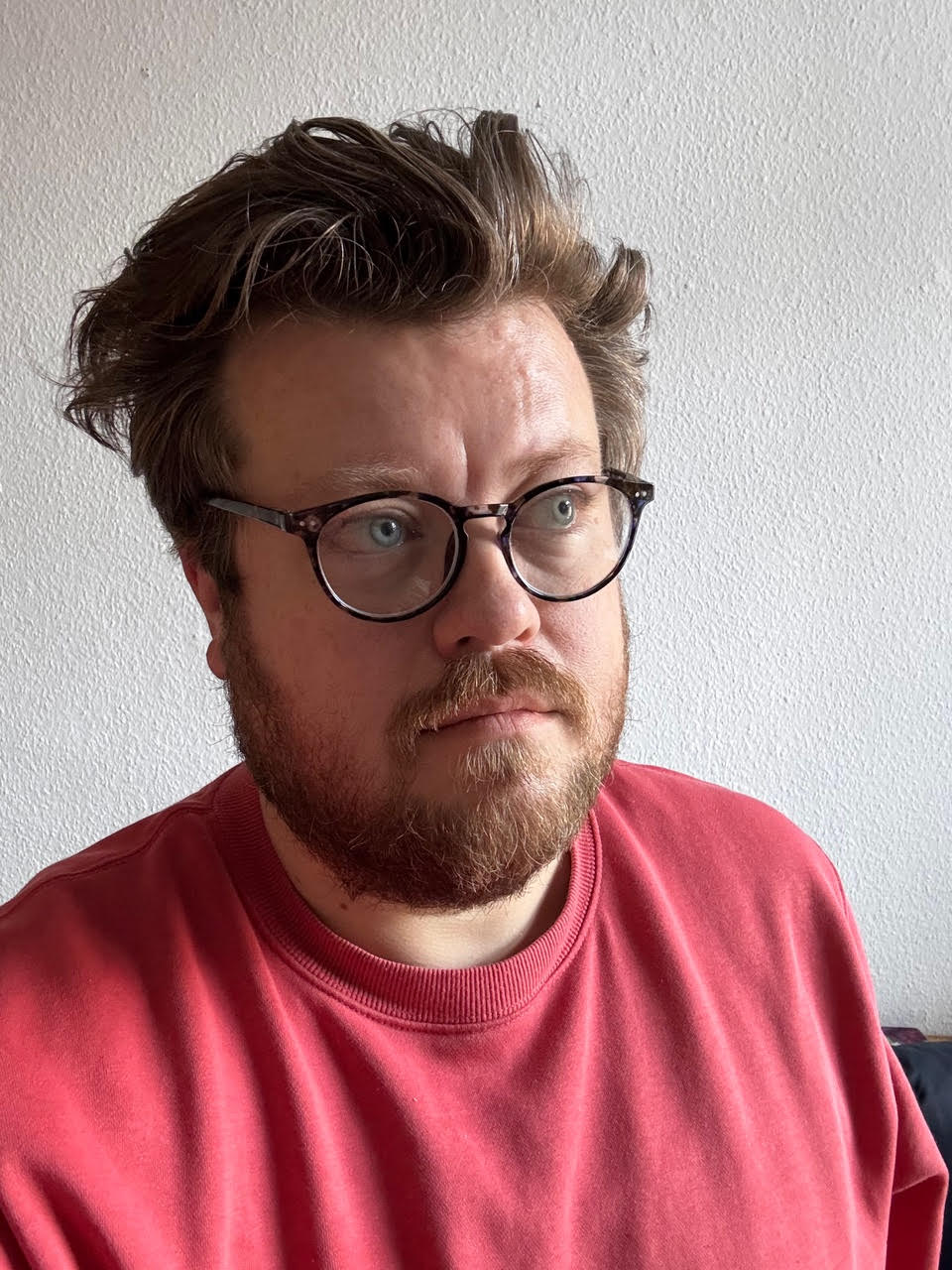
Pictured in Constant Dullaart, a bearded man from the Netherlands, wearing black, round glasses and bearing a contemplative look, as he gazes towards his left. He is wearing a medium dark shade of pink-red sweatshirt and sits against a white wall.Pictured in Constant Dullaart, a bearded man from the Netherlands, wearing black, round glasses and bearing a contemplative look, as he gazes towards his left. He is wearing a medium dark shade of pink-red sweatshirt and sits against a white wall.

Portrait of Eyebeam alum artist 2020, Constant Dullaart. Courtesy of the Artist

With Constant Dullaart
Pronouns
He/him
Date and place of birth
b. 1979, Leiderdorp, Netherlands
Current location
Between Amsterdam and Berlin
Year(s) of residency and/or fellowship
2020, Rapid Response Fellow

How do you characterize the media you work in?

Abundant. I explore media without a single endpoint, critically investigating what constitutes the concept of a medium. But I’ve mostly been affiliated with media like video, internet, or photography.

How does your practice engage with technology?

The tool influences what you make with it. The technology we use colors what we see and what we create as does the media we distribute our message

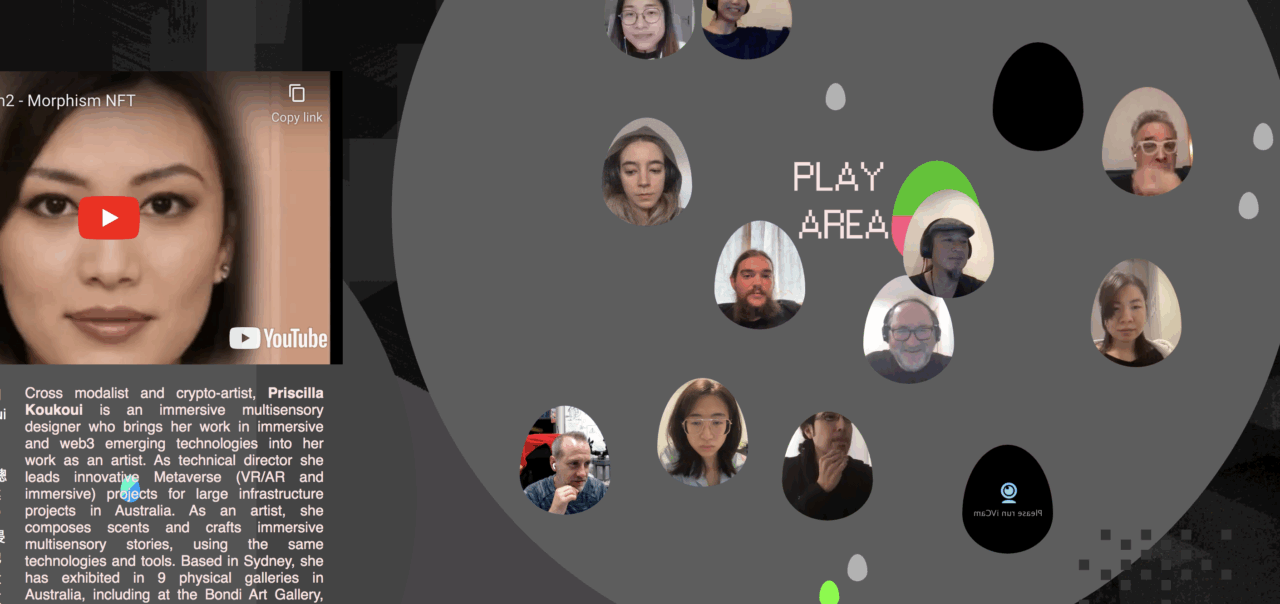
Screenshots of online hang outs at the ‘common.garden’ online platform. In the background, each hangout, people are sharing linked videos, and various resources, one hang out devoted to teaching about newer web3-based technologies and the other one about the history and politics of women dancers. In each screenshot you see floating and moving egg-shaped avatars, representing an individual’s video from their webcams.

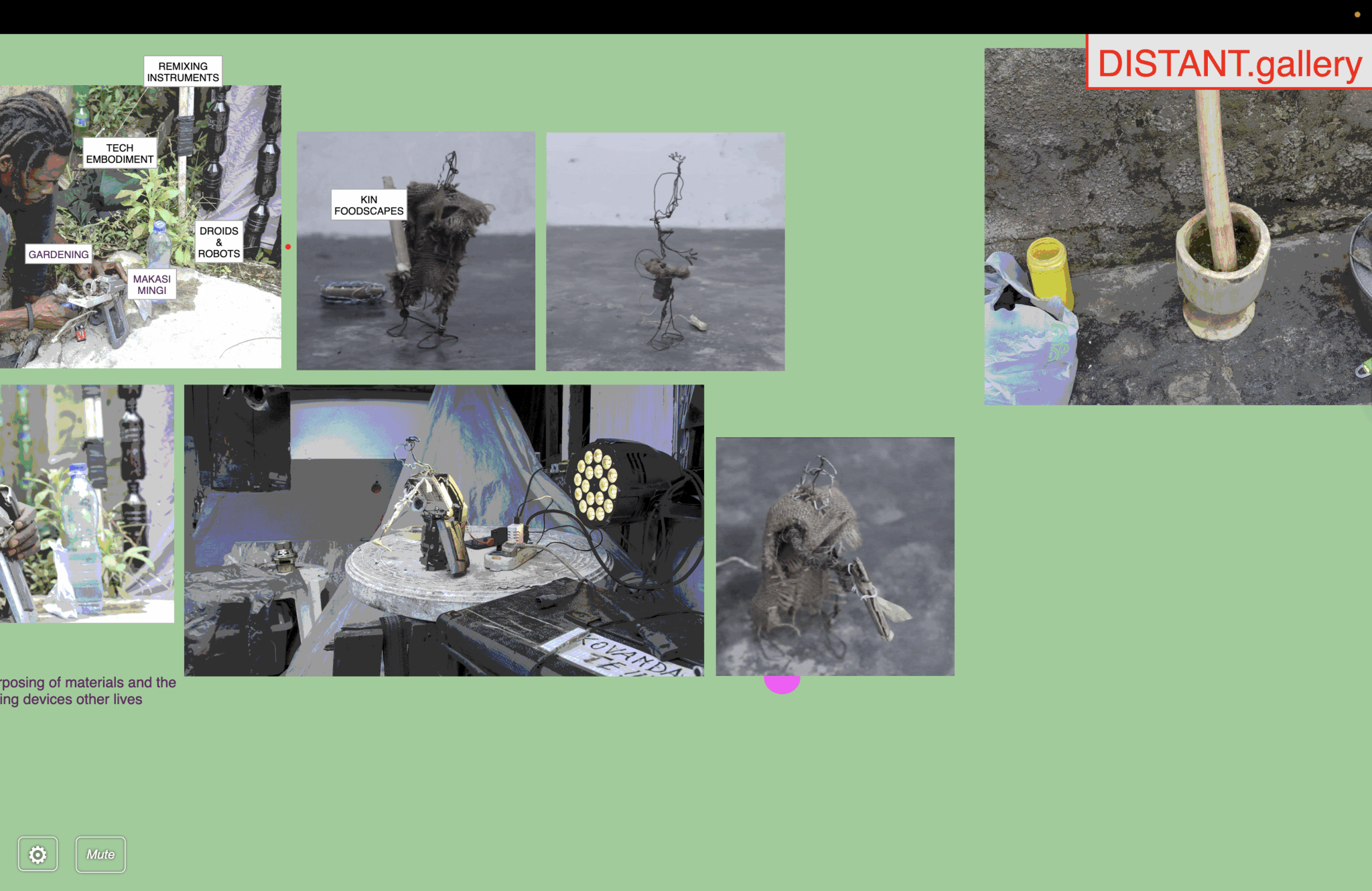
Screenshot of opening on Distant.gallery of ‘Foundation Festival’ organised by Videotage.

Screenshots of online hang outs at the ‘common.garden’ online platform. In the background, each hangout, people are sharing linked videos, and various resources, one hang out devoted to teaching about newer web3-based technologies and the other one about the history and politics of women dancers. In each screenshot you see floating and moving egg-shaped avatars, representing an individual’s video from their webcams.

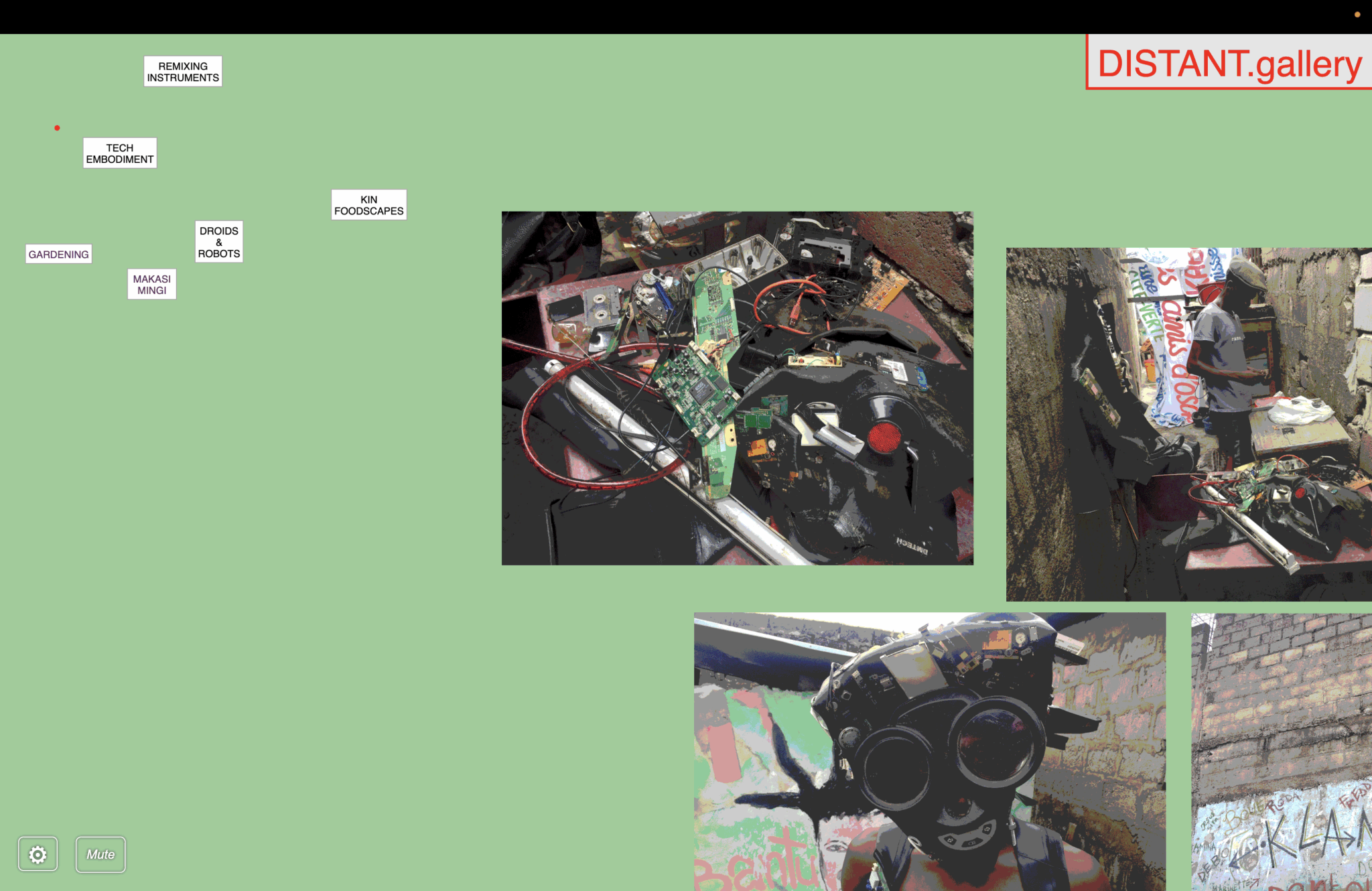
Screenshot of opening on Distant.gallery of ‘African ‘Bone-Breakers’ Challange You To Watch THIS ACTS Without Looking Away For One Second’ a solo show by Isaac Kariuki.

What was your focus during your time at Eyebeam?

During the start of the COVID-19 lockdowns in Europe, I found that I was missing a way to connect socially online without resorting to using a multibillion-dollar US-based company.  I set up an artisanal social exhibition platform, common.garden, based on spontaneous audio / video  interaction. I wanted a grass-roots lockdown alternative to the chess club or neighborhood bar, in which people could easily meet each other in preferred  contexts without a steep learning curve or other barriers to access.

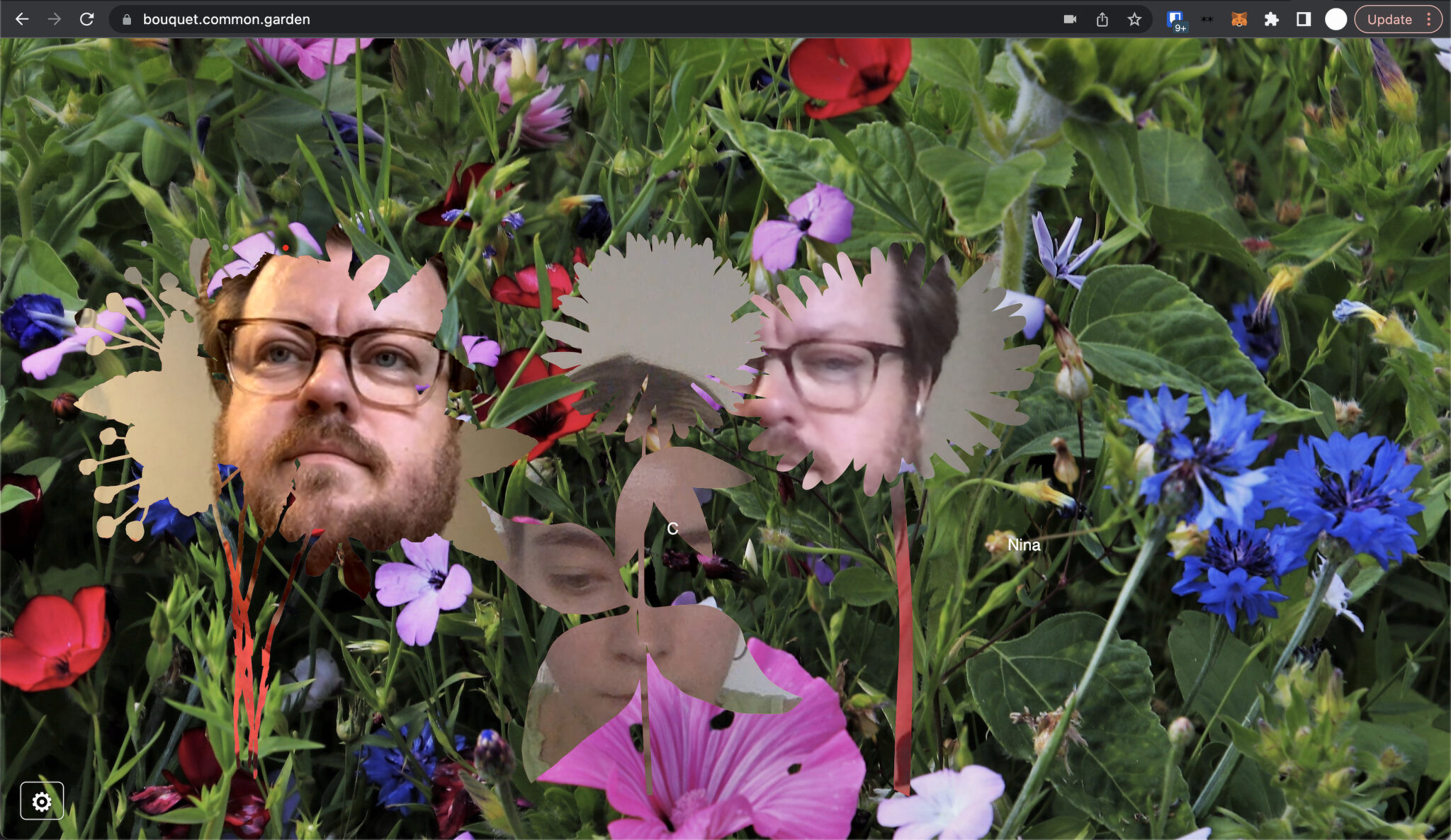
Screenshot taken from an online hangout, bouquet.common.garden, a virtual lush gardenscape full of red, pink, and blue wildflowers in the background.

Screenshot taken from an online hangout, bouquet.common.garden, a virtual lush gardenscape full of wildflowers in the background.

Was there a culminating project?

distant.gallery is the foundation I currently run on top of common.garden software, and have made over 30 exhibitions with people in Baghdad, Shiraz, Amsterdam, Bogota, Kinshasa, Seoul and many more. We have an amazing team developing the project to open source our janky code so it can be self-hosted, but still work together and work with federated login structures. This way, everyone keeps control over their own data, and we can continue to supply a platform for collaborating institutions like HEK Basel, Ocean Archive, and ZKM Karlsruhe who, next to funding partners like Cultuurloket DigitALL. It has become a digital exhibition canvas, where people follow other users presenting, live editing the page, and can casually meet other visitors who you see jotting around the page as small, colorful eggs. There’s this almost physical, embodied dynamic of moving among the digital objects. We’ve become a site for hybrid experiments including musical compositions, intercontinental dinners, and made specially for the medium.
How has dialogue or collaboration with Eyebeam artists and alumni factored into your work?

Other Eyebeam residents naturally experimented with the platform and weighed in. Chris Clary, who was also a Rapid Response fellow, used it for The Chrisy Show and has since curated a number of exhibitions on the platform. JPGS, who was also in the cohort, has curated shows on the platform with SAVVY Contemporary in Berlin and the Futura Tropica project. Sarah Grant, a Rapid Response fellow whom I knew prior to Eyebeam has become a core member of our team.

How do you think about the role of the artist in society?

Reality can be an oppressive construct; to be challenged at all times. Art can prompt you to see differently and shift your perspective. Artists can dream up incorrect, weird, non efficient, non solutionary uses of technology and different modes of using technology that don’t involve the outrageous data mining that we’ve become accustomed to. To use a pandemic analogy: I’ve been fed factory bread, now we make our own sourdough for anyone to make the wildest sandwiches they can dream of.

Eyebeam models a new approach to artist-led creation for the public good; we are a non-profit that provides significant professional support and money to exceptional artists for the realization of important ideas that wouldn’t exist otherwise. Nobody else is doing this.

Donate today