
Page contents

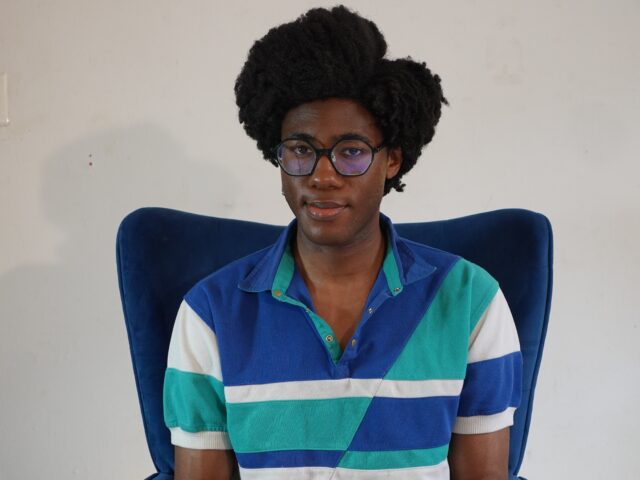
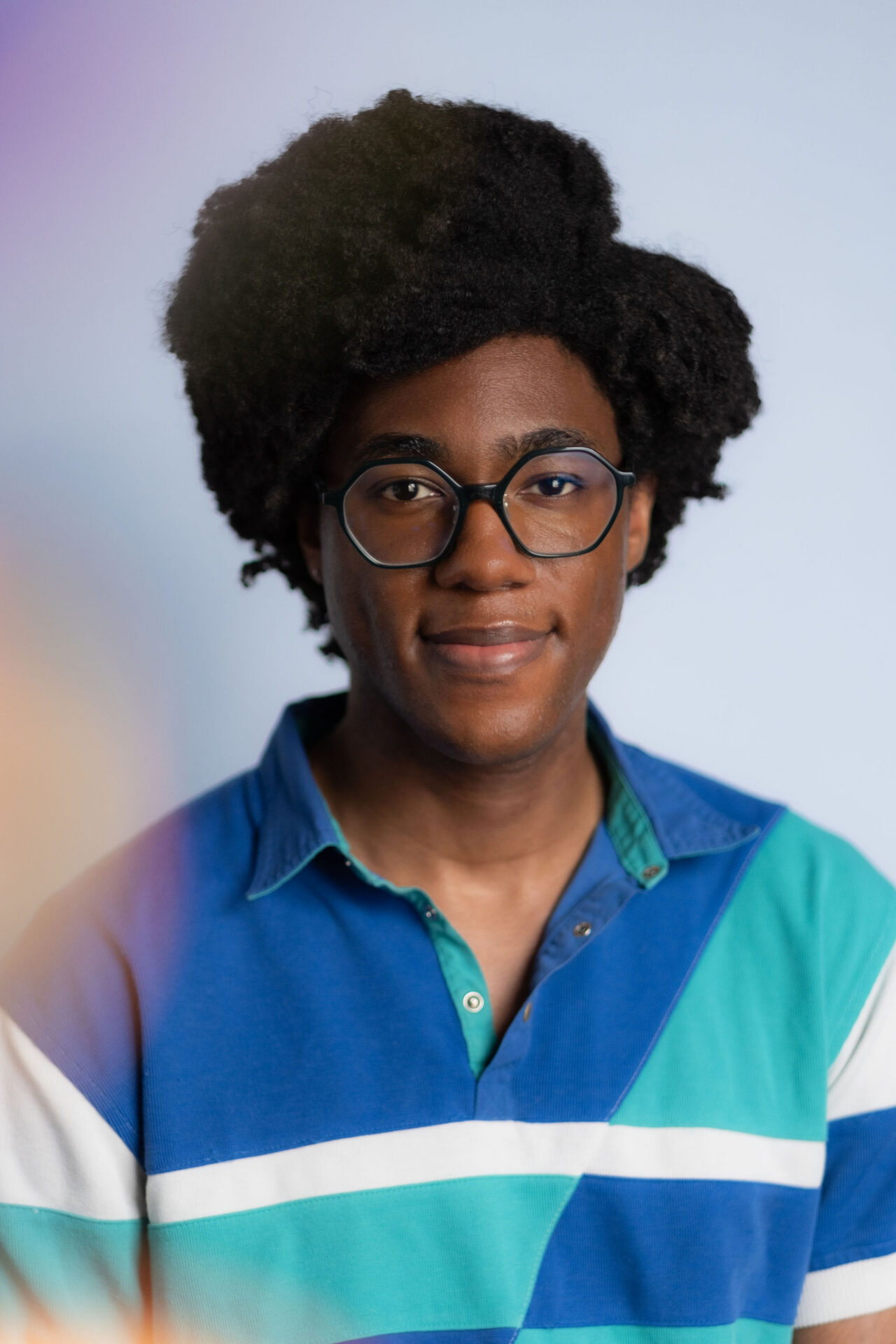
Portrait of Eyebeam resident, Avery/Alex Beige, 2026. Image Credit: Chanel Matsunami / Gidra Studios.

With Avery/Alex Beige
Pronouns
They/them
Date and place of birth
b. 1999, Mobile, Alabama
Current location
Brooklyn, NY
Year(s) of residency and/or fellowship
2026, Speculating on Plurality Resident

Special to Feed


Artist Bio

Avery / Alex Beige is a freelance web developer, biohacker, and playwright based in New York City. A proud SfPC alumnus, they design speculative theater and digital experiences focused on the gap between being watched and being seen—and the self-knowledge or self-annihilation that ensues. Their one-person show, Website Evangelist: Eulogy for a Laptop, was performed in Ars Nova’s ANT Fest, and they’re currently a finalist for the Jesse L. Kearney Playwriting Initiative for their full-length play Blushing Milk [OTC], In Vivo. Alex / Avery is a research fellow at The Nonbinary Research Facility, where new approaches to bodily autonomy are co-created, and the distinction between person and place dissolves entirely.

Tell us about yourself.

A/AB: I’m originally from Alabama, and came to NYC to study Chemical Engineering. But deep down, I knew I was coming to NYC to pursue stand-up comedy. I spent most of my time outside of class writing “experimental” (silly) plays and running an open mic. After a summer internship making shampoo with Procter & Gamble, and another unsavory year learning fluid mechanics, I turned my back on the ChemE life, and began my self-guided path of freelance web dev and playwriting.

It was the School for Poetic Computation (SfPC) that taught me these practices didn’t have to be mutually exclusive. Their courses literally rehabilitated my relationship to learning and gave me the language and tools to disentangle the values embedded in our technology that I hadn’t previously had. Wordhack’s monthly showcases, led by Todd Anderson, gave me a welcoming space to imagine new ways of combining technology and performance. And NYC’s indie theater community gave me rare spaces ripe for small-scale experimentation (and loving encouragement for my work, as well).
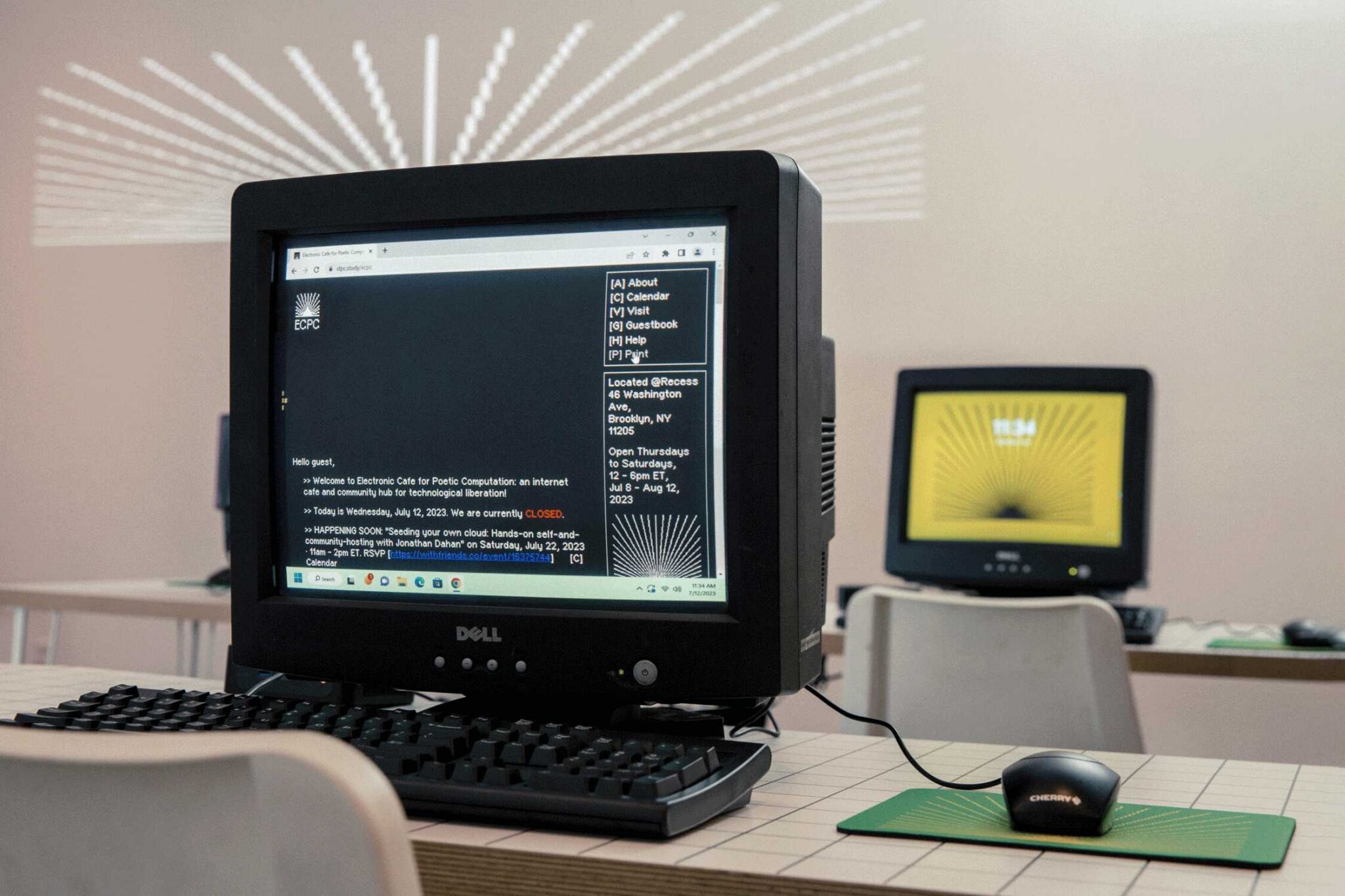
Electronic Cafe for Poetic Computation, SFPC at Recess Art in Brooklyn, NY in 2023. Courtesy of Recess Art. Photo credit: Minu Han.

How did you come to find the Brooklyn scene of creative technologists? Was it a vast change from the theater scene? (Were you originally in a more traditional theatre practice?)

A/AB: Before I found myself in the creative tech space, I mainly held a theater practice in the independent scene, which naturally lent itself to a more experimental orientation by nature of operating on a smaller, more DIY scale. My start in theater and writing was always quite unorthodox because my background was primarily in stand-up comedy. 

Back in the summer of 2023, I found SfPC through their open computer lab, The Electronic Cafe for Poetic Computation (ECPC), which was hosted at Recess Art. From there, my first course with them was a zine class taught by Neta Bomani, one of the co-directors of SfPC. It was free and in-person. It was an art practice I had no exposure to before, and it soon opened my world to all sorts of disciplines where digital and physical media converge. One of the things I love about the creative tech space is how welcoming it is. It felt like it didn’t matter that I knew so little. And I didn’t have to engage in the kind of social posturing I found more common in other art spaces.

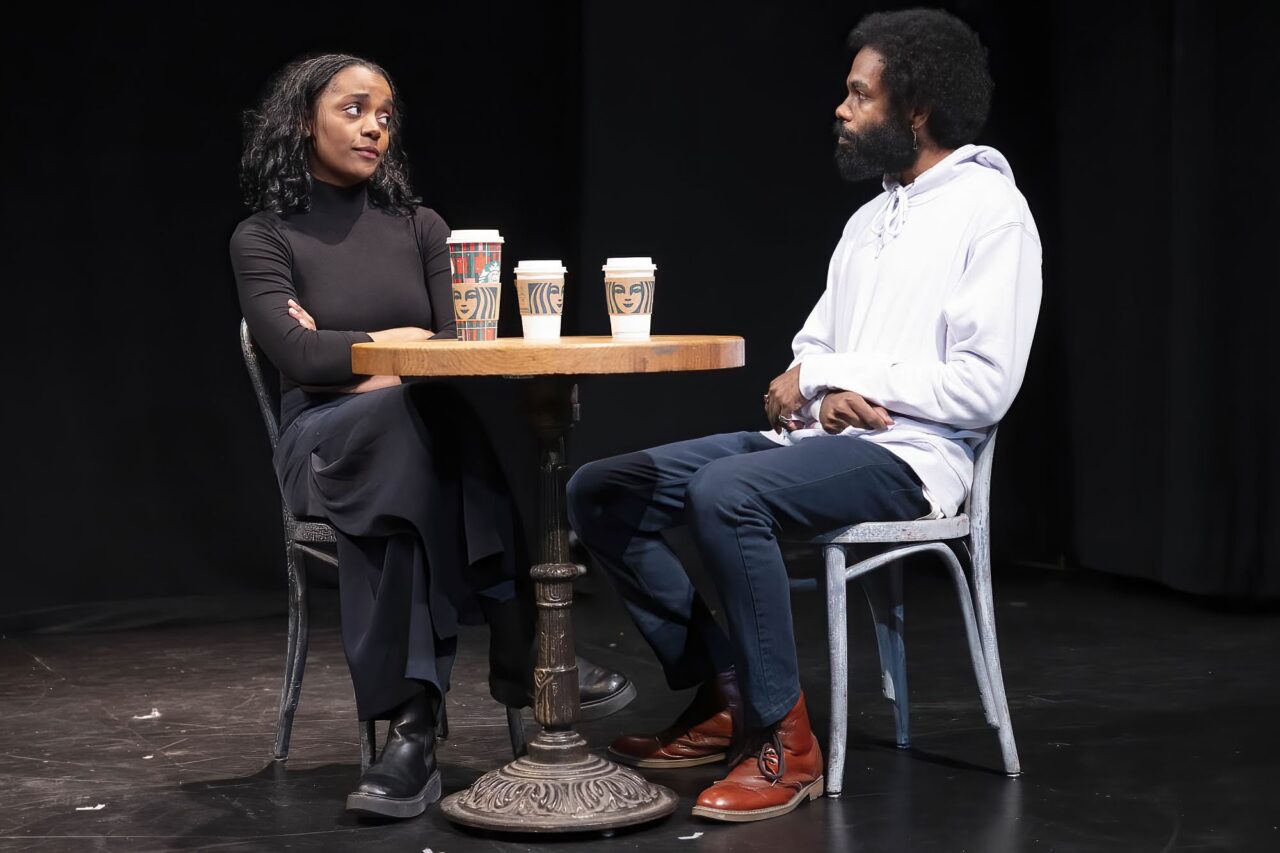
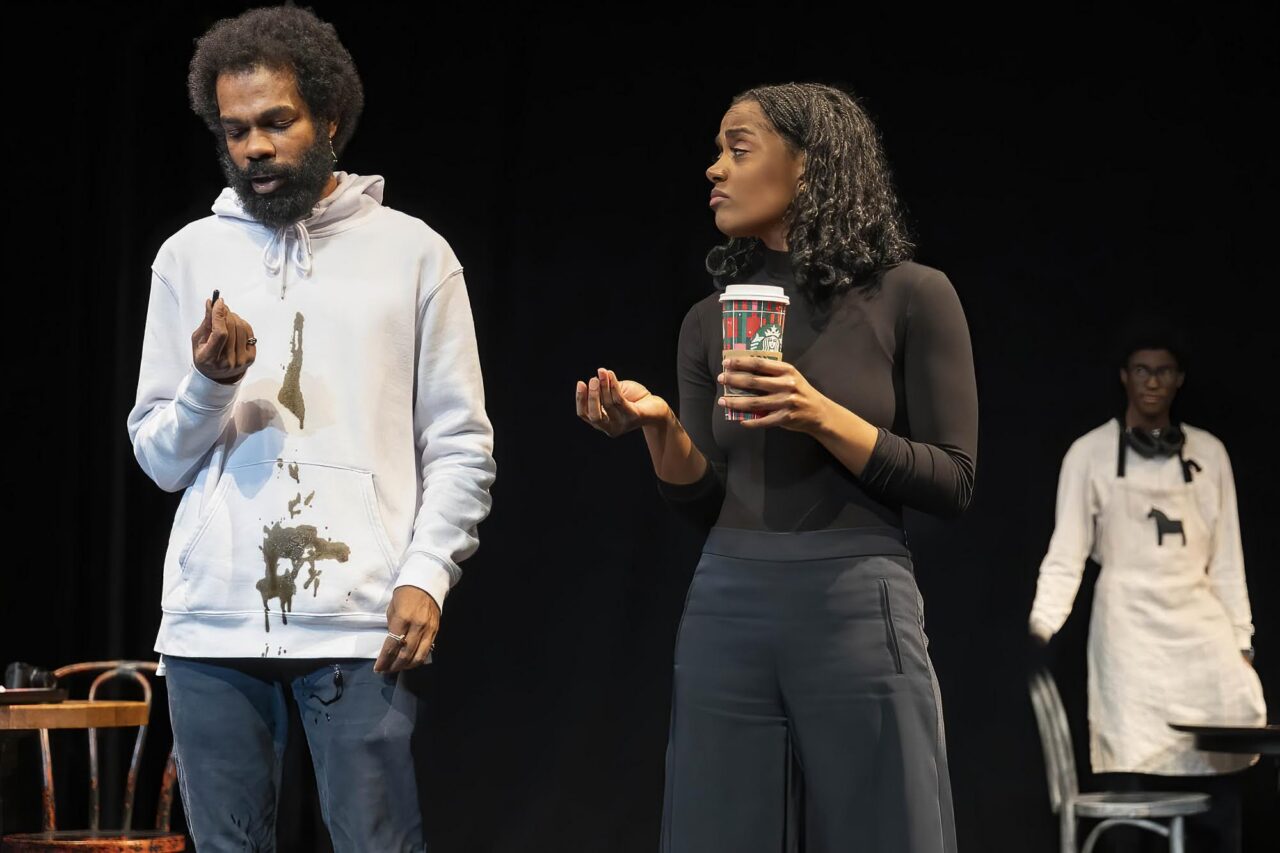
Blackpilled: A Blueprint, December 8th, 2023, at the Tank NYC. International Human Rights Festival. Courtesy of the artist.

How has the Blushing Milk piece developed over time?

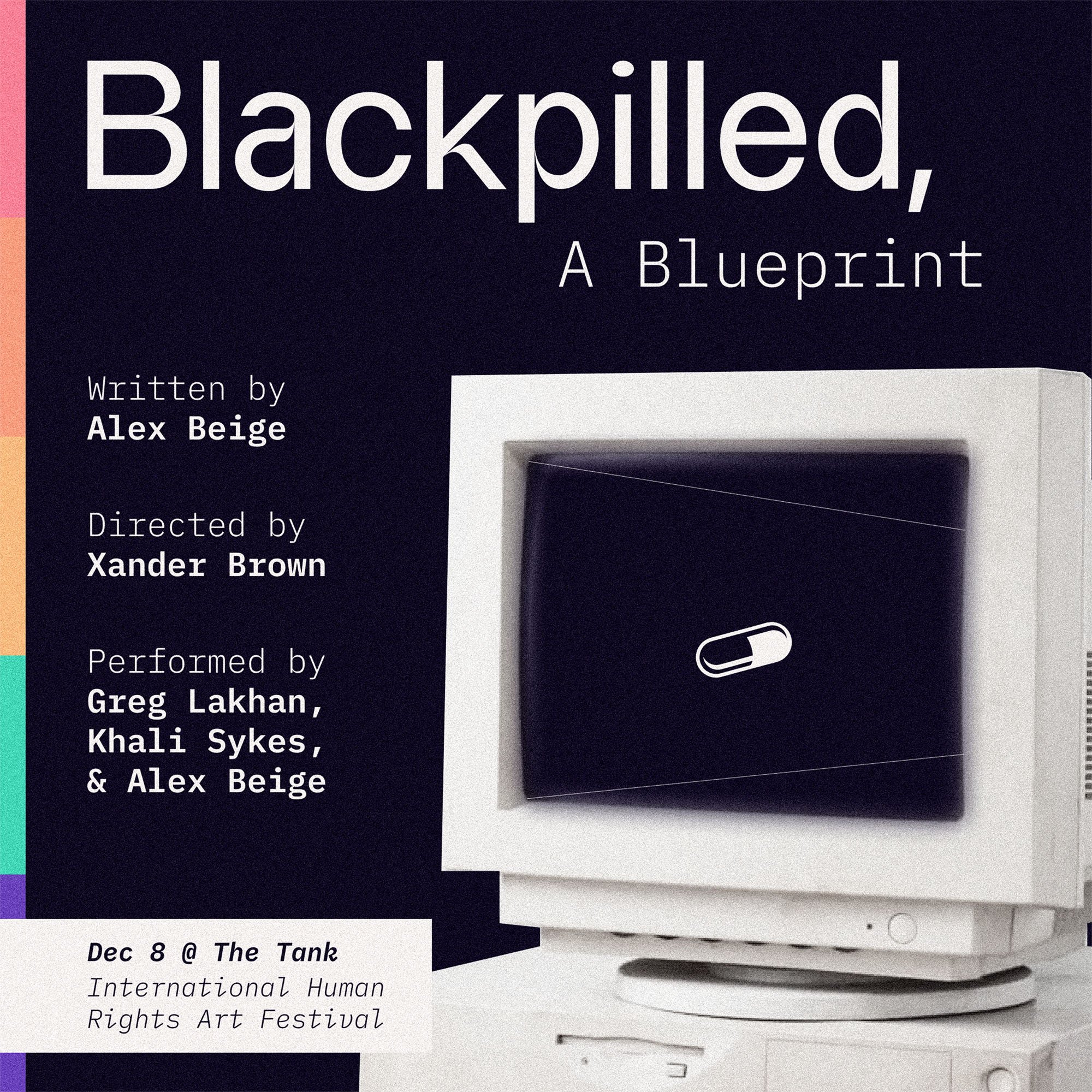
A/AB: Blushing Milk (formerly known as The Blackpilled Synthesis) is a play that inspired the project I am currently working on. It was first written in 2023. It was originally called Blackpilled: A Blueprint at the time. I performed a 15-minute version of the piece for the International Human Rights Arts Festival (IHRAF) at The Tank over on 36th Street, with collaborators Xander Browne as director, and Greg Lakhan and Khali Sykes as performers. The story takes place in a chain store coffee shop. I play myself, as a barista, listening in on the two other characters, friends sitting over coffee who are discussing the merits of a drug that turns Black people white.

At the end of the play, I deliver a monologue that recounts the experience of my parents calling the cops on me, relaying an incredibly intimate account of my night in jail, vulnerable in front of an audience. I spoke a bit about digital racism’s lasting effects and how we often think we’re immune to propaganda, but no one ever is.

After the performance, an older white woman in the audience came up to me and said, “That was beautiful.” And I was like “thank you!” But then, upon reflection, I began to really understand the predicament my play had placed me in. If the worst night of my life, as a Black person experiencing institutional and internalized racism, could be construed as a beautiful piece of work on stage, I was doing something wrong.

‘Blackpilled: A Blueprint’ poster for the International Human Rights Arts Festival, December 8th, 2023 at the Tank NYC. Courtesy of IHRAF movement.

The project was too sincere, too vulnerable. What started as catharsis became minstrelsy, no matter how hard I tried. Every attempt to write a story about Black suffering became spectacle–reproducing the very terror it depicts as Saidiya Hartman details in Scenes of Subjection (1997). An intractable problem, to find my own suffering was perpetuated by merely opening my mouth to name it.

I wrote, rewrote, and over the course of three years, I found myself circling a surprising, dark, and extremely potent solution to the question of suffering as spectator sport: you go pro. 

And so I did. 

In its final form, the play Blushing Milk [OTC], In Vivo, is a gnostic, cosmic-horror, sci-fi rom-com. This version of the piece asks whether the excavation of one’s own suffering can be worth the pain, and answers with what Devon R. Johnson calls Black Nihilism: the wager that, in a world that rests on anti-Black values, the only way out is to abandon that value system entirely, and only through that destruction can one create entirely new values not predicated on the suffering of Black people. But of course, one must first become aware of the suffering, and because it can be hard to face the truth, this is where the play’s masochism and dark humor come into play. I’m the Joker, baby.

My writing background is in stand-up comedy, an art form where suffering is sublimated through laughter. And so, the play’s worldview emerges as one focused on transmuting suffering into self-knowledge, or as the Gnostics would put it, Gnosis. I, as a character in my own play, put my characters through torturous hell so that they may learn to see the bars of their prison, and someday be free. 

And absolutely not because I find entertainment value in the suffering of Black performers.

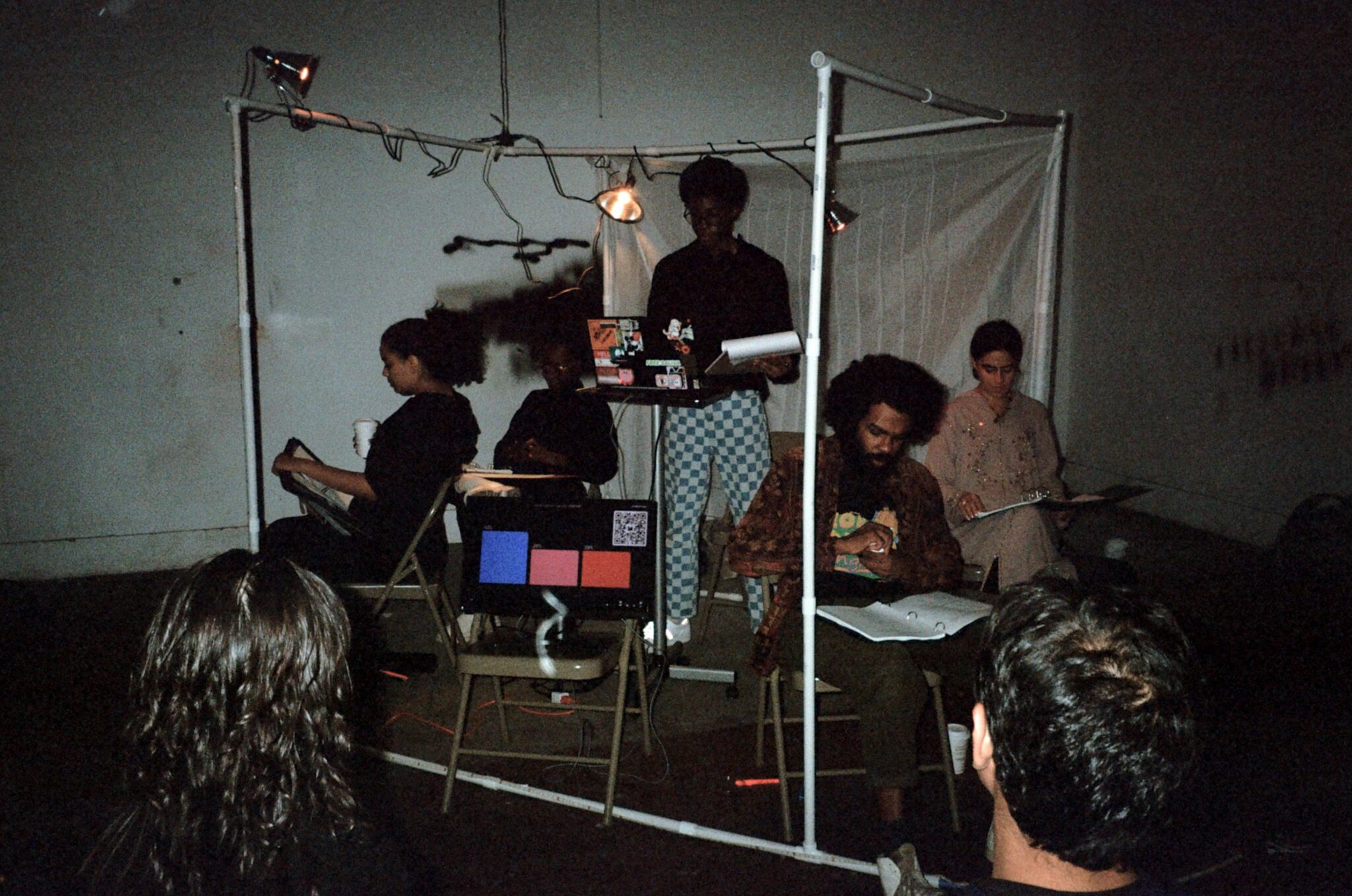
Avery Alex Beige, ‘Blackpilled Synthesis,’ 2024. Interactive play and installation. Lavender Town group exhibition, HEART, NYC, October 25, 2024.

The piece eventually stopped being something performed at an audience and became something done with one. When did that shift happen?

A/AB: Right. Back in 2024, at Maya Man’s HEART Gallery, which was on 442 Broadway, for a one-night Lavender Town exhibit, I showcased an interactive game version of the play. This featured BT Hayes, Greg Lakhan, Amalia Mayorga, and Temídayọ Amay as performers, with me reading stage directions. This iteration offered me my most recent opportunity to explore the overlaps between technology and performance. It was read aloud by performers, while real-time audience voting restructured the reading as it unfolded—jumping scenes, reading backward, swapping performers, and allowing audience members to trade places with the cast. Crucially, the audience members never knew precisely what they were voting for.

And while we performers were reading a text about suffering, we ourselves were reading the piece transparently, and thus refused the category of ‘object’ that performers being watched can be subject to. We weren’t seamlessly acting, we could see the audience seeing us–and this allowed us to resist easy consumption through employing the ‘oppositional gaze’, in bell hooks’ terms–the look back that refuses the position of object. And this interactive version allowed my own vulnerability, and that of the performers, to be something exchanged with the audience. There’s a kind of reciprocity in the interactive version that the theatre piece alone doesn’t get to imagine.

Video walkthrough of Lavender Town group exhibition at HEART, taken from HEART’s Instagram (@heartbroadwaylove); October 25, 2024.

You’ve said you mean to avoid conversations about Black suffering in your work becoming consumptive. How does that conviction show up in the actual structure of the work? 

A/AB: A guiding principle in my play has been to always take care of the performers. Far too often, the investigation of Black suffering in the context of art can be exploitative and perpetuate more racism by increasing the audience’s appetite for consuming it. In the piece I’ve written, I’ve literally written aftercare into the script for the audience and performers.

During the interactive performance, one of our rules was that any performer could step away at any time for any reason, and in the room we built, they actually did.

While you’ve been developing Blushing Milk, you also worked on another piece, Website Evangelist: Eulogy for a Laptop, that was performed over in ANT Fest at Ars Nova in 2024. Where does this fit in the ecosystem of your practice?

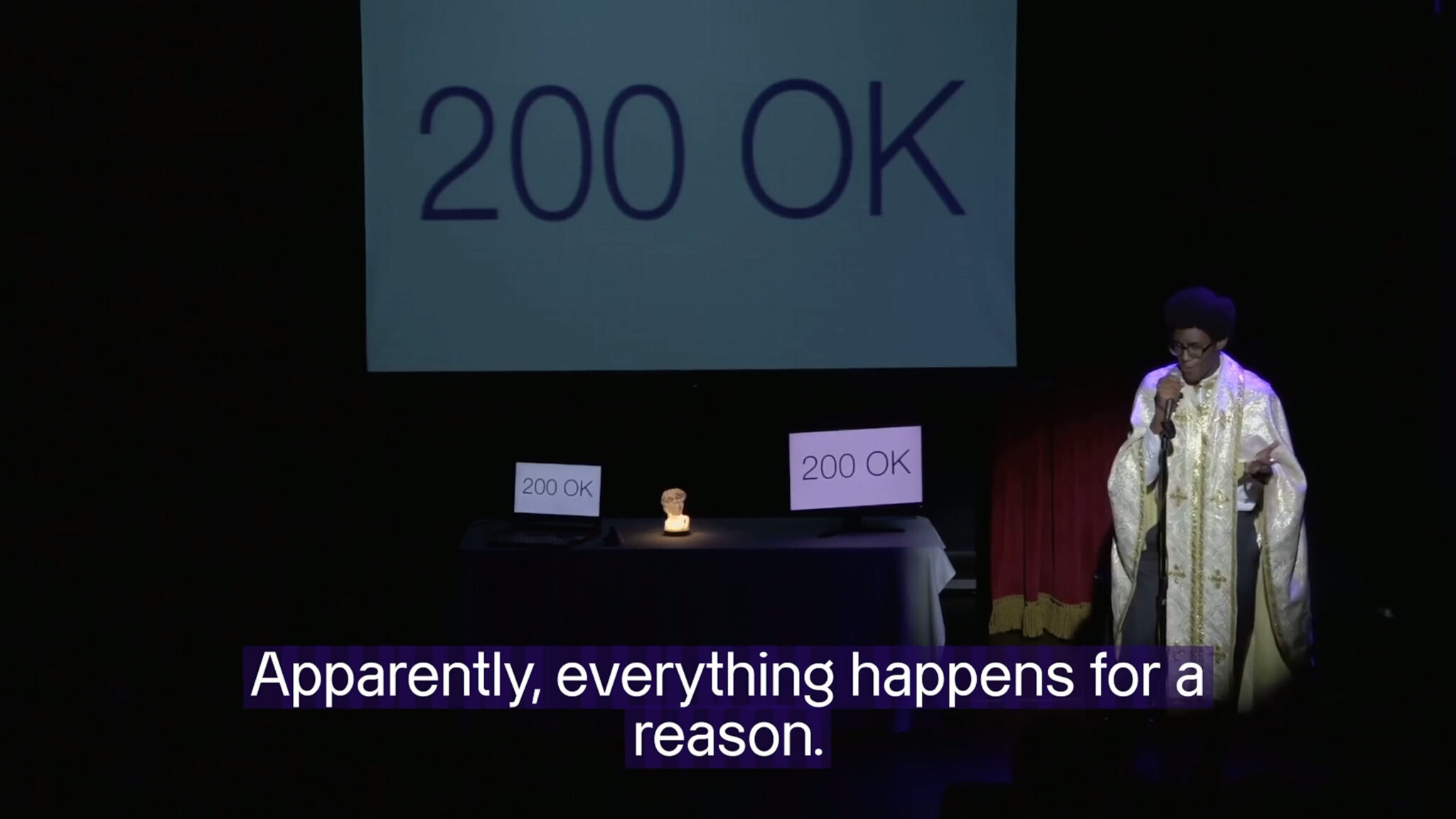
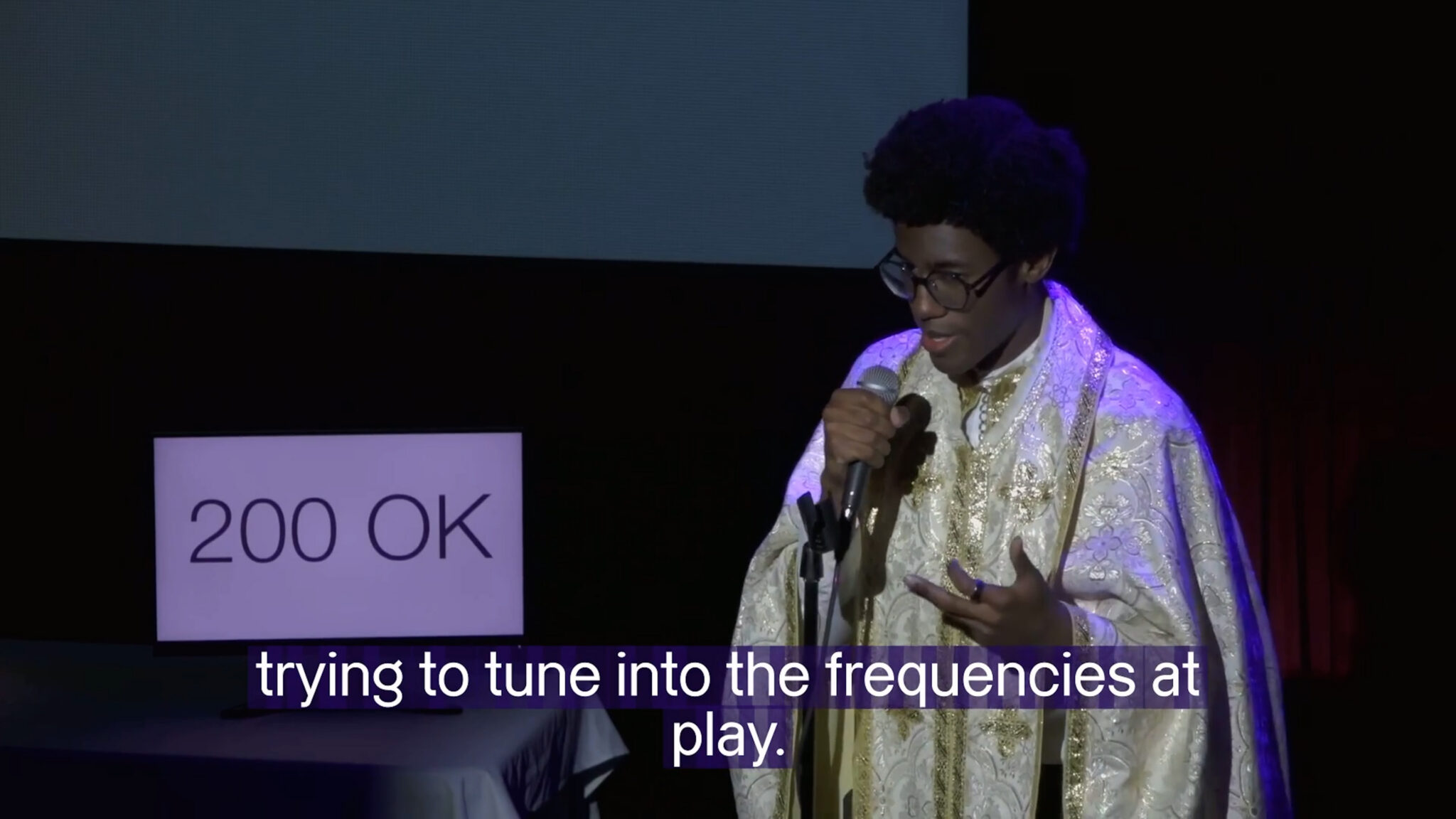
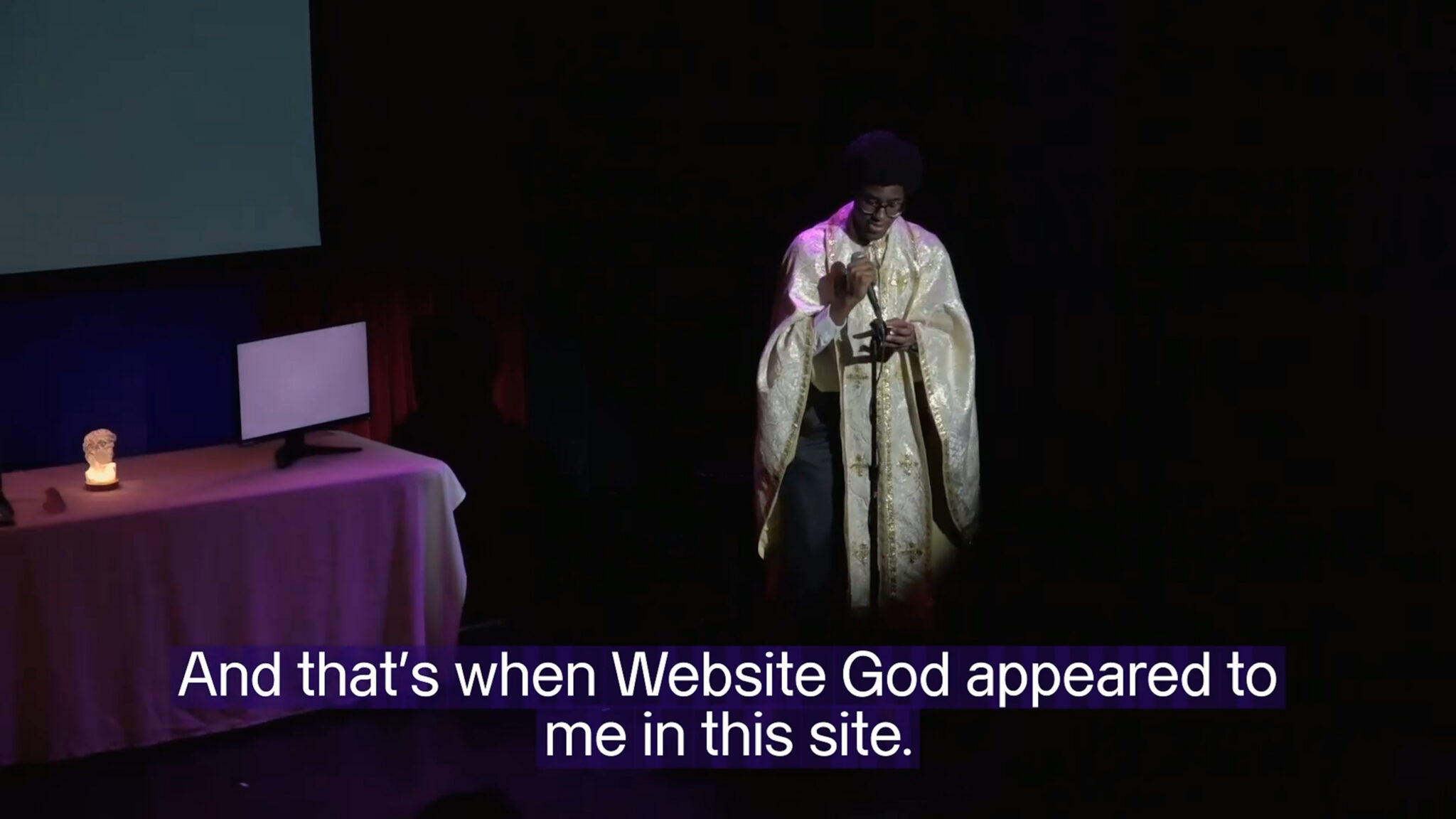
A/AB: My one-person show, Website Evangelist: Eulogy for a Laptop, explores what it means to grieve a technology that shaped you, whether that technology is my laptop, Catholicism itself, or my friend Anshul.

The thing that is central to the structure of this performance is thinking about how being raised in the South as a Black Catholic has left me with internalized racism; how the roots of Catholicism in the South, well, Christianity more broadly, are perpetuating and elongating the legacy of slavery in the South. Christianity has blood on its hands, and I’m thinking about how, despite that, it also has meant so much to me, helping me process the recent passing of a dear friend. 

Through this work, I carve out a space where I am trying to hold the duality and contradictions that Catholicism and the internet have brought to my life, where it’s like I have learned to love the things that hate or hurt me, but at the same time have brought me so much joy.

And speaking of Catholicism, which shame and suffering are a huge part of the culture, it also ties with my belief that you have to learn how to love your own suffering when dealing with racism, and not shy away from it, stems heavily from this. Catholicism allows suffering to be purifying, and that is, for better or for worse, an idea both pieces hold (loosely) in common.

How do you hope to advance this project during this residency? What does this residency allow you to do to build upon this work? 

A/AB: There’s so much for me to learn in digital technology more broadly. The interactive game version of my play was cobbled together from the tools and systems I knew—I used a random corporate SaaS for the voting system so people could vote on their phones. I controlled the lights via a proprietary app on my phone. I played the sound effects by clicking around on my laptop during the show. I’m incredibly excited to be in a space where building bespoke technology solutions for these systems is the norm. Eyebeam has a history of supporting open-source tech, but also artists building it from the ground up. I am in the process of building a custom UI and systems to allow people to vote and to control the piece, i.e., lighting. Mainly, I would love to develop my TouchDesigner skills, so I can use the custom-built UI during a live performance, and I would eventually like to have a digital interface that can control lighting, stage, and mechanics. 

 Avery Alex Beige, Website Evangelist: Eulogy for A Laptop, 2024. Performance.

Something I am curious about, which I have seen you share on social media, is The Nonbinary Research Facility. I was wondering how that play/practice ties in a lot of the ideas you play with? 

A/AB: [REDACTED]

█████ ███ █ ████ █ ██████. ███ ██. █ ██████ ██ ████ ██. ████ ██

███ ████ █ ████ █████ ██ ████ ██████. ██████ █████ ██████ ██ █.

██ ███. ████ ██ █ ████. ████ █ ████ █ █, ultimately a burden.

[REDACTED]

Part of what I’m trying to say is that I couldn’t change my name if I didn’t have a name to begin with, you know?

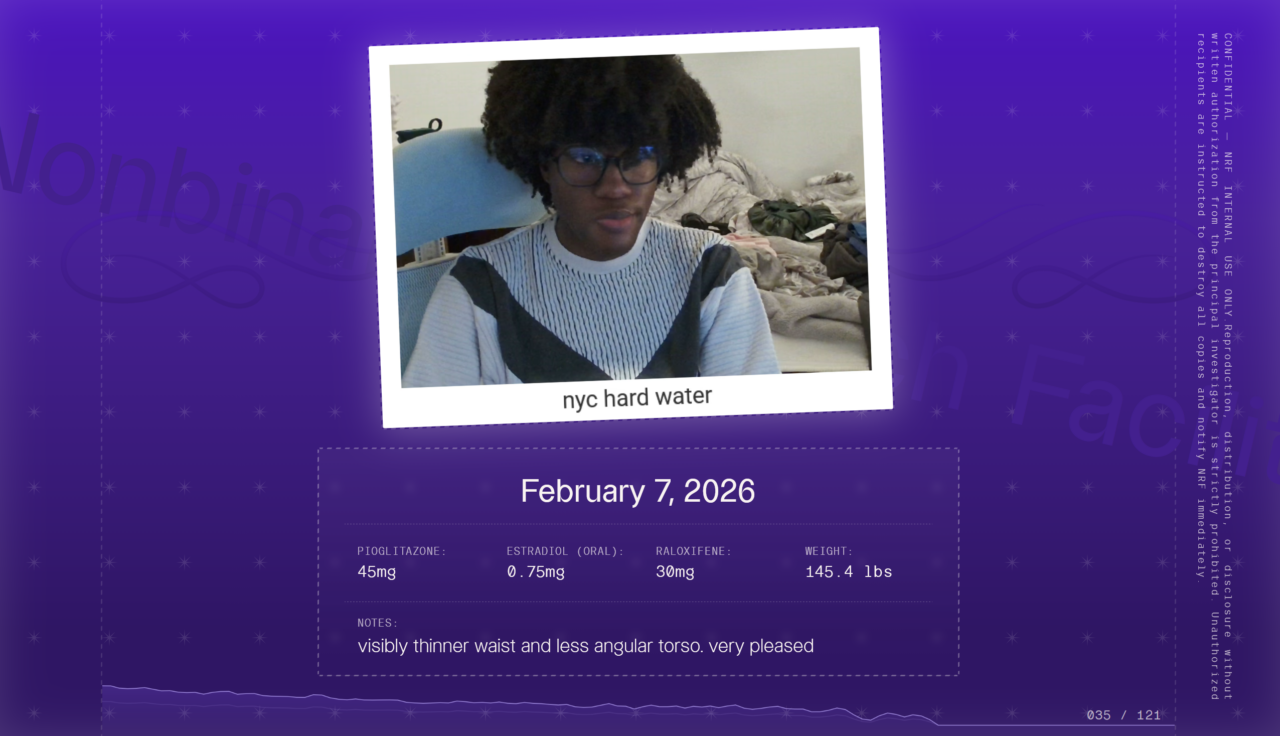
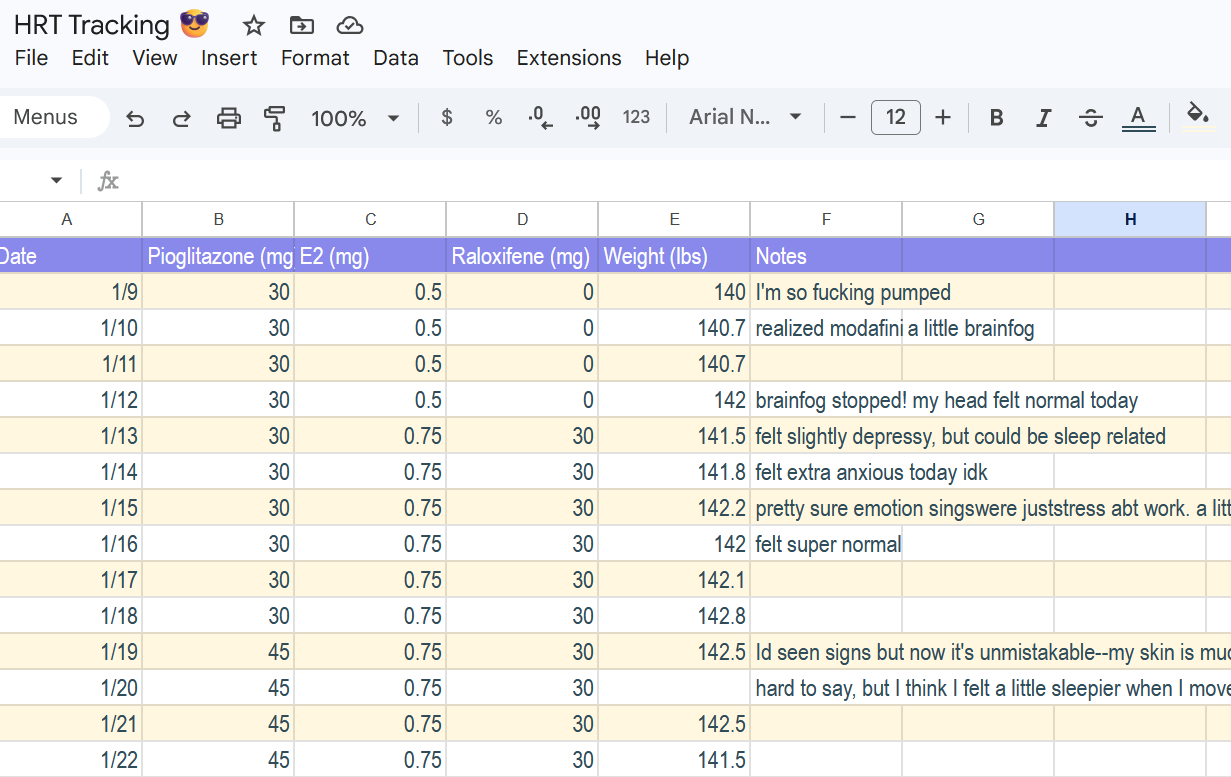
The Nonbinary Research Facility

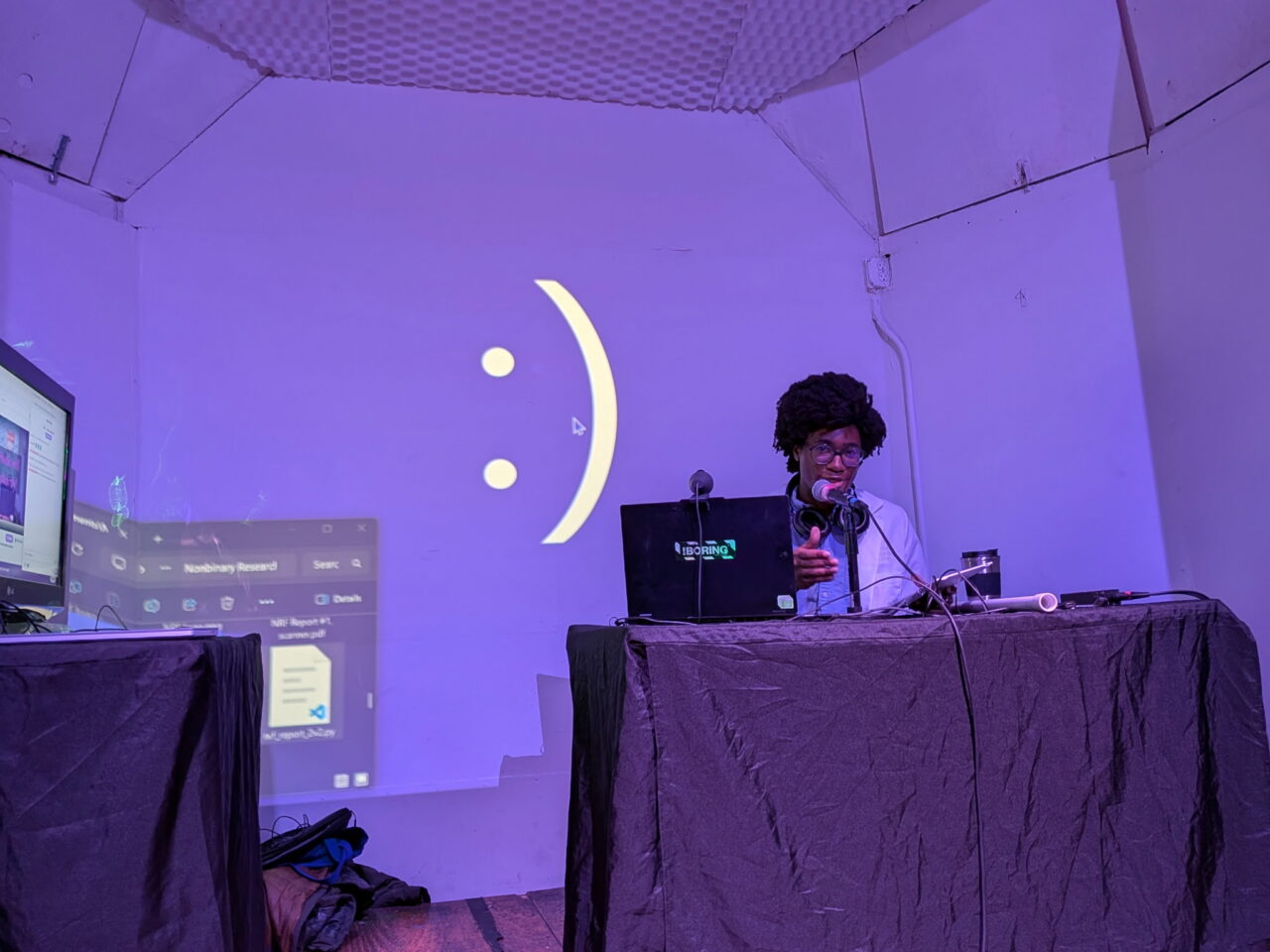
The Nonbinary Research Facility, 2025 Performance. Todd Anderson's WordHack, Wonderville, NYC. Courtesy of the artist.

Here’s a loaded question. What does speculating on plurality mean to you?

Here’s a loaded answer. The central mechanic of my interactive piece is the audience’s voting. I think speculating about plurality also entails investigating what kinds of harm it can obscure. As the act of voting is never neutral, the pluralities emerging from a political system defined by its willingness to disregard minority opinion are certainly not neutral. It manages to bring legitimacy to a system that’s built on subjugation–I’m interested in how abstracting violence through ideas of plurality, understood in the negative sense, can launder complicity and make insidious technological systems more palatable.

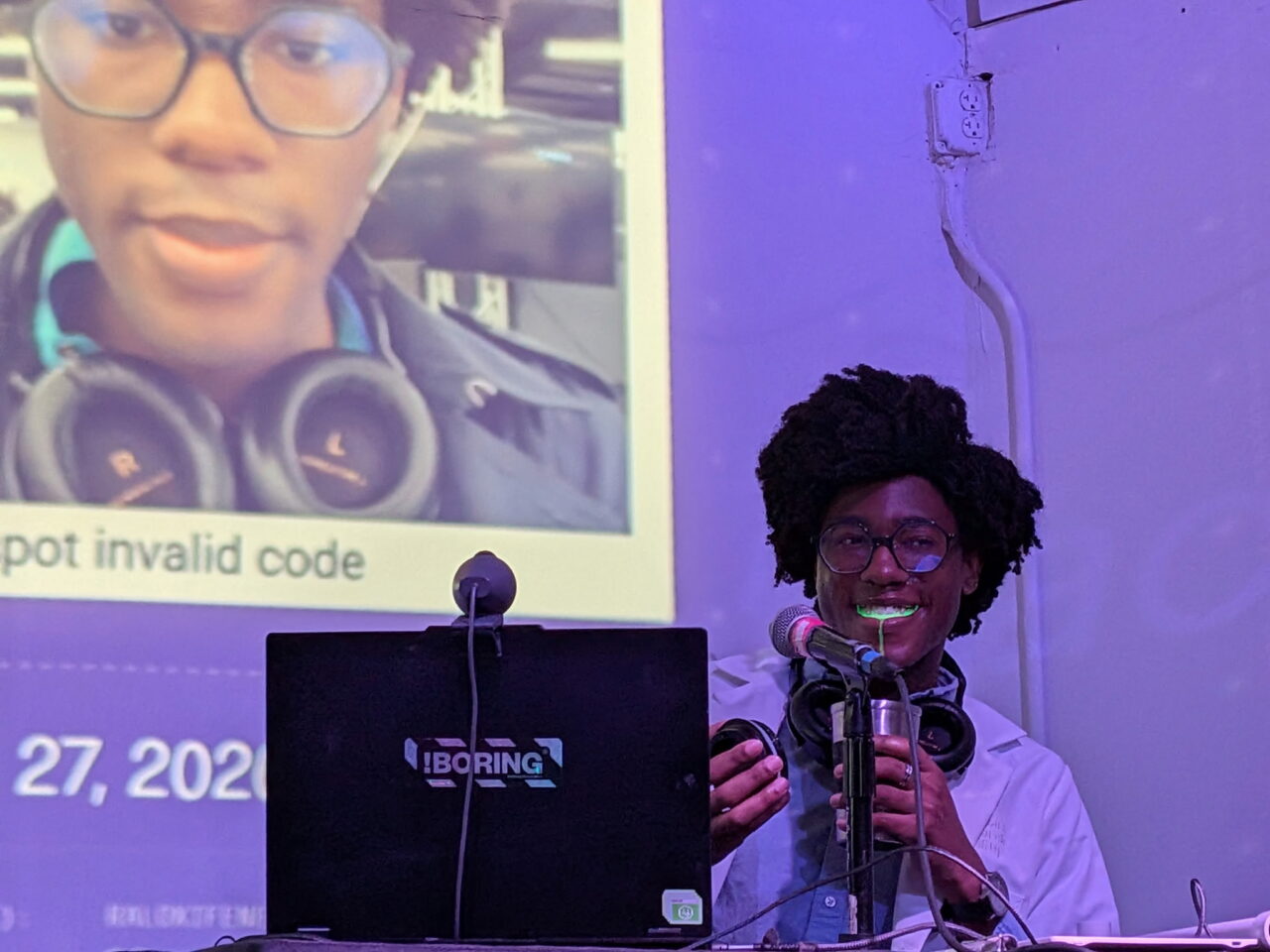
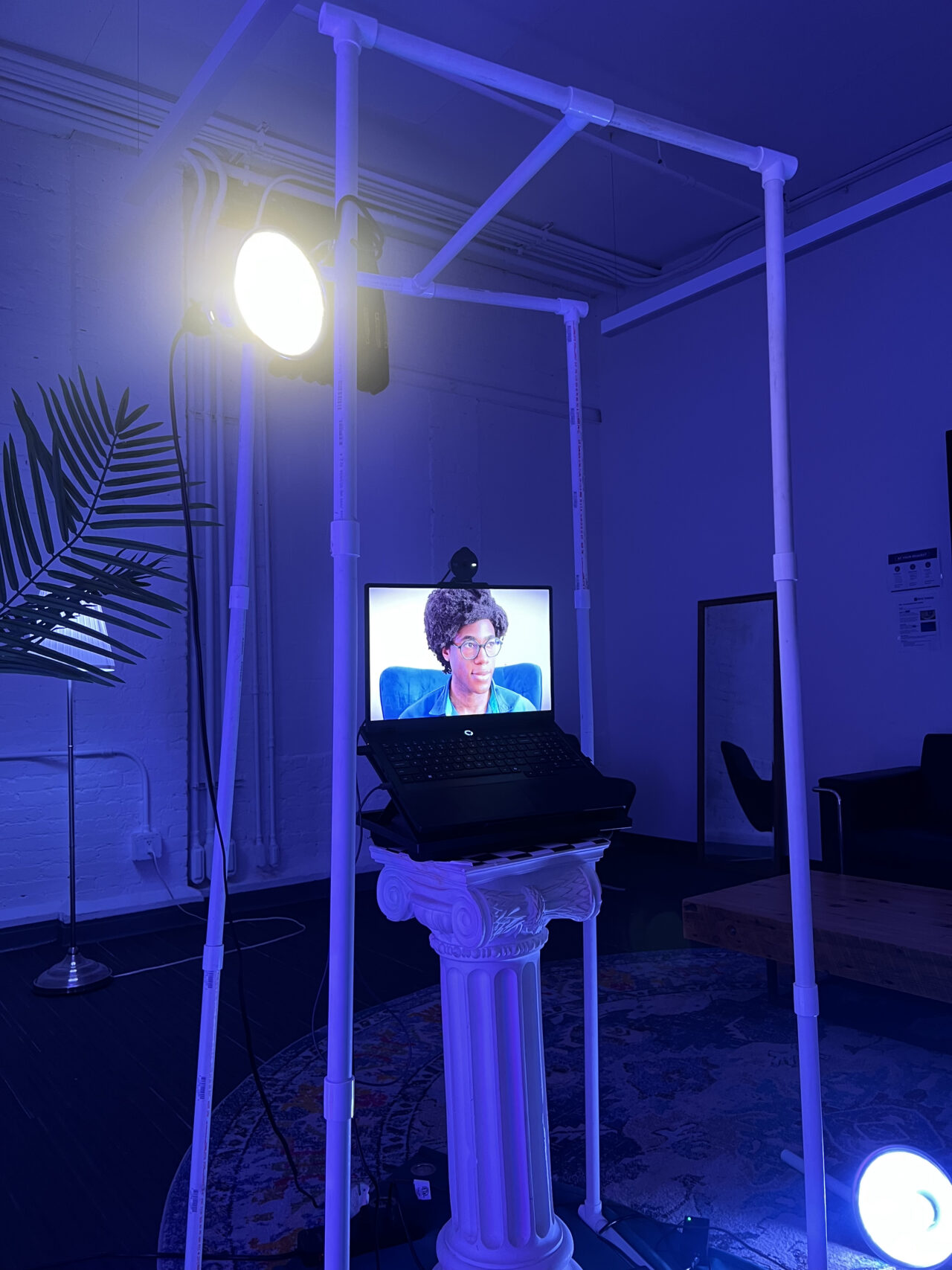

Installation Still and work-in-progress, without performers, Avery/Alex Beige, Blushing Milk [OTC], In Vivo, 2026. Cybernetic Play, performance, and interactive game. 

Installation Still and work-in-progress, without performers, Avery/Alex Beige, ‘Blushing Milk [OTC], In Vivo,’ 2026. Cybernetic Play, performance, and interactive game. Alumni and Cohort gathering at NYU Tandon @ the Yard, Brooklyn, NY, May 15, 2026. Photo credit: Nat Lemus; Courtesy of the artist.

Installation Still and work-in-progress, without performers, Avery/Alex Beige, ‘Blushing Milk [OTC], In Vivo,’ 2026. Cybernetic Play, performance, and interactive game. Alumni and Cohort gathering at NYU Tandon @ the Yard, Brooklyn, NY, May 15, 2026. Photo credit: Nat Lemus; Courtesy of the artist.

Eyebeam models a new approach to artist-led creation for the public good; we are a non-profit that provides significant professional support and money to exceptional artists for the realization of important ideas that wouldn’t exist otherwise. Nobody else is doing this.

Donate today