Page contents
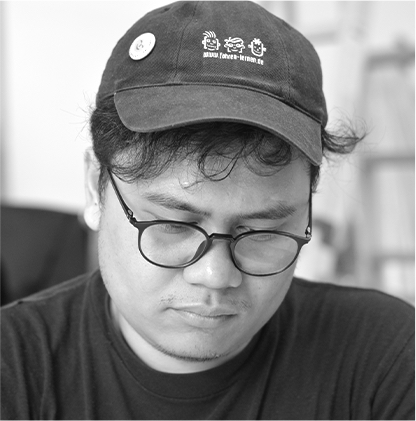
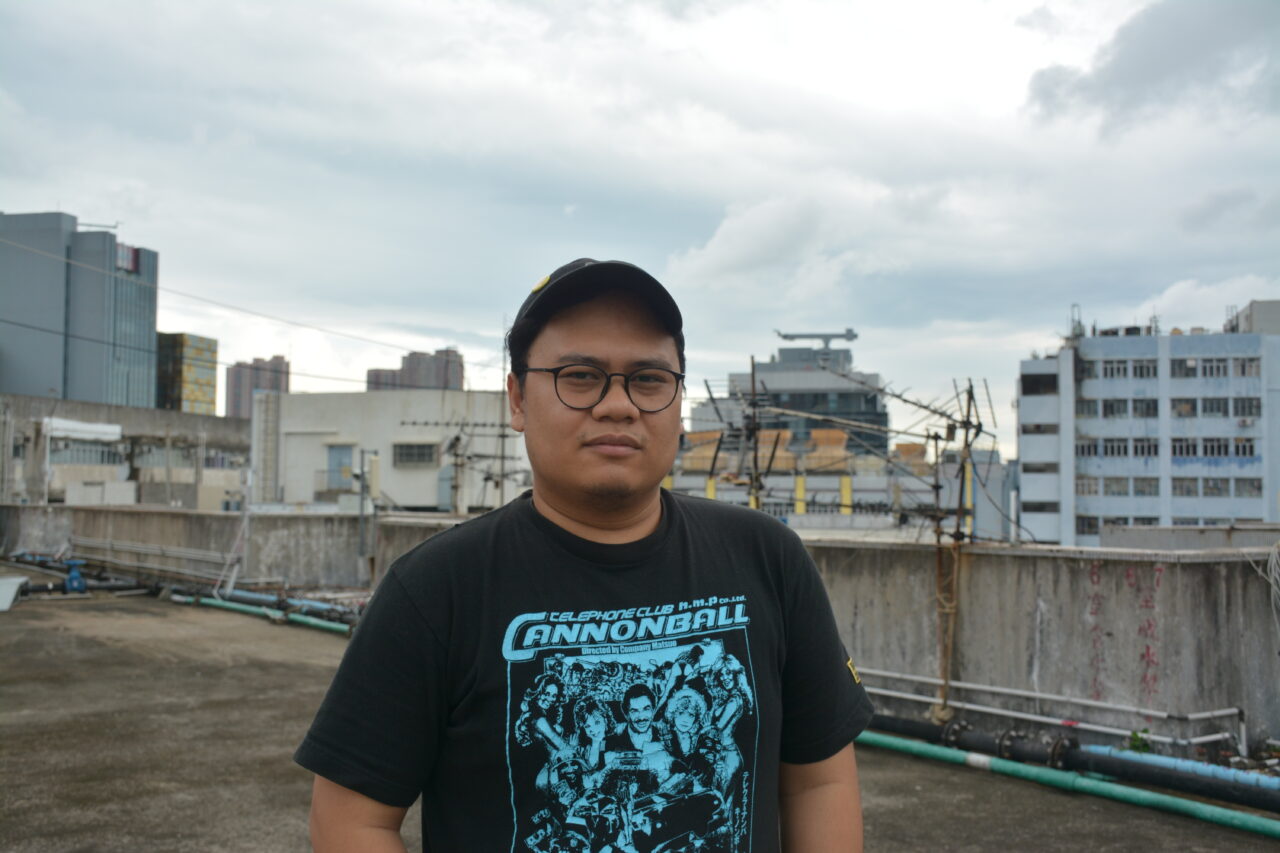
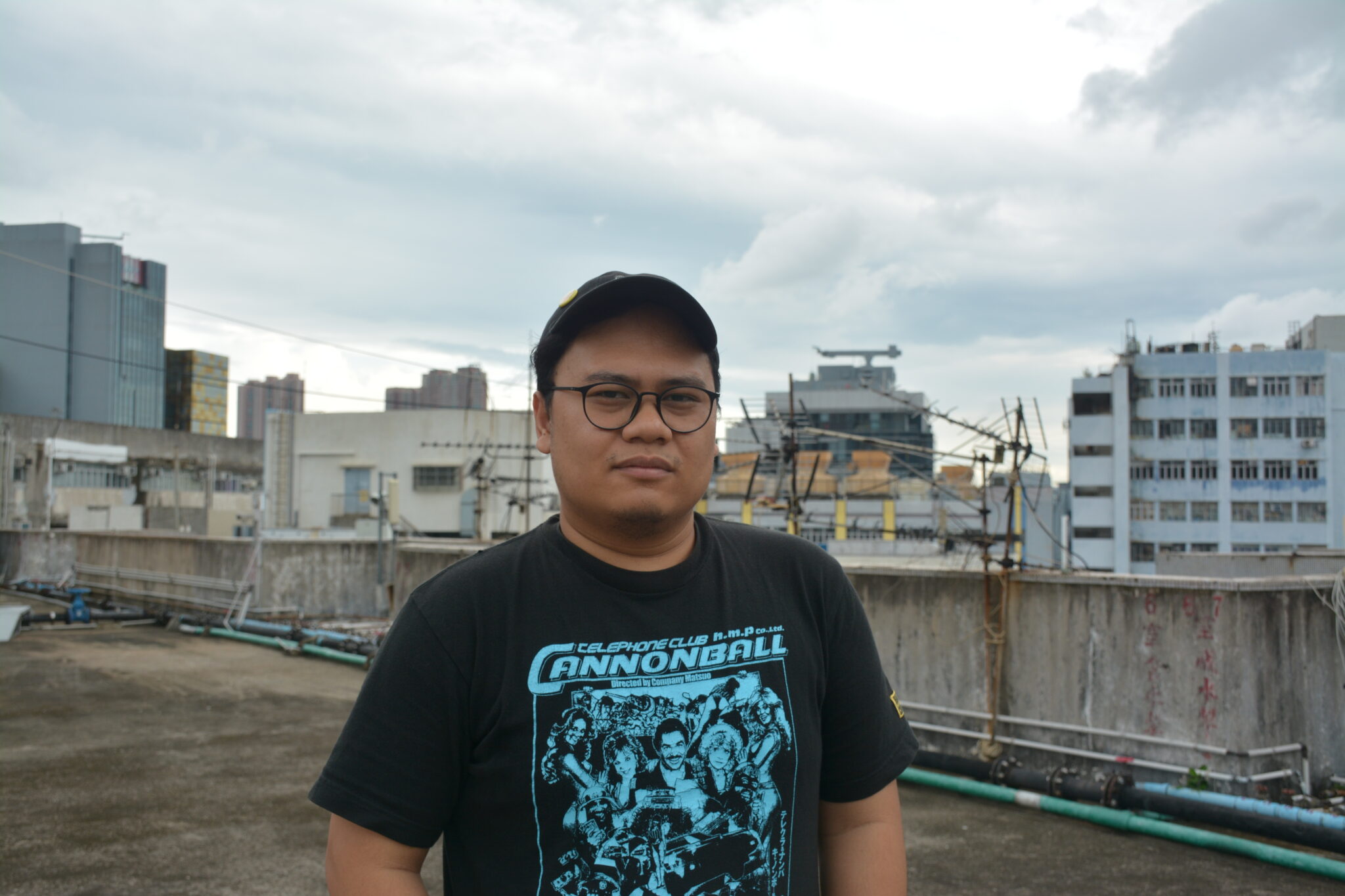
Pictured is the artist Riar Rizaldi, an Indonesian person wearing glasses and a black T-shirt with blue graphics that say “Celephone club h.m.p. Co LTD, cannonball, Directed by Company Matsuo.” He is standing on a rooftop in Indonesia, with an overcast creamy blue sky, city buildings, and rooftops visible in the background.Pictured is the artist Riar Rizaldi, an Indonesian person wearing glasses and a black T-shirt with blue graphics that say “Celephone club h.m.p. Co LTD, cannonball, Directed by Company Matsuo.” He is standing on a rooftop in Indonesia, with an overcast creamy blue sky, city buildings, and rooftops visible in the background.

Portrait of Eyebeam alum artist 2023, Riar Rizaldi. Photograph by Kay Beadman.

With Riar Rizaldi
Pronouns
He/him
Date and place of birth
b. 1990, Bandung, Indonesia
Current location
Yogyakarta, Indonesia
Year(s) of residency and/or fellowship
2022, VH Award Resident

How do you characterize the media you work in?

Most of my artistic practice involves moving image and sound, and focuses on theoretical fiction and the relationship between capital and technology. 

How does your practice engage with technology?

I want to engage with technology from a perspective that is rooted in where I come from in Indonesia—exploring how technology is understood by people who live in a humid, tropical area that is, on one hand, a dumping ground for electronic waste, and on the other, a center for natural resources like tin that are used to manufacture those same objects. In considering technology more philosophically than practically, I want to think about science non-rationally, as something that is rooted in cultural imaginations rather than observation, validation, and verification.
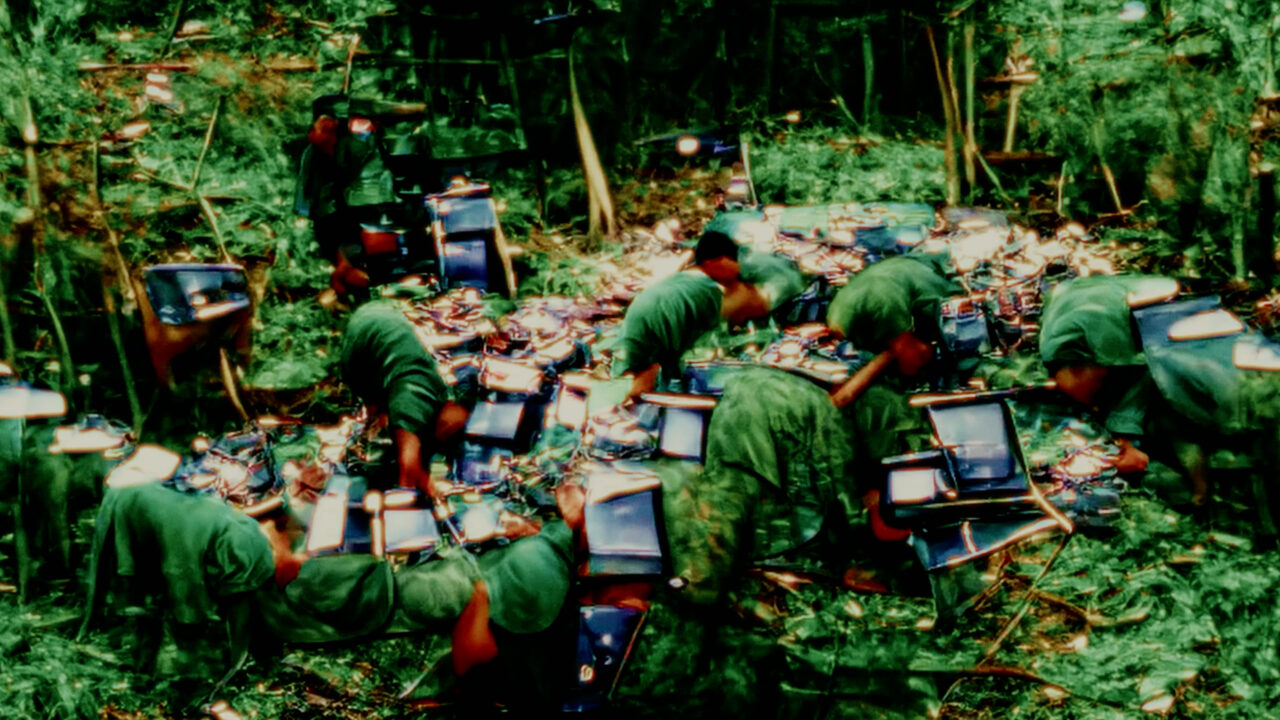
A still from the still. A lush greenscape, of tropical plants, with e-waste, screens, and technology, unearthed from underneath the overdeveloped botanical terrain.

Screen still from ‘Fossilis,’ Riar Rizaldi, 2023. Provided by HYUNDAI MOTOR GROUP VH AWARD.

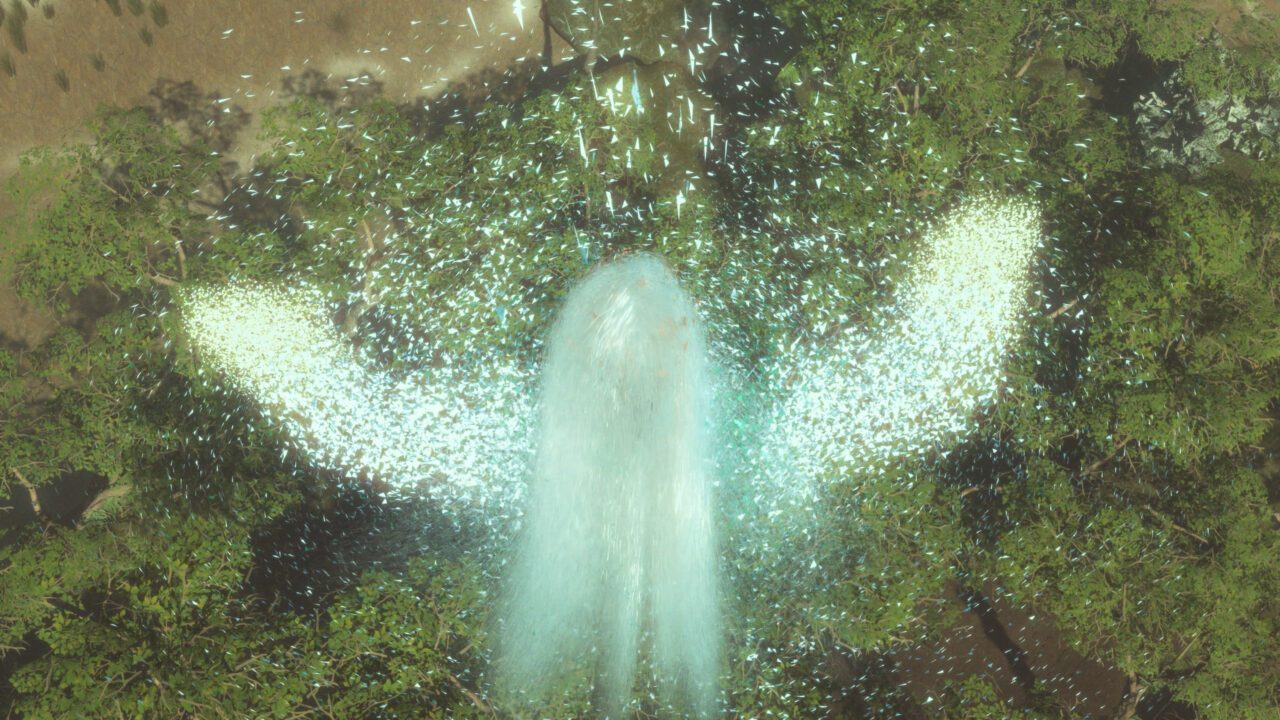
On the screen is the film, the scene is set on a grassy, dirt patch, and resting on top is a white, glittering, ghost-like, snow-angel-like shape.

Screen still from ‘Fossilis,’ Riar Rizaldi, 2023. Provided by HYUNDAI MOTOR GROUP VH AWARD.

A still from the film. What looks like a lab researcher, in an all-white jumpsuit, and goggles, sits in front of a white incubator, everything lit in a deep, lustrous green, set in a dark space with tropical plants jutting out from the dark.

Screen still from ‘Fossilis,’ Riar Rizaldi, 2023. Provided by HYUNDAI MOTOR GROUP VH AWARD.

You were a finalist for the 5th VH Award. Can you tell me about the work that garnered you this honor?

I’m interested in the ways in which fictions, and the world-building that happens through them, can create imagination around present issues. For some time, I was drawn to this notion of e-waste becoming fossilized in the future because it doesn’t decompose. Then I started to think about narratives involving future archaeologists who encounter these fossils. My video Fossilis (2023) isn’t just about e-waste narratively; it also implements this waste as a method and tool. I made the work from materials that are not usually used to make films, like old, unwanted 3D models discarded by game developers. I was inspired by a night market in Indonesia where people sell used (sometimes stolen) electronics, and so make consumption cycles a bit slower, and that also features in the video.

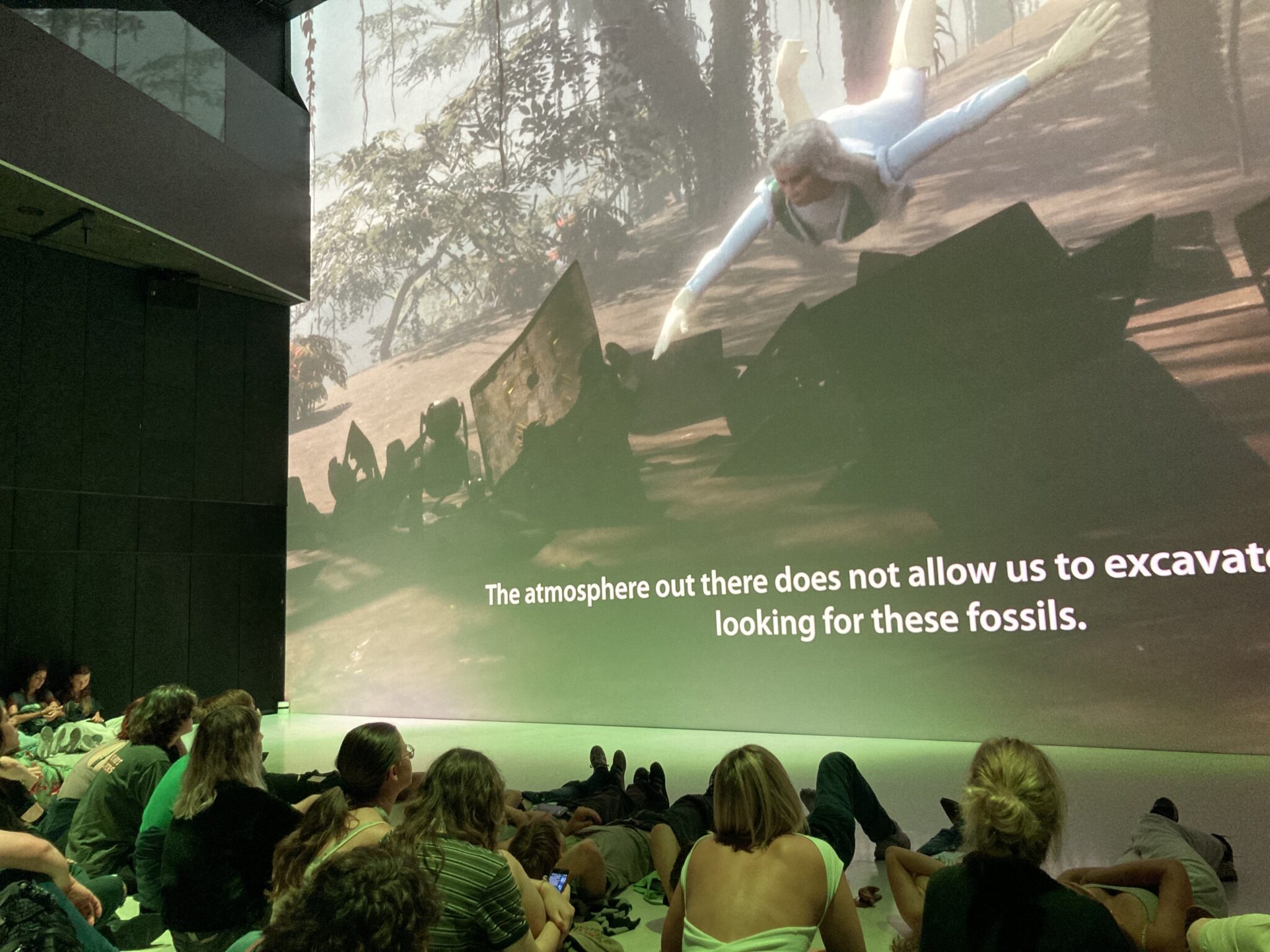
An image of a group of people sitting on the floor, watching the film projected onto a wall at a gallery.

Installation view at Ars Electronica, Linz 2023. Riar Rizaldi, ‘Fossilis,’ 2023. Two-channel 6K videos, 16:9 format, colour and sound (stereo), 12 min 56 sec. Supported by the 5th VH AWARD, and presented by the Hyundai ArtLab, Hyundai Motor Group. Images courtesy of DEEP SPACE 8K, Photo: Martin Hieslmair. © VH Award.

What was your focus during your time at Eyebeam? Was there a culminating project?

As I worked on Fossilis as well as an additional project while at Eyebeam, there were regular meetings where we shared our progress and received feedback from the artist residents as well as invited guests. These were really helpful in developing work.  It was also great to gather and learn more about the other participants’ practices.

At the Hyundai Vision Hall, there is a dark screen room with a 24-meter-wide high-resolution display. On the screen is the film, the scene is set on a grassy, dirt patch, and resting on top is a white, glittering, ghost-like, snow-angel-like shape.

Installation view at Hyundai Vision Hall, South Korea 2023.

How has dialogue or collaboration with Eyebeam artists and alumni factored into your work?

I found that speaking with other participants in the residency was particularly meaningful, in part because of similarities regarding our understanding of technological development in Asia. I saw a lot of discarded e-waste growing up in Indonesia, and Zike He, who was in my cohort, expressed that the dumping of e-waste is also a big problem in China, where she is from. Through conversations like these, we learned that we were facing the same issues.

How do you think about the role of the artist in society?

It’s a question I’ve never had the answer to, but I always think that what is interesting about artists is that they offer imagination and speculation in areas that other people might ignore, or simply not have time or space to think about beyond their daily routine. My aim as an artist is not necessarily to solve a problem but instead to give a new experience and a new understanding of the world—to help you experience how I think about the world. 

Eyebeam models a new approach to artist-led creation for the public good; we are a non-profit that provides significant professional support and money to exceptional artists for the realization of important ideas that wouldn’t exist otherwise. Nobody else is doing this.

Donate today