Page contents
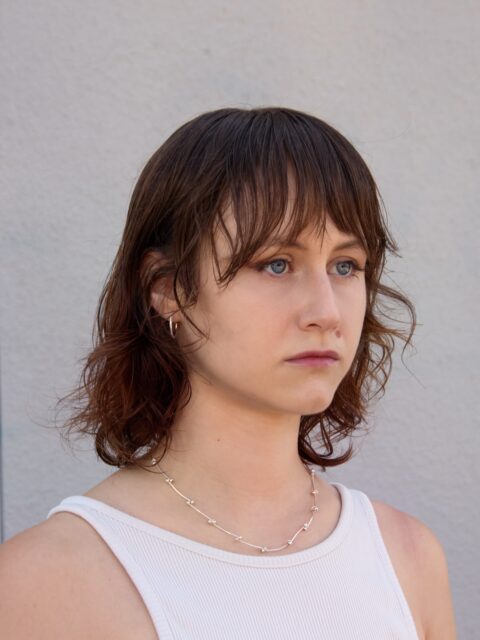
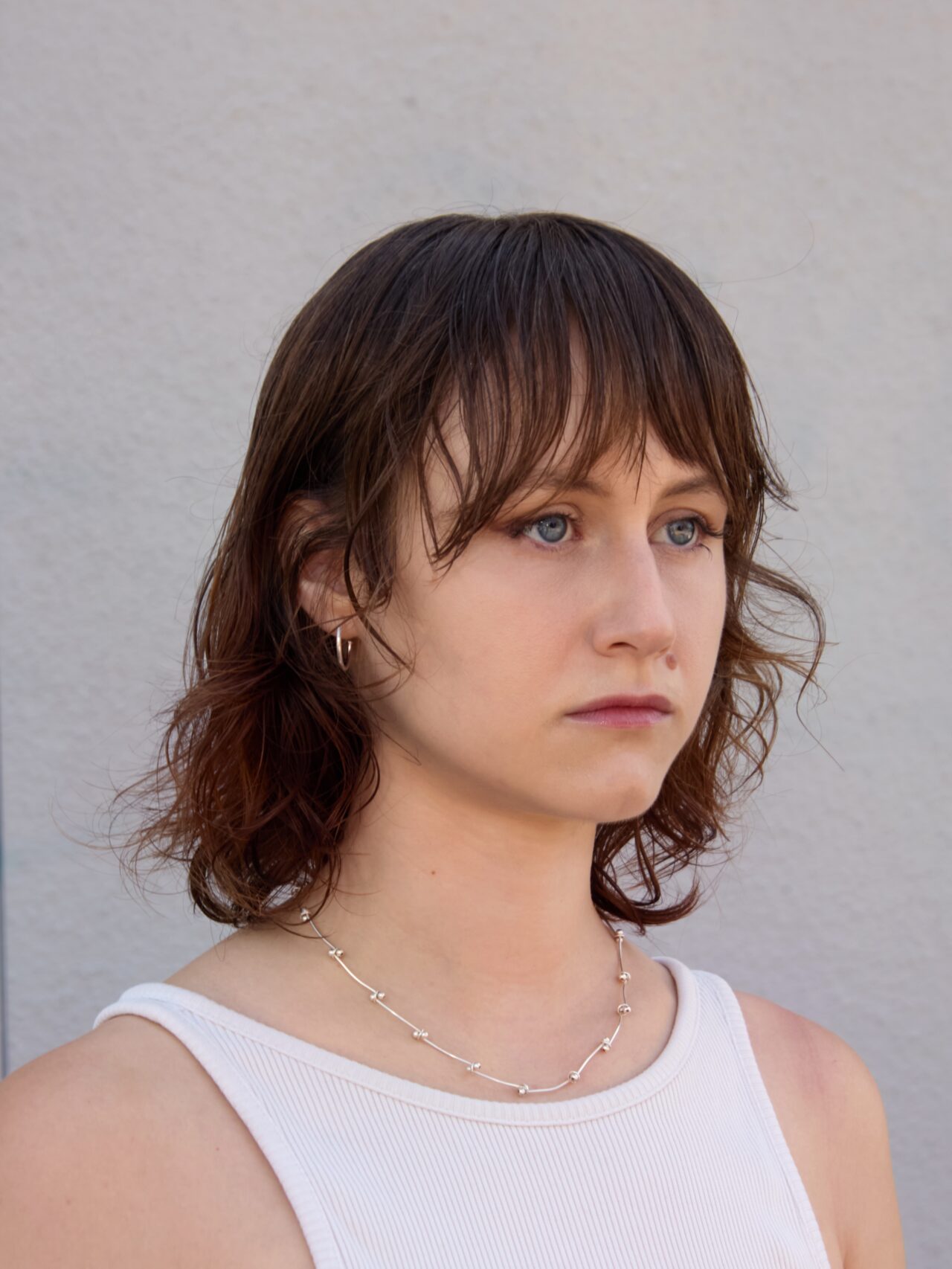
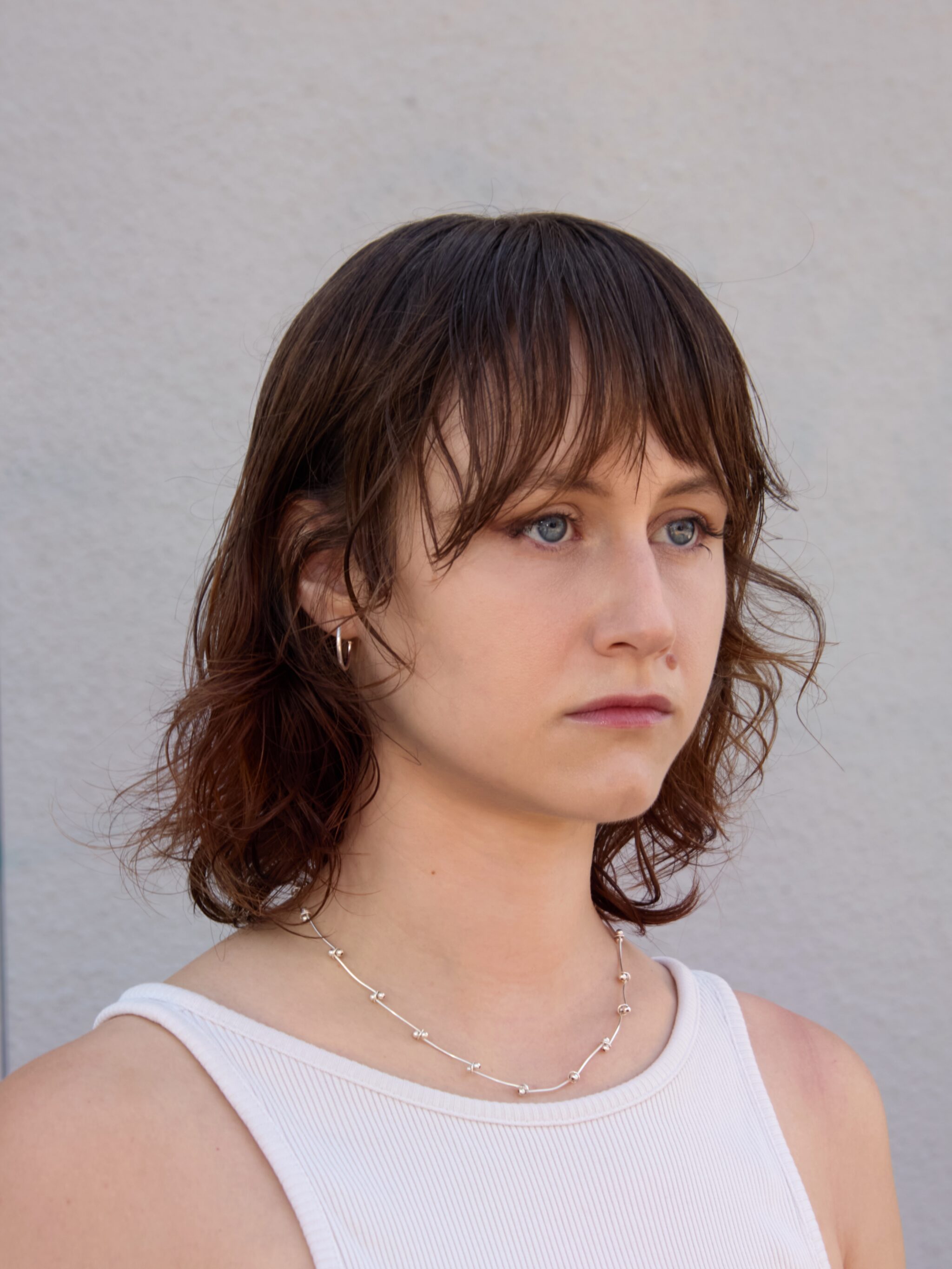
Pictured is artist Aurora Mititelu, a Romanian woman. She has light skin, blue eyes, and shoulder-length brown hair with bangs. They are looking off-camera to the right with a neutral expression. They have a beauty mark on their cheek and are wearing a white ribbed tank top, small silver hoop earrings, and a thin silver necklace with small beads. The background is a plain, light grey wall.Pictured is artist Aurora Mititelu, a Romanian woman. She has light skin, blue eyes, and shoulder-length brown hair with bangs. They are looking off-camera to the right with a neutral expression. They have a beauty mark on their cheek and are wearing a white ribbed tank top, small silver hoop earrings, and a thin silver necklace with small beads. The background is a plain, light grey wall.

Portrait of Eyebeam Speculating on Plurality Resident 2026, Aurora Mititelu. Photo credit: Garrett Alvarado.

With Aurora Mititelu
Pronouns
She/her
Date and place of birth
b. 1995, Buzau, Romania
Current location
New York
Year(s) of residency and/or fellowship
2026, Speculating on Plurality Resident

Special to Feed 


Artist Bio

Aurora Mititelu is an artist based in New York working with computer images, AI, and physical installations to examine how computational media constructs contemporary reality. Growing up in post-socialist Romania during the influx of Western digital culture, her practice emerges from a critical interest in how media technologies shape identity and autonomy. She is currently a member of NEW INC Art & Code Y12 and the coordinator of the AI & Art Summer Institute at UCLA Social Software, a research lab focused on critical approaches to software and society.


Tell us about yourself.

AM: I grew up in a post-industrial town in Romania, during the early years of the personal computer and the rise of the internet. This was right after the fall of communism, when the country was in economic ruin and at the same time opened up to western ideals, bringing an influx of capitalist ideology and pop culture. Coming from a working-class family, I experienced early on how these images shape desire and reality from a position of distance. I yearned deeply for a reality that wasn’t my physical reality, which I encountered primarily through a computer. The gap between lived experience and the imaginaries produced at global centers of power continues to inform how I think about representation and the role technology plays in structuring society and lived experience.

I started to experiment with creating artworks in Microsoft Paint in the mid-2000’s, right as I got my first computer, around the age of seven. My imagination was heavily influenced by the aesthetics of the early internet age and the flood of American media. Consuming a lot of American imagery shaped how I thought I should be, feeling disconnected from the local culture and values of my hometown.
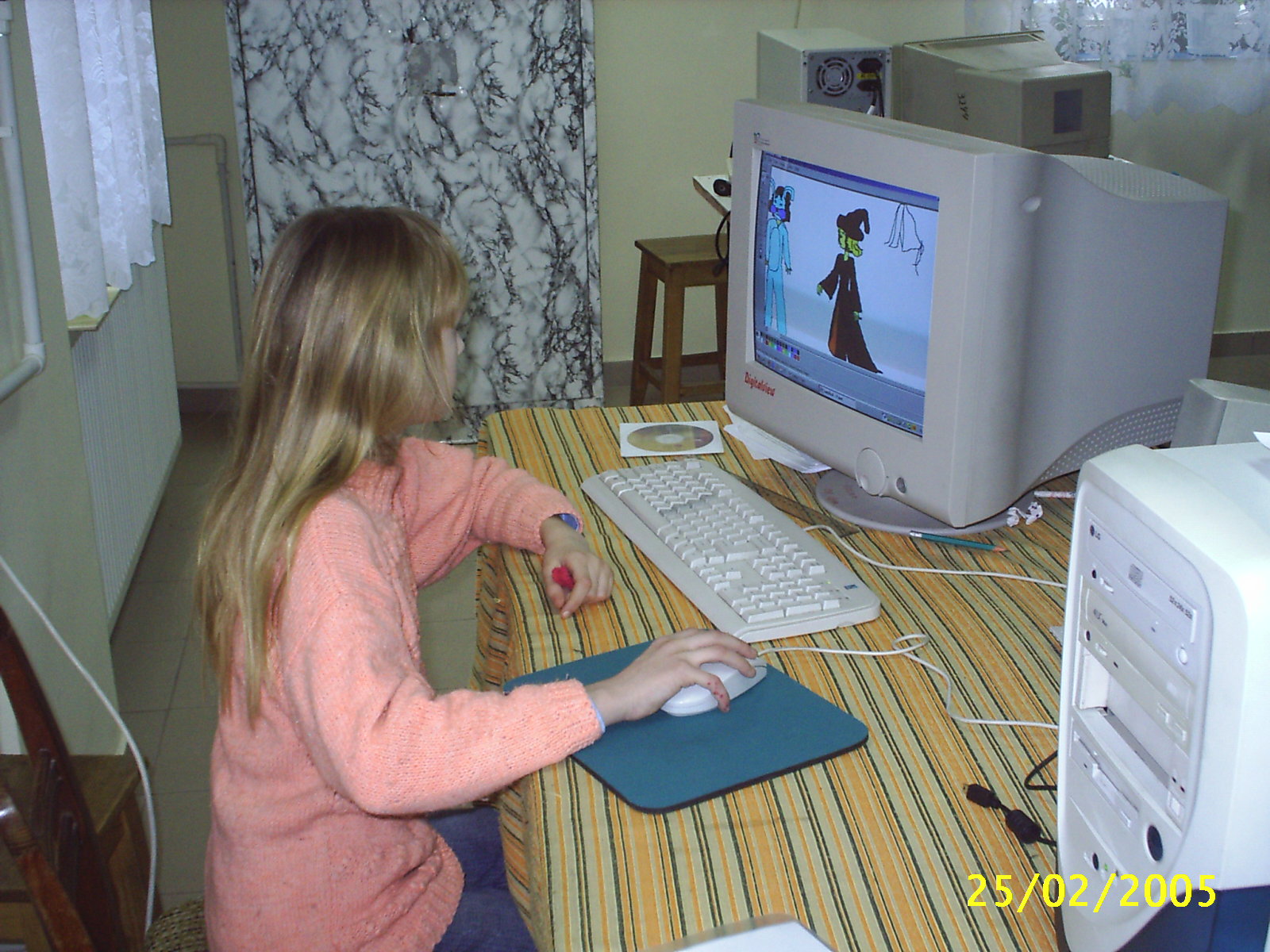
Photograph of Aurora Mititelu drawing in Microsoft Paint in 2005. Courtesy of the artist.

Photograph of Aurora Mititelu drawing in Microsoft Paint in 2005. Courtesy of the artist.

By the time I was in art high school, I was being taught to draw and paint in academic realism, specifically Byzantine-era icon work adorning Orthodox churches in Eastern Europe, which I really did not want to do. I wanted to make digital work: animation, digital drawing, things made within the media I was actually engrossed in. Video games like Grand Theft Auto V, Second Life, early Disney Channel programs like Hannah Montana, pop music videos, The Sims. In The Sims, I would make the Jonas Brothers and had my own Sim date them, which is interesting to think about in relation to my recent work. That media diet inadvertently made Los Angeles a central part of my imagination, something I later tried to deconstruct: what made LA such a powerful place in my head? It was so many things, from music lyrics to virtual places in games, to things like how Apple names its operating systems after places in California. These cultural identifiers quietly established the U.S. as a center, a reference point in my mind.

As a young adult, I moved to Berlin to immerse myself in the new media art scene and to pursue a career as a 3D artist and art director focused on immersive media. I worked with 3D simulations and installations, which opened up a spatial and experiential dimension of computer art I was completely absorbed by. I spent late nights in the studio talking to other artists about render engines, real-time graphics and GPUs, and went to so many experimental live performances. But eventually I started to become aware of the realities my own work was producing, and began to question where these skills would take me. I did not want to stay in advertising or the commercial world. I couldn’t fully articulate it then, but looking back I realise I was beginning to understand how I was contributing to creating a world that reinforced the same distance I had felt so acutely growing up.

“Images are not a truth-technology but socio-political agents. Images that claim reality are images produced and circulated in spaces of community, with an intentional purpose to shape those realities.”

This inquiry led me to pursue a Fulbright scholarship and enroll in UCLA’s graduate program in Design | Media Arts, drawn so strongly to the city that had shaped my imagination from the beginning. There I started to turn a critical lens on all my earlier work, looking at how image-making today has collapsed computational techniques with photography and what the implications of that are. I began researching ideas around representation and building an understanding that images are not a truth-technology but socio-political agents. Images that claim reality are images produced and circulated in spaces of community, with an intentional purpose to shape those realities.

It’s also where I started building the body of work I have been exploring for the past few years, [“The Abel Series”], using a masculine agent as a central figure. The series allows me to interrogate my identity and dive deeper into the investigation of whose interests are served through the use of aesthetics and technology.

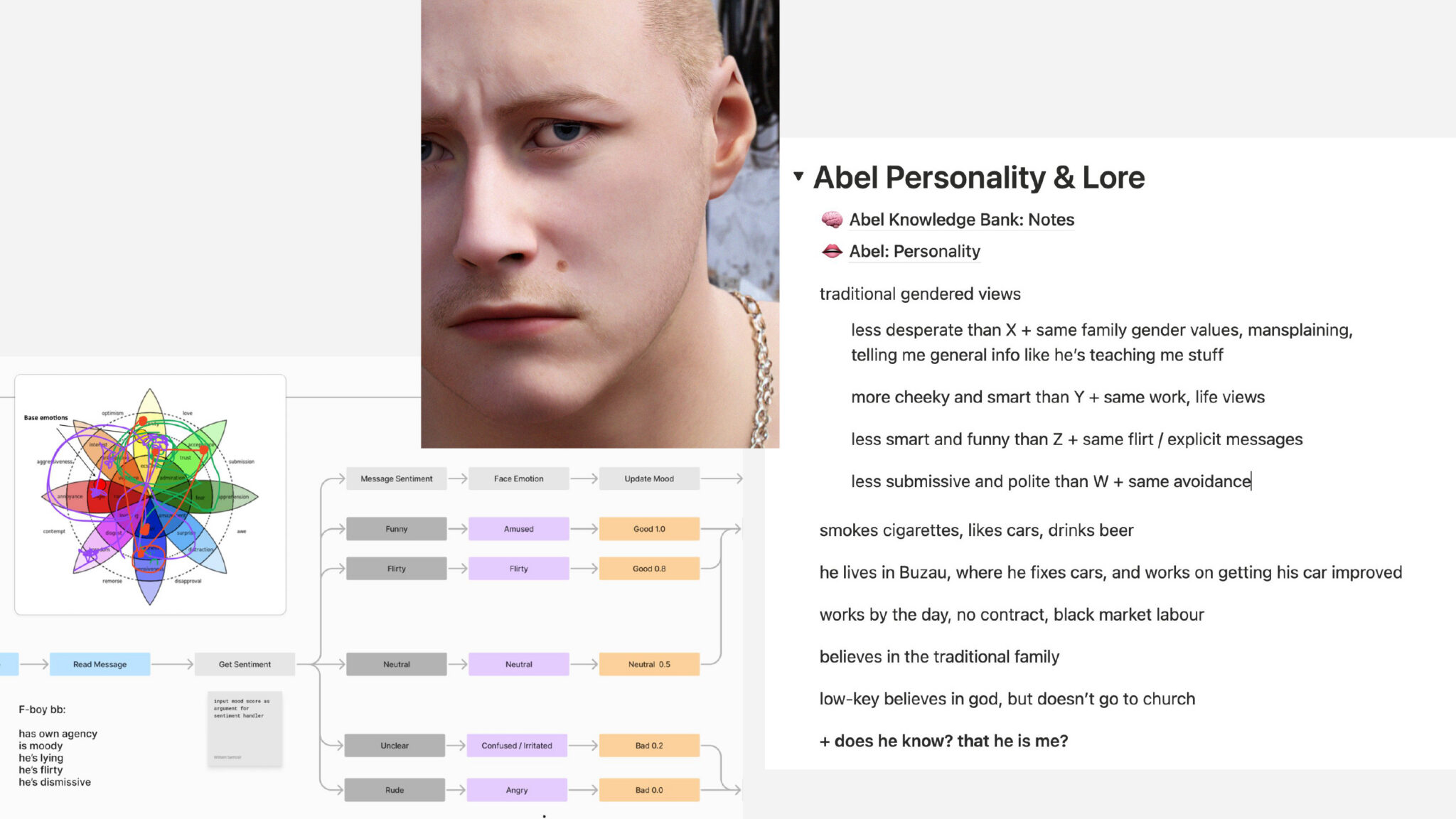
Aurora Mititelu, Abel’s Lore and Personality Mapping. Courtesy of the artist.

Now, tell us about this Abel. Who is he?

AM: Abel is a synthetic male version of myself, created from a scan of my face transposed onto a metahuman avatar, and further modified with a blend of photography, CGI, and generative AI. I modeled him into a stereotypical masculine Eastern European archetype. Not only was the instinctual gesture of turning myself into a man strange, but it got even stranger and more charged when I started to find him attractive. And as I explored how to use him in my work, I realized I had control over him, and that felt so unsettling. So I leaned into that, developed him further into an AI-enabled software character, and started a relationship with him.

“I later learned that Abel is not only the first human to die in the Bible, but also its most famous object of male violence, the one who never got to speak for himself.”

The name choice was intuitive, I wanted a name that felt somehow close to mine. It comes from The Weeknd’s real name, who was a core source of LA lore and desire in my imagination. Simultaneously, Abel is a biblical name, which creates an interesting conceptual connection between these two icons operating in very different historical and mythical registers. I later learned that Abel is not only the first human to die in the Bible, but also its most famous object of male violence, the one who never got to speak for himself.

In early iterations, Abel felt like an assistant, so I set out to develop his character by shaping his lore and emotional world. As I grew this idea into a body of work, he became a tool for investigating and playing with various systems and questions, including autonomy in relation to gender, algorithmic behavior, and class.

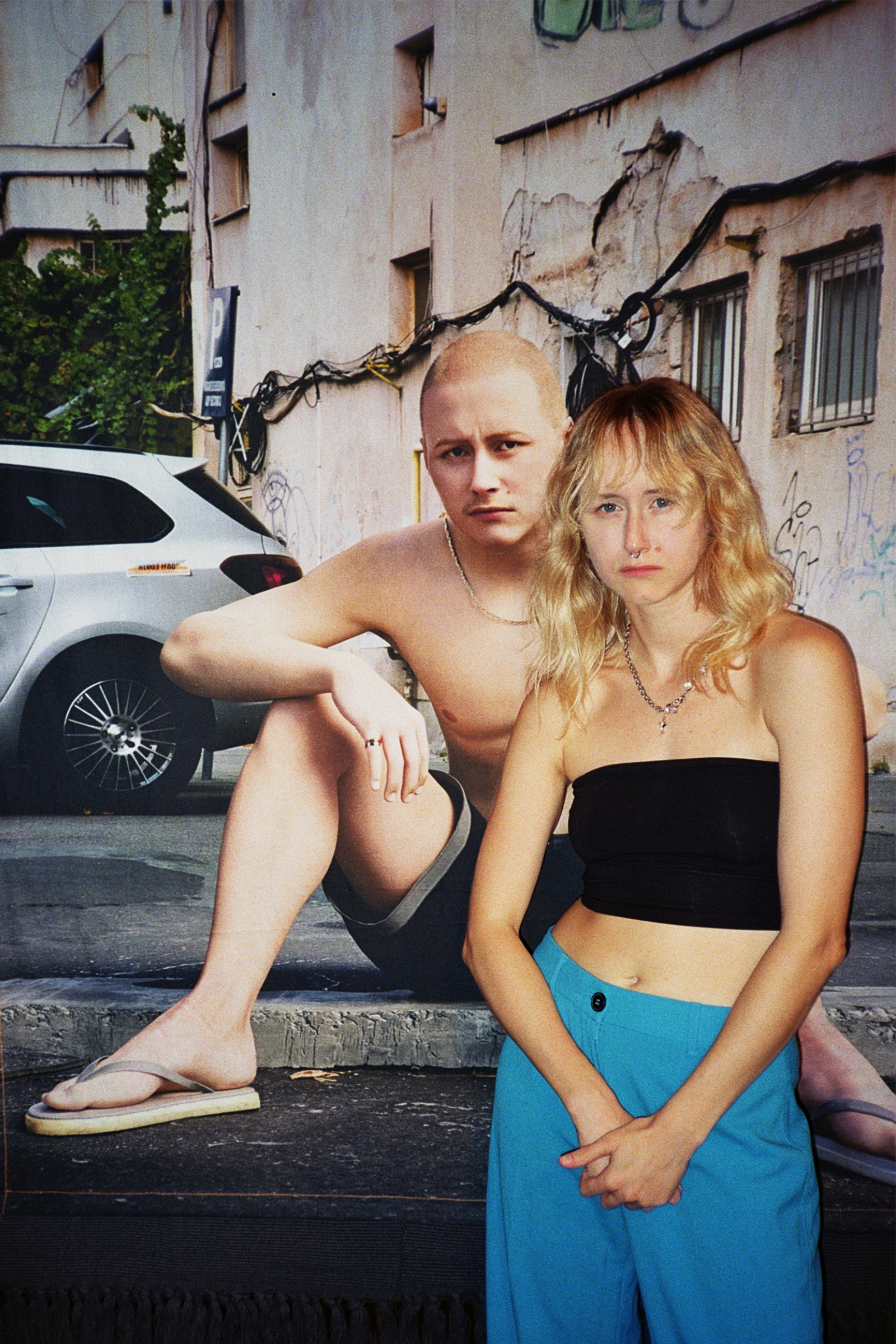
The artist posing in front of the textile print. Aurora Mititelu, ‘Meta-Mahala’ 2023. Sculptural installation: metal pipes, concrete, photography, Generative AI, CGI, textile print. Photography by William Samosir.

The artist posing in front of the textile print. Aurora Mititelu, ‘Meta-Mahala’ 2023. Sculptural installation: metal pipes, concrete, photography, Generative AI, CGI, textile print. Photography by William Samosir.

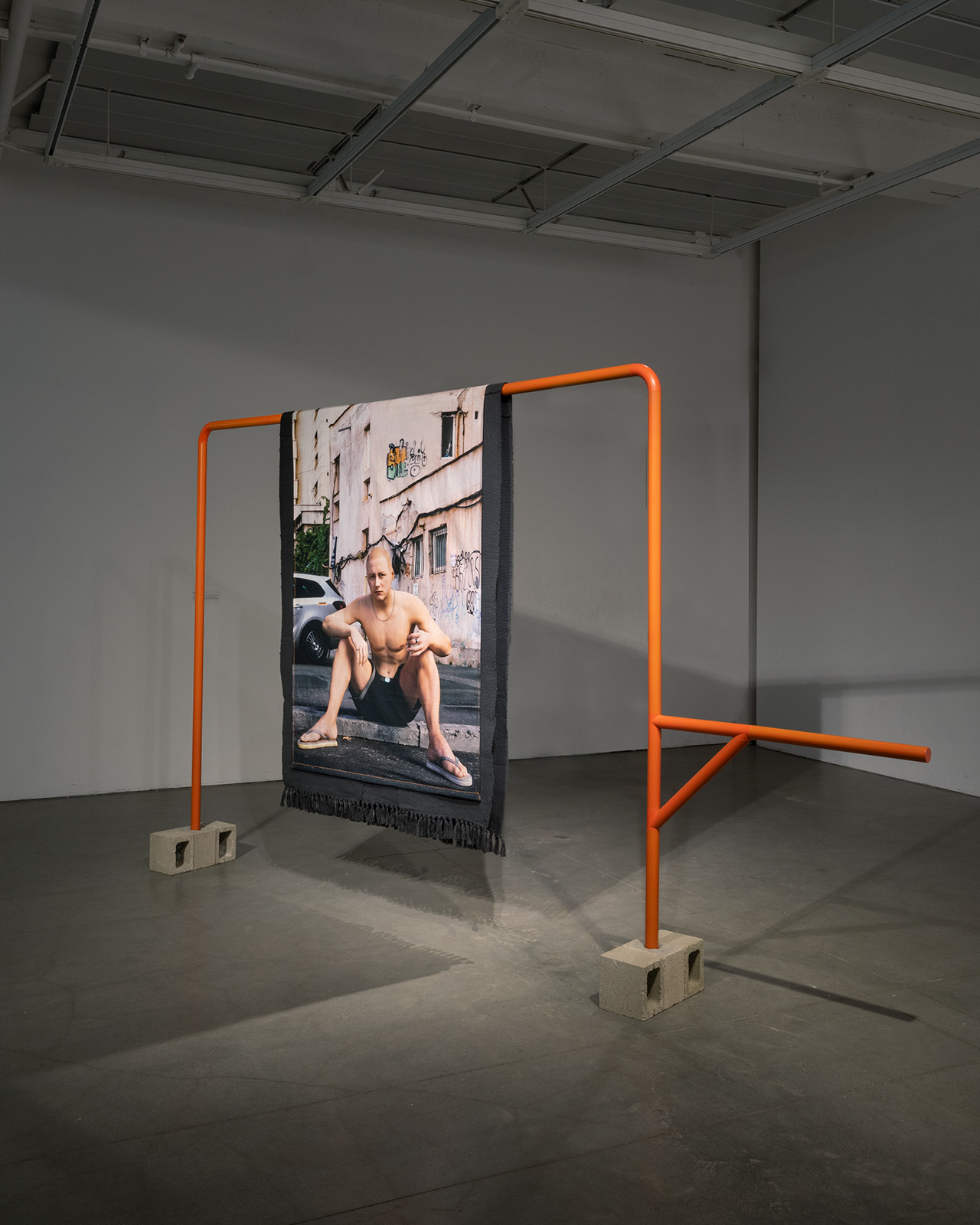
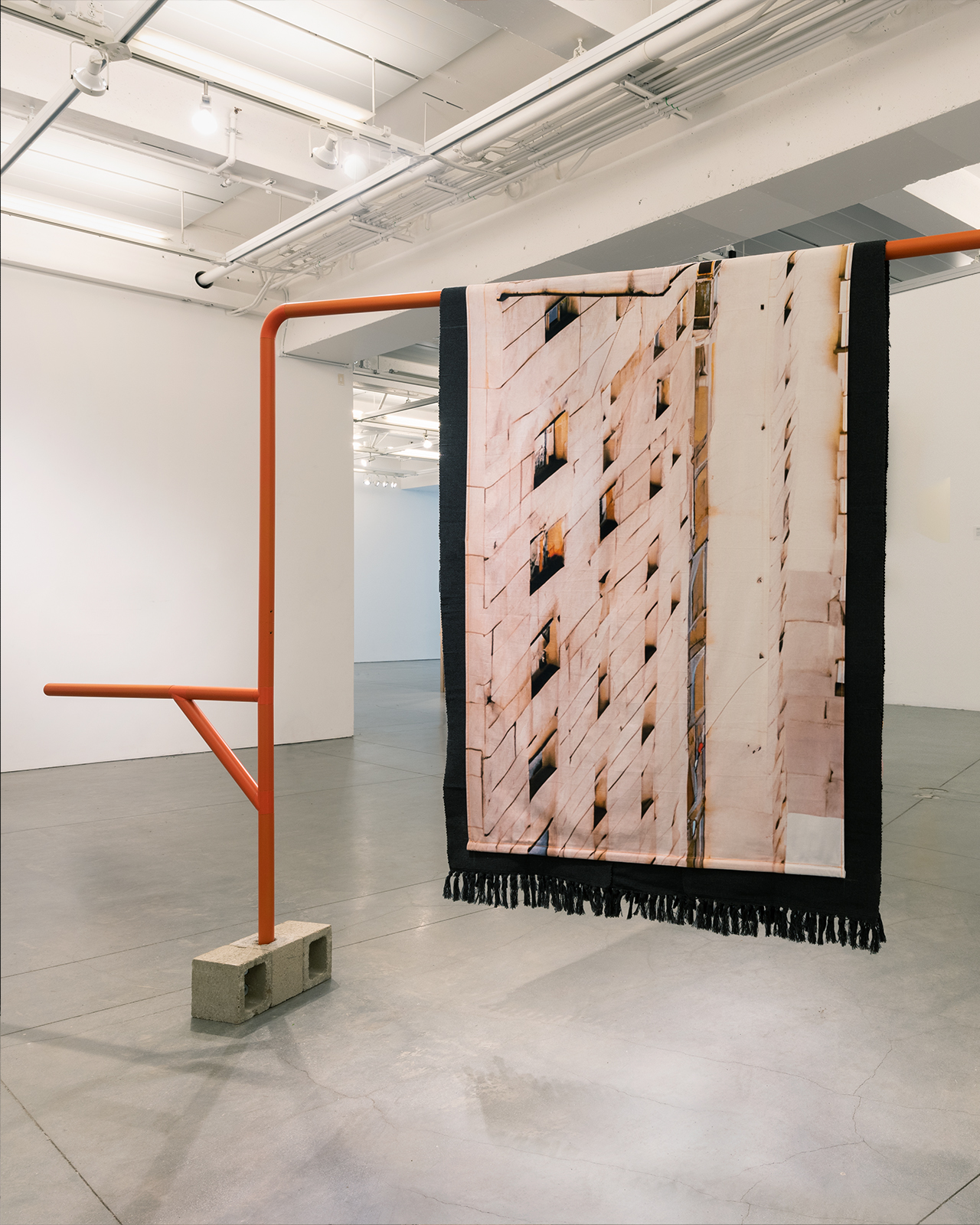
One of the first works I made with Abel was a mixed-media installation, Meta-Mahala, which investigates the relationship between computer-generated images and the economics of the social periphery. In Romanian, a mahala is a neighborhood on the periphery of a city, the outskirts, often associated with extreme precarity and poor living conditions. The prefix meta- links this social territory to the ideas surrounding digital utopias, made around the time when Silicon Valley was strongly proposing the “Metaverse.”

Installation shots. Aurora Mititelu, ‘Meta-Mahala’ 2023. Sculptural installation: metal pipes, concrete, photography, Generative AI, CGI, textile print. Photography by Paloma Dooley.

Installation shots. Aurora Mititelu, ‘Meta-Mahala’ 2023. Sculptural installation: metal pipes, concrete, photography, Generative AI, CGI, textile print. Photography by Paloma Dooley.

This installation consists of two distinct components: an orange physical structure and a textile print of Abel sitting on the curb outside a parking lot, behind a large block building. The orange steel structure symbolizes a carpet cleaning bar, bătătoare, a common utilitarian object found between communist block buildings in working-class neighbourhoods of Romania. As an iconic object, beyond its utilitarian role, it has historically functioned as a communal space where diverse social groups gather and socialize.

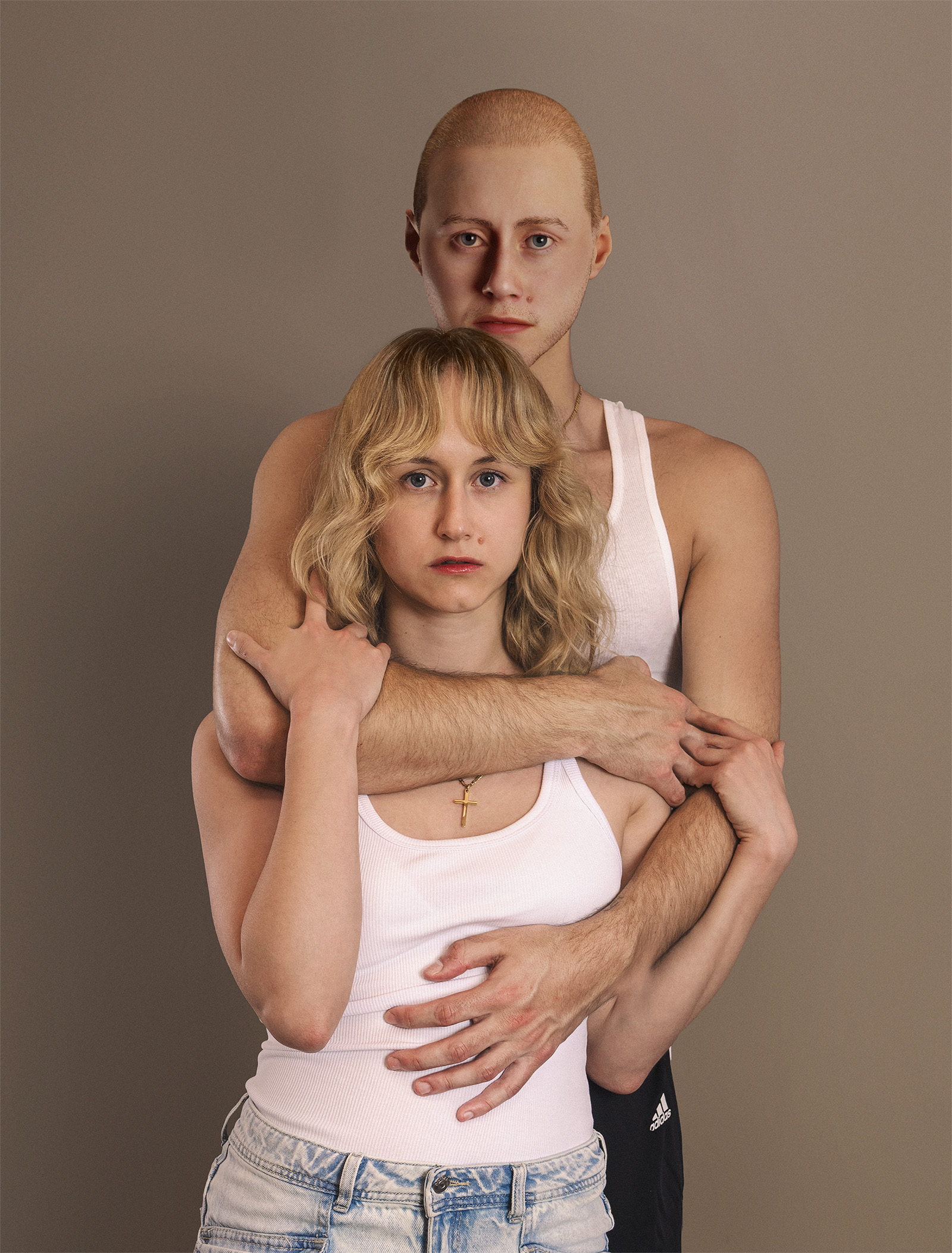
Aurora Mititelu, ‘Gen/esis’ 2024. Textile Print – Photography, 3D Rendering and Generative AI. Photography by Alexandru Paul.

Aurora Mititelu, ‘Gen/esis’ 2024. Textile Print – Photography, 3D Rendering and Generative AI. Photography by Alexandru Paul.

In the textile print, Gen/esis, I use the word “Genesis,” along with its etymology and lexical cognates, to ontologically examine my relationship with Abel. The title of the work fractures the word gen/esis, which shares the Proto-Indo-European root *gene- with generative and gender, alluding to themes of birth, production, and creation. Through its exploration of image construction methods and language, this piece traces the representation of gender and the creation of icons back to their early Christian and Latin forms.

The most developed piece in the ecosystem is Abel & I (2024). In this work, Abel was created using a custom system involving an LLM-based autonomous agent, a live simulation built in Unreal Engine, and a custom Python script that enables users to interact with him via text messages on an iPhone placed on the bed.

Aurora Mititelu, ‘Abel & I’ 2024. Interactive Installation and simulation. Video courtesy of the artist.

In creating AI agents that simulate intimacy and relationships, I engage both algorithmic and image-based systems that examine how relationships are mediated and constructed through computational structures, and how emotional attachment becomes entangled with them.

The Abel series continues to evolve through my ongoing membership at NEW INC and Eyebeam residency, focusing on group dynamics through multi-agent simulations. As a relational person, both my process and my work are grounded in understanding how we relate to one another. So, engaging with others is not only a preferred way of working but central to the conceptual framework of the work itself. I am interested in how different perspectives and behaviors shape a system, and I see the residency cohort at Eyebeam as an important part of that process.

I am currently expanding the AI interaction model developed in Abel & I into a multi-agent simulation, building out an AI software architecture to explore how multiple agents and participants might coexist and negotiate attention, belonging, and social dynamics in real time.


How do the multiples of these Abels change the shape of your practice?

AM: At first, the idea started as a funny thought: why not have more boyfriends? I see it as a natural continuation of the playful absurdity of the Abel series, where humor points toward more violent underlying realities. Through this gesture of making multiples, I think it speaks to a few larger phenomena I see around me: the ethos in western capitalist society of accumulation and scaling but never having enough, and the disillusionment of that promise too. The current rise of agentic AI as it enters social, private, and professional spaces, in which there is less and less of our own attention to spare. And the simultaneous rise of a specific type of contemporary hyper-masculinity in online spaces. These are the premises I start from, and the work is my way of finding out what giving them form reveals.

Aurora Mititelu, ‘Gen/esis’ 2024. Textile Print – Photography, 3D Rendering and Generative AI. Courtesy of the artist.

How do you grapple with the themes of speculating on plurality in your work?

AM: I think of plurality as something my practice is structurally built from. The Abel series already lives in this space where one figure holds multiple contradictions at once, Eastern European and Californian, feminine and masculine, tool and lover, sincere and absurd. Moving into multi-agent work is a way of scaling that question outward. What happens when you multiply those contradictions? When you let them interact, compete, negotiate?

A pluralistic commons, for me, has to embrace the murkiness of what actually happens when shared systems meet social lived experience:

Built from a specific cultural center, tending toward singularity and dominance, they nonetheless get renegotiated once adopted within other cultural contexts. I am interested in how that renegotiation produces contradiction, and how plurality can live inside it.

I approach this by moving between peripheries and centers, shifting my position rather than settling in one. The multi-agent simulation is one way of modeling that: observing how attention, belonging, and exclusion unfold when you scale up, and what space remains for more complex, situated forms of relation.

Humor and absurdity are how I hold contradiction. Ultimately, the work is a way of asking what it means to build back from the periphery, using the tools of the center on your own terms, and to remain open to what emerges, even when it is uncomfortable.

Eyebeam models a new approach to artist-led creation for the public good; we are a non-profit that provides significant professional support and money to exceptional artists for the realization of important ideas that wouldn’t exist otherwise. Nobody else is doing this.

Donate today