
Page contents
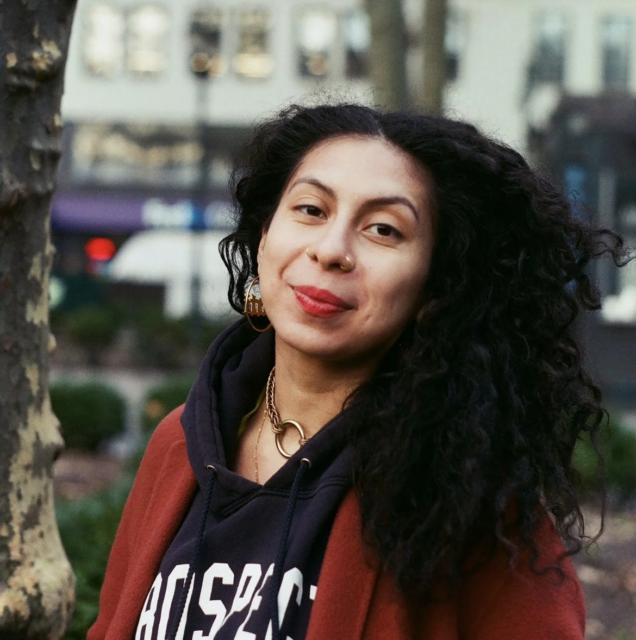
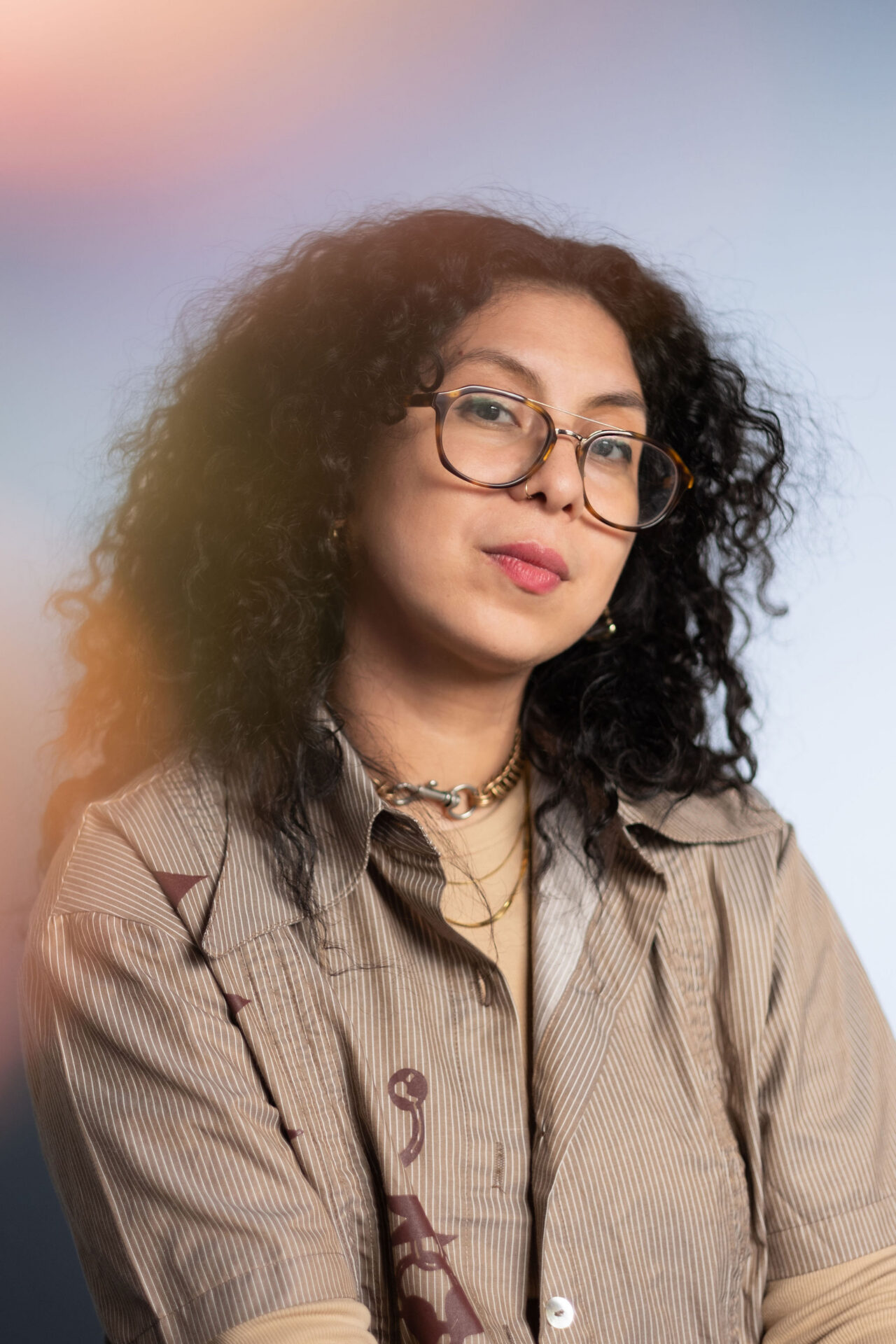
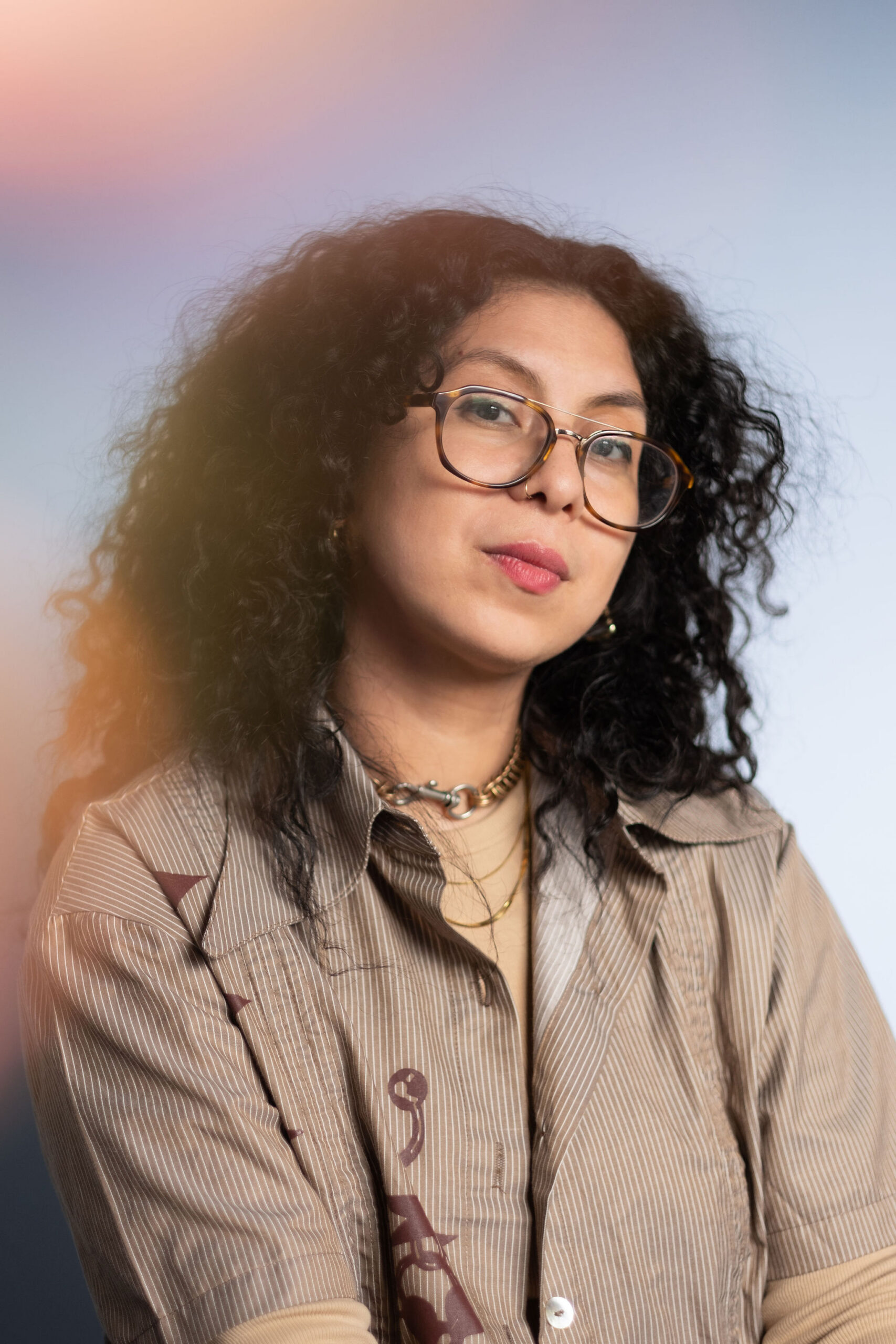
Pictured is artist, dre jácome, a brown femme with big black curly hair with gold hoops and nose rings smiles wearing a light cool brown shirt.Pictured is artist, dre jácome, a brown femme with big black curly hair with gold hoops and nose rings smiles wearing a light cool brown shirt.

Portrait of Eyebeam resident, dre jácome. Image Credit: Chanel Matsunami / Gidra Studios.

With Dre Jácome
Pronouns
She/her
Date and place of birth
b. 1992, Atlanta, GA
Current location
Brooklyn, NY
Year(s) of residency and/or fellowship
2026, Speculating on Plurality Resident

Special to Feed


Artist Bio

dre r. jácome is an Andean transdisciplinary artist, storyteller, and strategist inspired by magical realism and the survival arts of everyday living. Drawing from her studies in history, herbalism, and interactive technology, she weaves across digital and land-based technologies to honor and defend BIPOC knowledge systems held in story, nature, and recovering cosmologies. Her practice is grounded in relational methodologies—archival research, oral history, critical ethnobotany, and long-term partnership with organizations and chosen family—and indebted to years of working alongside solidarity economy, abolition, and popular education movements across Philly, NYC, and Bogotá. Currently, she serves as the communications director at the After Violence Project.

Tell us about yourself.

DJ: My name is dre, and I am many things: a storyteller, communications strategist, and an artist. And here, for the residency, I will be thinking about how to build on this ongoing project, Earthseed, that I have been walking with for close to four years now. It’s an ongoing storytelling installation that encodes oral history interviews into seed-like sculptures; it’s an experimental archive that sits at the intersection of oral history, physical computation, and land-based knowledge.

I come to this work through a riot of cross-references and a desire for different tactics of storytelling and storykeeping. I think of myself as an artist by accident.

In school, I studied History and Latin American Studies, focusing on Black and Indigenous histories of struggle and resistance across the Americas. My twenties had a lot of chapters: co-founding street art collective #tintedjustice, co-directing community organizing at Girls Rock Philly, stewarding communications for worker cooperatives in NYC, teaching herbalism and tending gardens across the city. Across all of it, I kept finding myself in positions of holding collective stories—ghostwriting, designing the pamphlet, thinking through information architecture for multilingual organizing, bridging narratives into calls to action. I took on positions of responsibility pretty early (eldest daughter of immigrants, surprise surprise). My herbalism practice offered important balance: a tool for personal healing and for repairing my relationship with ancestors and ancestral homelands.
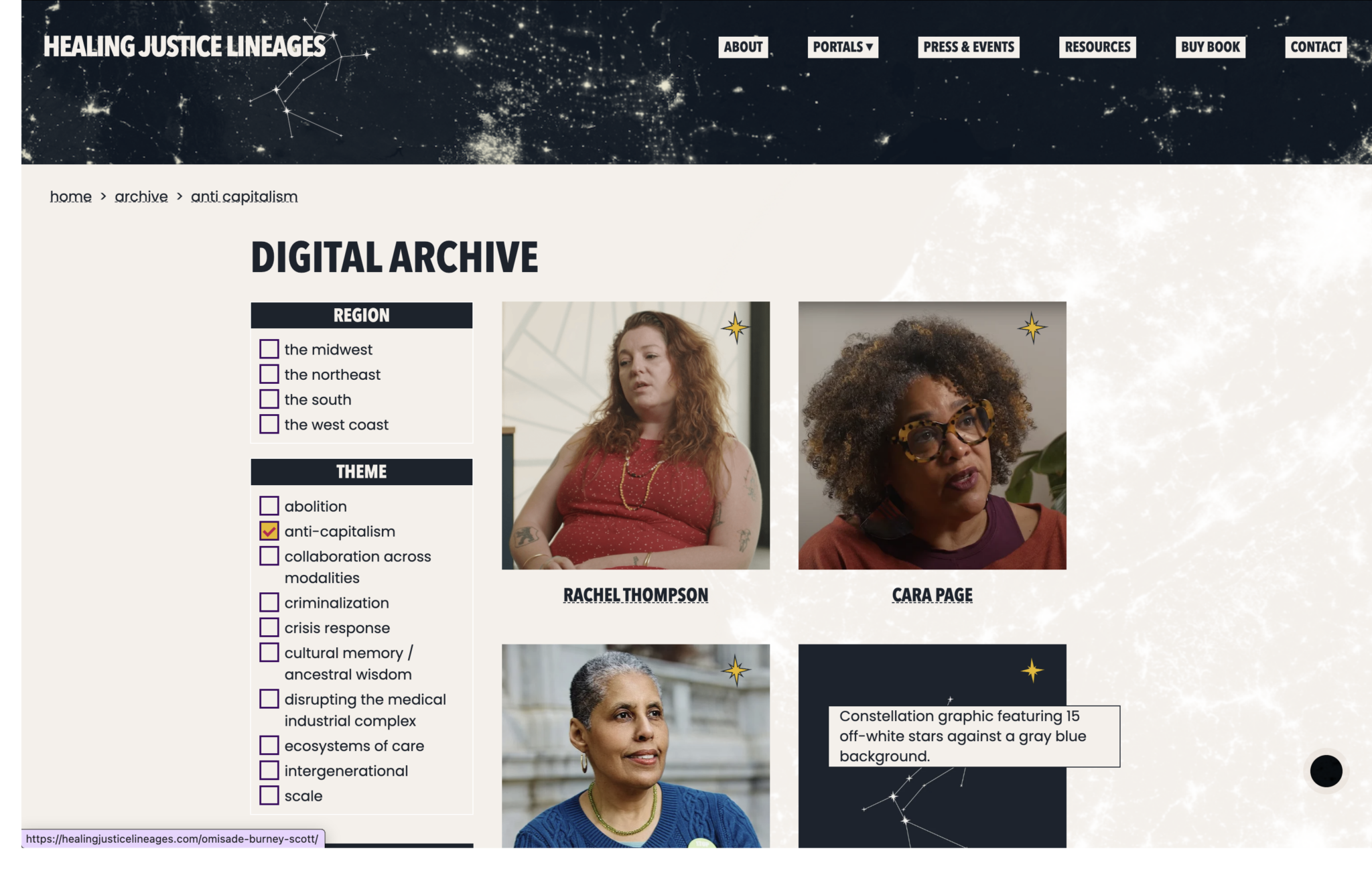
Screencapture, of the Healing Justice Lineage’s digital archive.

My role has shifted over time—from organizing to communications strategy, where I often think through whether and when stories are ready to be shared, and the best distribution strategies and technologies. Most recently, I was the archive producer for the Healing Justice Lineages digital archive, where I worked with editors Cara Page and Erica Woodland and led the process of interviewing abolitionist healing justice practitioners across the country, as well as the collaborative editorial process for the archive and political education tools. Currently, I work at a community archive documenting the impacts of state violence.

Love the Octavia Butler reference.

DJ: ‘Earthseed’ is a nod to Octavia Butler, who is one of my many teachers. Someone I think a lot with.

In Butler’s Parable of the Sower and Parable of the Talents, Earthseed is a speculative religion created by the character Lauren Oya Olamina, who suffers from hyperempathy, causing her to share pain and pleasure with any living human she comes into contact with. After being displaced when an organized raid by outsiders destroys her town, we follow her on an odyssey set against the backdrop of dystopian societal collapse, as she finds community and, through it, slowly unearths a new religion, Earthseed. It is a religious system that holds Change as its core, that “God is change,” and believers can “shape God” through conscious effort to influence the changes around them. Overall, it offers a cosmology of survivance (survival and resistance).

dre jácome, corazón de melón, 2024. Interactive web app, HTML, JavaScript, CSS.

Butler’s work is a cautionary tale. People have reached for it, especially in this current polycrisis, citing her eerie foreshadowing with phrases like “Make America Great Again.” But when I first read her 10 years ago, I came to the story through a different door, as the child of a displaced immigrant mother from Colombia, a country devastated by decades of violence and the war on drugs. For me, Olamina’s story wasn’t a warning about what might come. The story felt like an account of what had already happened. In my mother’s family’s case, they were forced to leave their village, a small town between Atlantic coast of Colombia and Magdelena River. The village was occupied by unclear actors. The community archive was burned. People went missing. I didn’t live that experience, but I inherited much of the disconnection, absence, and familial divisions it left behind. 

As I came to be an organizer, what I resonated with most was the offering of a cosmology—a shared spiritual compass for navigating an unraveling world. As someone two generations displaced from Kichwa-speaking, as an organizer trying to make sense of growing up in the South and later Philly and later NYC, I recognized in Olamina something I had been reaching for: the importance of a belief system, a reconnection to land, a way of holding together what displacement had scattered.

What does land mean to you?

DJ: While I was studying and practicing herbalism, I was thinking critically about the role of herbalists and healers, and the responsibilities that they have within communities, as the war on drugs continues to ravage the lands and the people stewarding them. While wellness and homesteading are major trends in land-based practices, how do we grapple with repair while the economies that played such a significant role in our displacement persist? Where does herbalism fit into the material history of land and labor?

As part of this inquiry, I looked into the history of the coca leaf, an indigenous plant originally cultivated for thousands of years across the Andes in Bolivia, Colombia, Ecuador, and Peru for medicinal, social, and religious purposes. It has gone through many iterations of colonization, criminalization, and extraction, with Spanish colonizers banning it for the use of religious ceremony but intending to keep it in order to drive the production of enslaved Indigenous labor in the silver mines. And in the 1800’s, with the rise of the Western pharmaceutical industry, it was co-opted and perverted for another use when European chemists extracted it to produce the alkaloid Cocaine. Given our geo-positioning, Coca might sound niche, but the politics here have affected my family. 

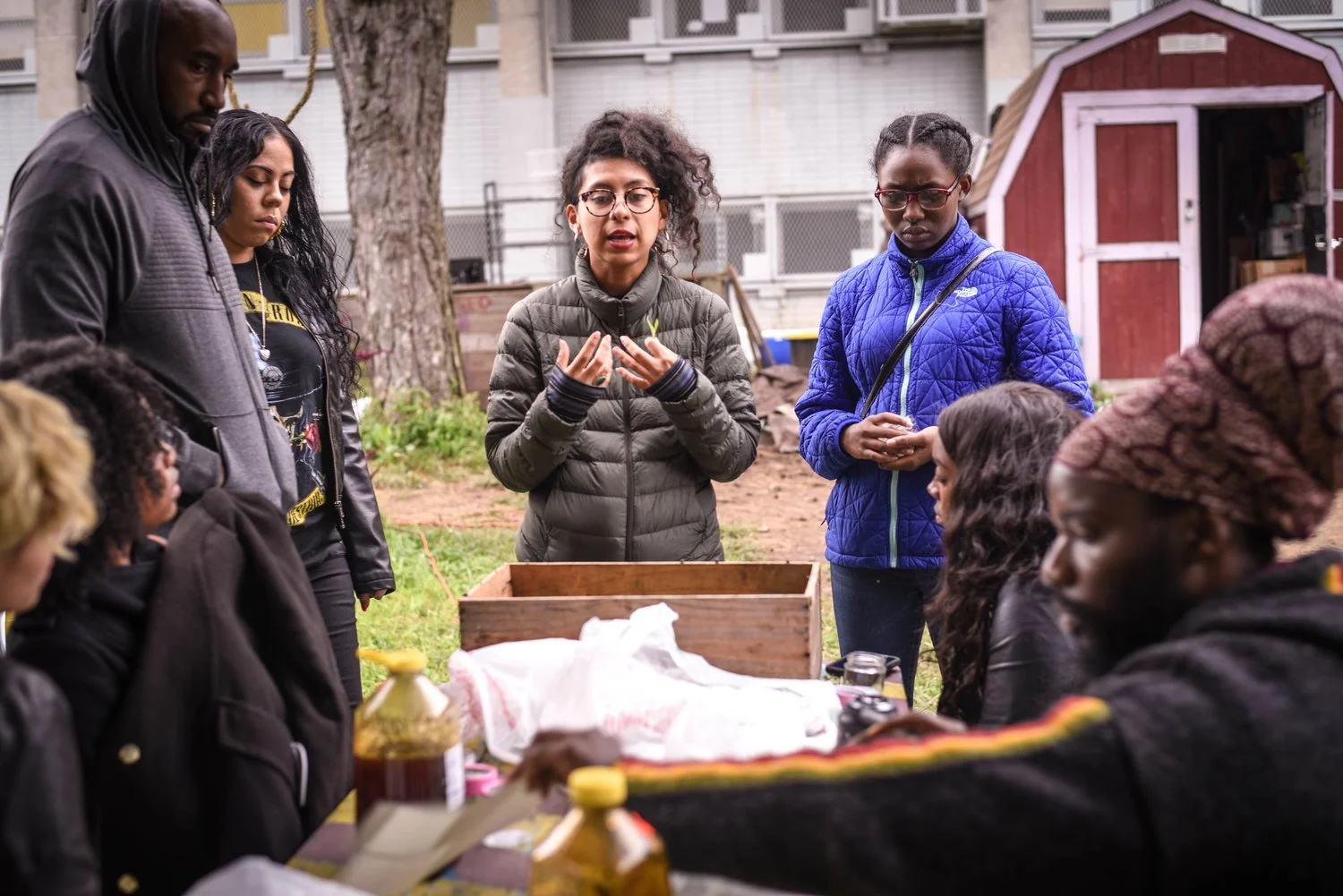
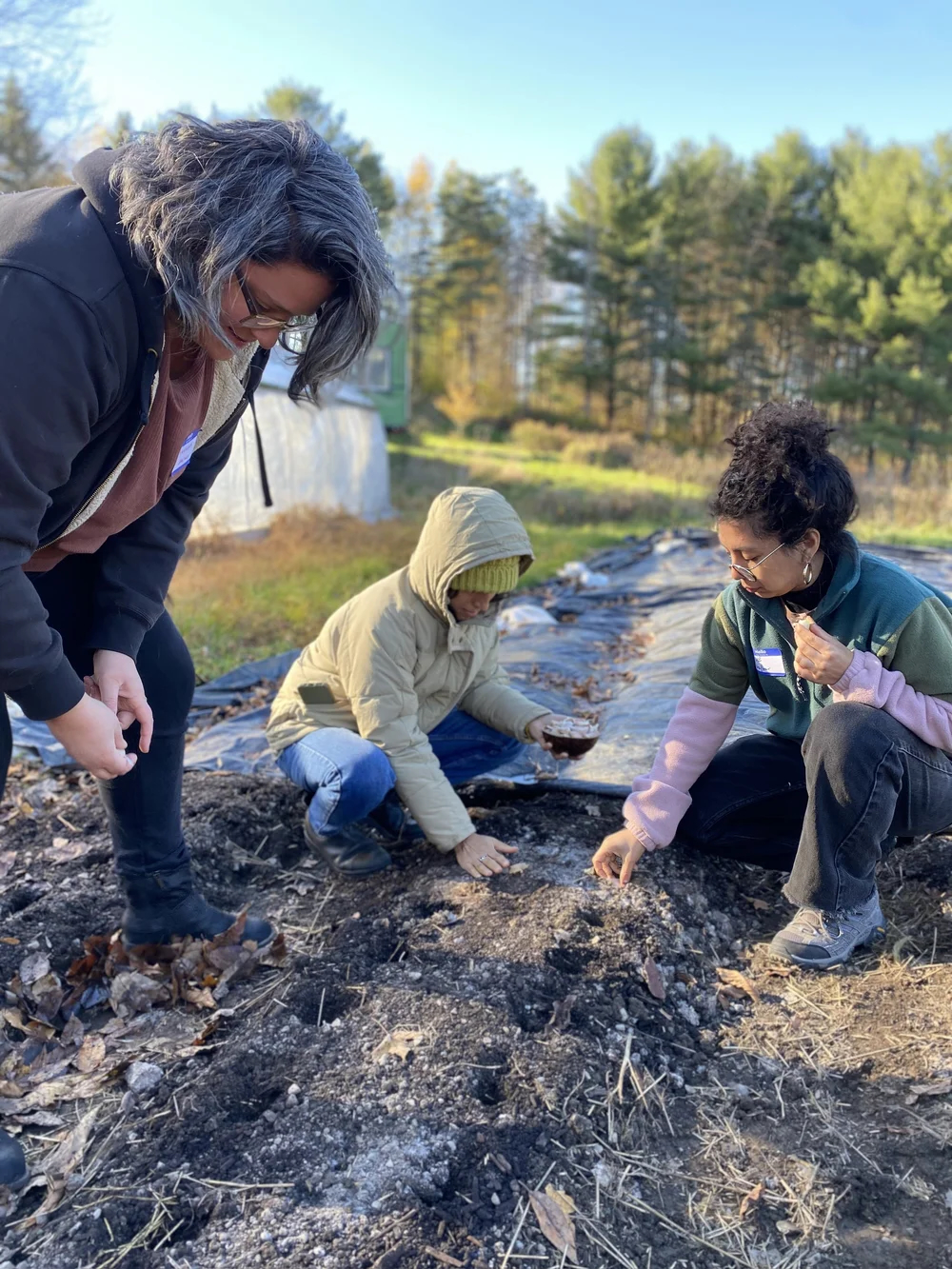
Artist Dre Jácome leading a workshop on Plant Medicine at a community garden/farm. Image courtesy of the artist.

In a research project, COCA ROSA, I drew connections between the development of industrialization around the coca leaf and roses. I was curious about roses because Colombia became one of the largest exporters of roses and cut flowers after the introduction of the North American Free Trade Agreement (NAFTA).

Native to the Persian region, the climate of Colombia provides the optimal conditions for mass growth. Before there was NAFTA, there was the Andean Pact (1969), then rebranded as the Andean Community in 1996, and then the proposal of the Andean Free Trade Agreement and expansion of the Andean Trade Promotion and Drug Eradication Act (ATPDEA), large neo-liberal policies driven by overarching international conventions and trade conditions that led to the criminalization of ancestral medicine. These conditions created subsidy programs for farmers to leave the underground, communal economy of the coca leaf for a more “legitimate” market of roses, enacting a further epistemicide that cleaves indigenous stewardship of lands in favor of international interests.

There’s a lot of shared history in the migrations of plants and people, with many overlaps in both the extraction of labor and resources and in how these move across borders. Plants’ biomechanics are a great reference point for modeling and reflection. 

The former Colombian President Cesar Gaviria, in a Wall Street Journal op-ed, once said, “to save Colombia, you have to buy its roses” (1990). Under a capitalist, neoliberal system, we project onto nature, while land and labor are morphed to conform to market economies rather than to non-extractive embodied stewardship, severing Indigeneity from these practices.

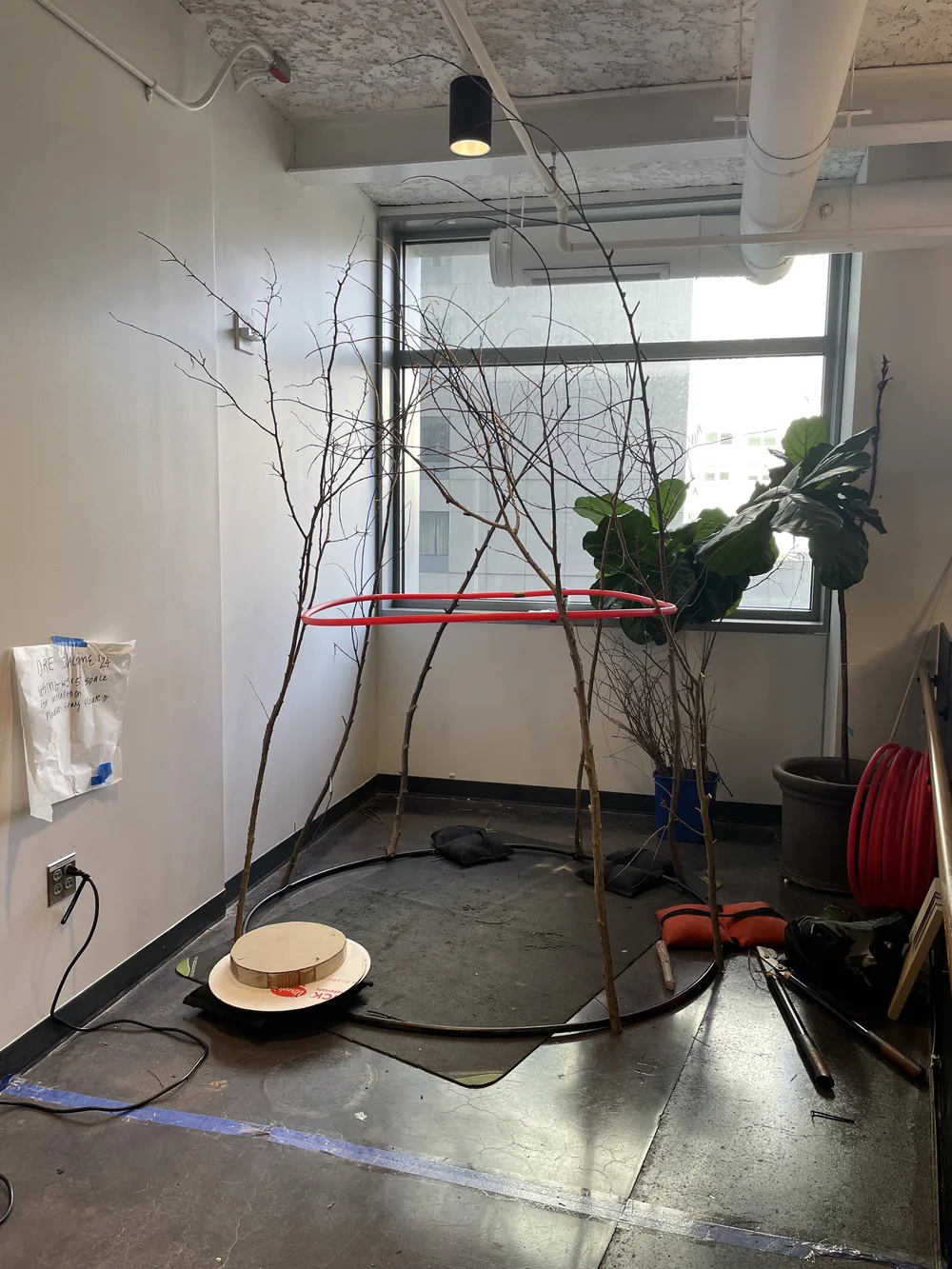
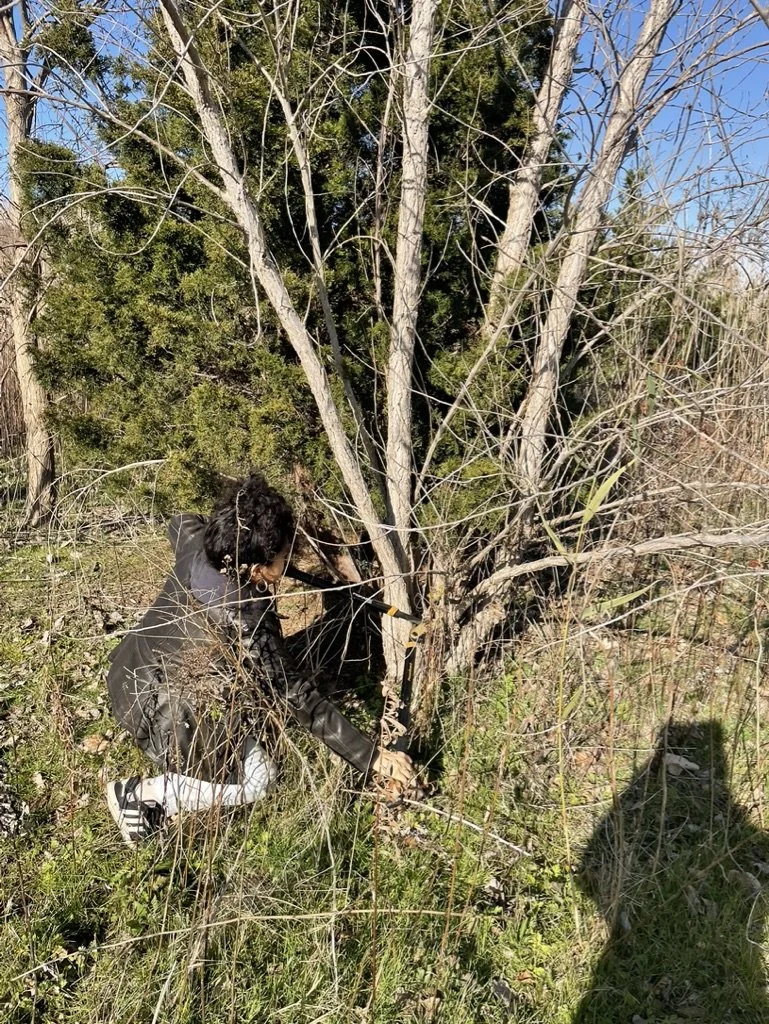
dre jácome, 'earthseed: freedom,' 2024. (Behind the scenes)

Like Olamina and the community in the Parable series, who develop Earthseed through this iterative process, your work has undergone many transformations. Where exactly did this journey start for you?

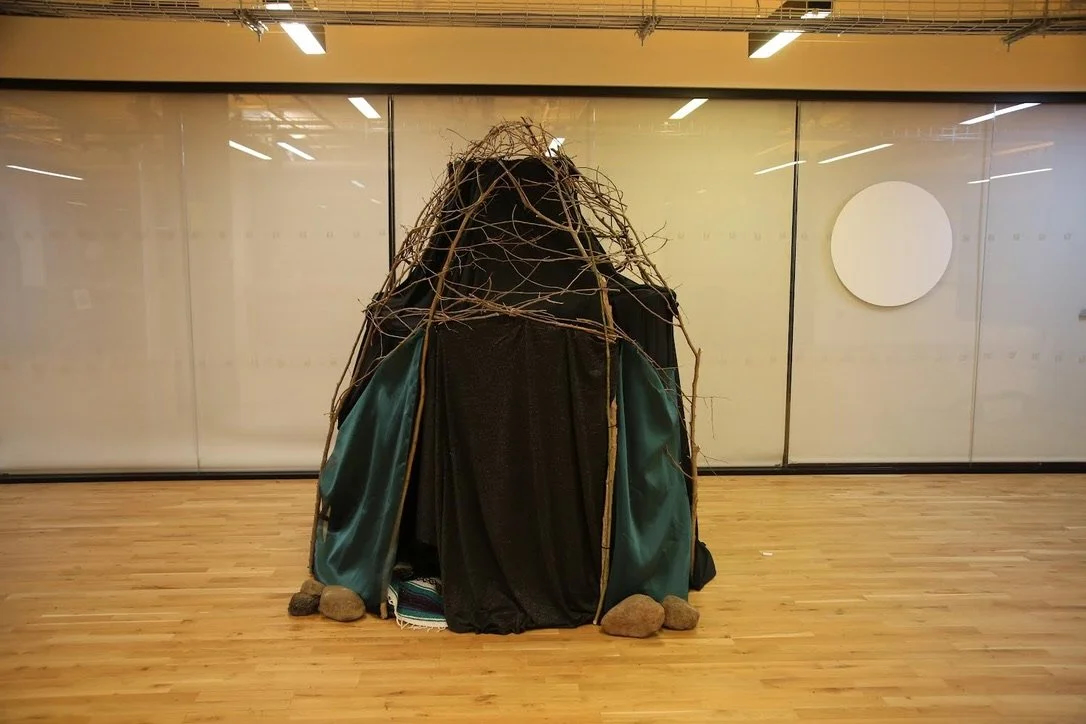
DJ: Earthseed began as part of my healing journey after a difficult abortion in 2022, the summer Roe v. Wade was overturned. I had a lot of susto to work through, unearthing what sovereignty looked like in my body and all that it has stored. The tools that helped most were ceremony and voice notes from loved ones. Especially my friends Quetzi and Tati who shared temazcal and sweat lodge ceremonies with me during that time. I won’t say more because that’s not medicine to share, but the experience really touched me and allowed for my own rebirth, in a way. It had me reflect on the importance of site-specific storytelling, songs shared in the dark and on the land. 

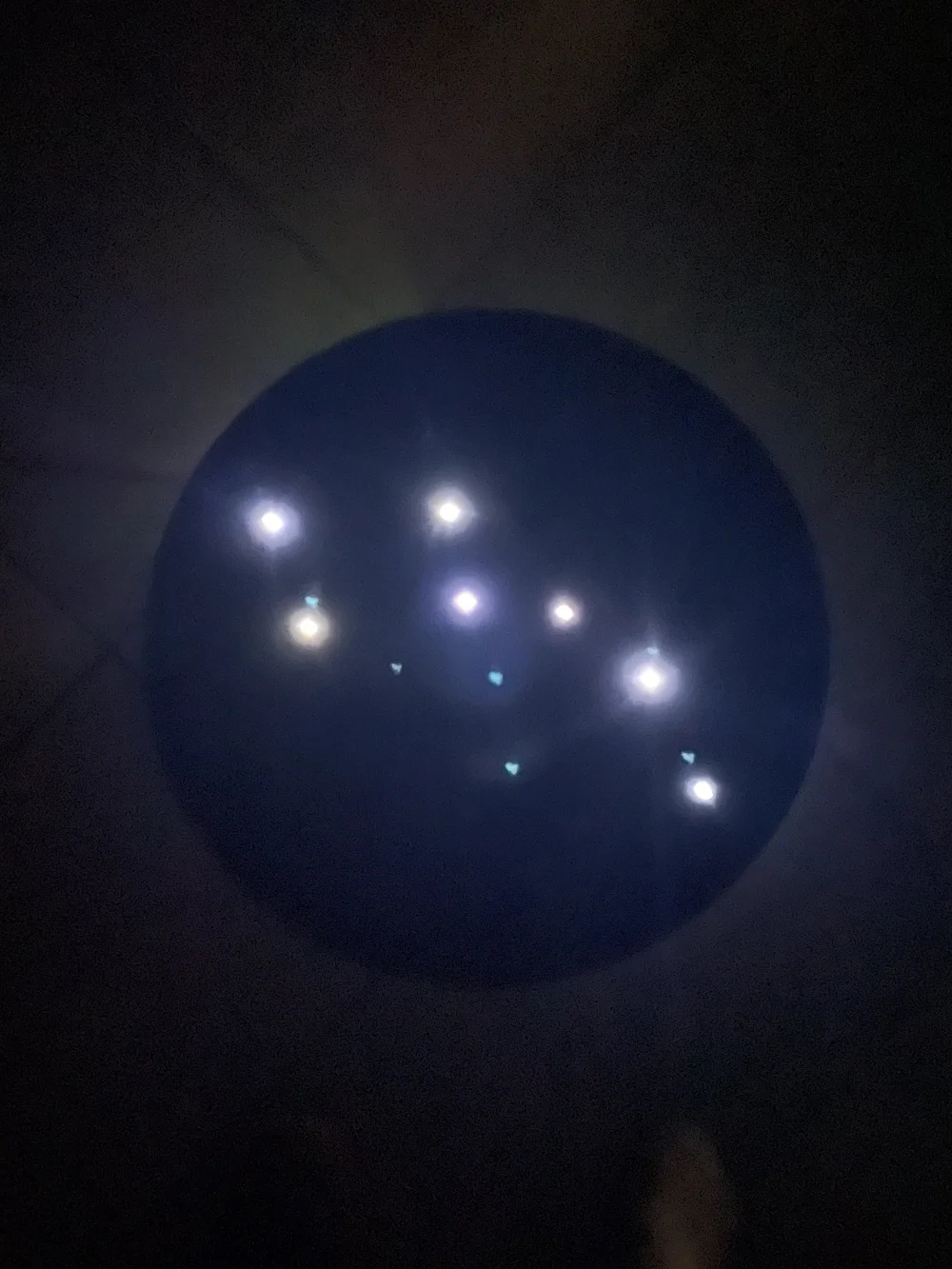
At the same time, I was inspired by the sculptures of Salvadoran artist Guadalupe Maravilla. It was a compelling example of an art form that just didn’t sit silently just as an object in a gallery but they were works that became alive and activated through sound rituals, becoming also a healing tool for communities, namely undocumented communities as well as those impacted by cancer. As someone who never had a creative practice that was about art for art sake, making tools like this really resonated. And so I was interested in merging these influences: taking the temazcal structure, comforting voices, and housing them together — encoding stories onto a constellation of LED lights inside an intimate enclosure of natural fiber. Together, a healing site of refuge.


dre jácome, 'earthseed: freedom,' 2024. (Behind the scenes)

In this iteration, I worked with archival audio recordings from chosen ancestors and teachers whose work has shaped my world view—Gabriel Garcia Marquez, Oswaldo Guayasamin, Nina Simone, James Baldwin, Toni Morrison, and others. Teachers who spoke to me, and made survival make sense. I was interested in taking these big names and distributing them, somewhat anonymously, into stardust composing a constellation. Each elder’s audio was represented by a star, connected as a touch-powered constellation, inviting visitors to activate their stories in a small, dark, enclosed space.

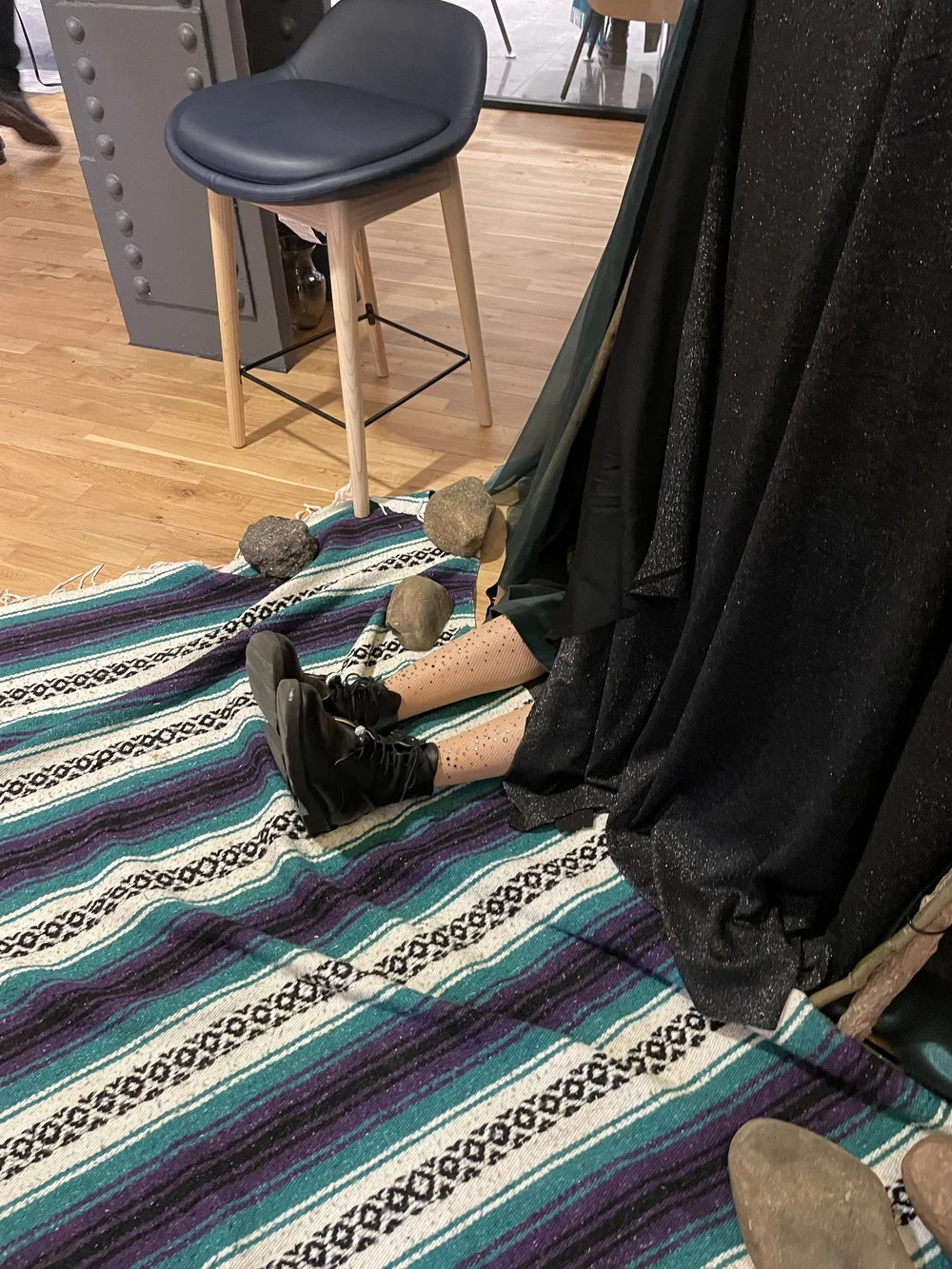
The build was a prototype—largely for myself—testing how I felt about this kind of mixing of these indigenous and modern technologies. There were a lot of navigating constraints: making it in NYC, indoors rather than on the land. It lasted about two days before I had to break it down.

*p5.js: an open-source JavaScript library used to teach code and make art, built by a community of designers, programmers, and educators. 1.0: https://p5js.org/, 2.0: https://beta.p5js.org/.

dre jácome, ‘earthseed: freedom,’ 2024. Photo courtesy of the artist.

How did you land on Kinship

DJ: In this iteration, I wanted to think through what it would take to house intimate stories from oral history interviews and protocols of access. And revisit how to house them in a different relational form in ways that honor land-based wisdom in a nuanced way.

The form evolved out of an earlier apprehension — I didn’t want to reference temazcales outside of their context. That version was largely for me and not really anyone else outside of my close circle. And so I returned to an ordinary sculptural form I had long admired in a different context: pinecones. 

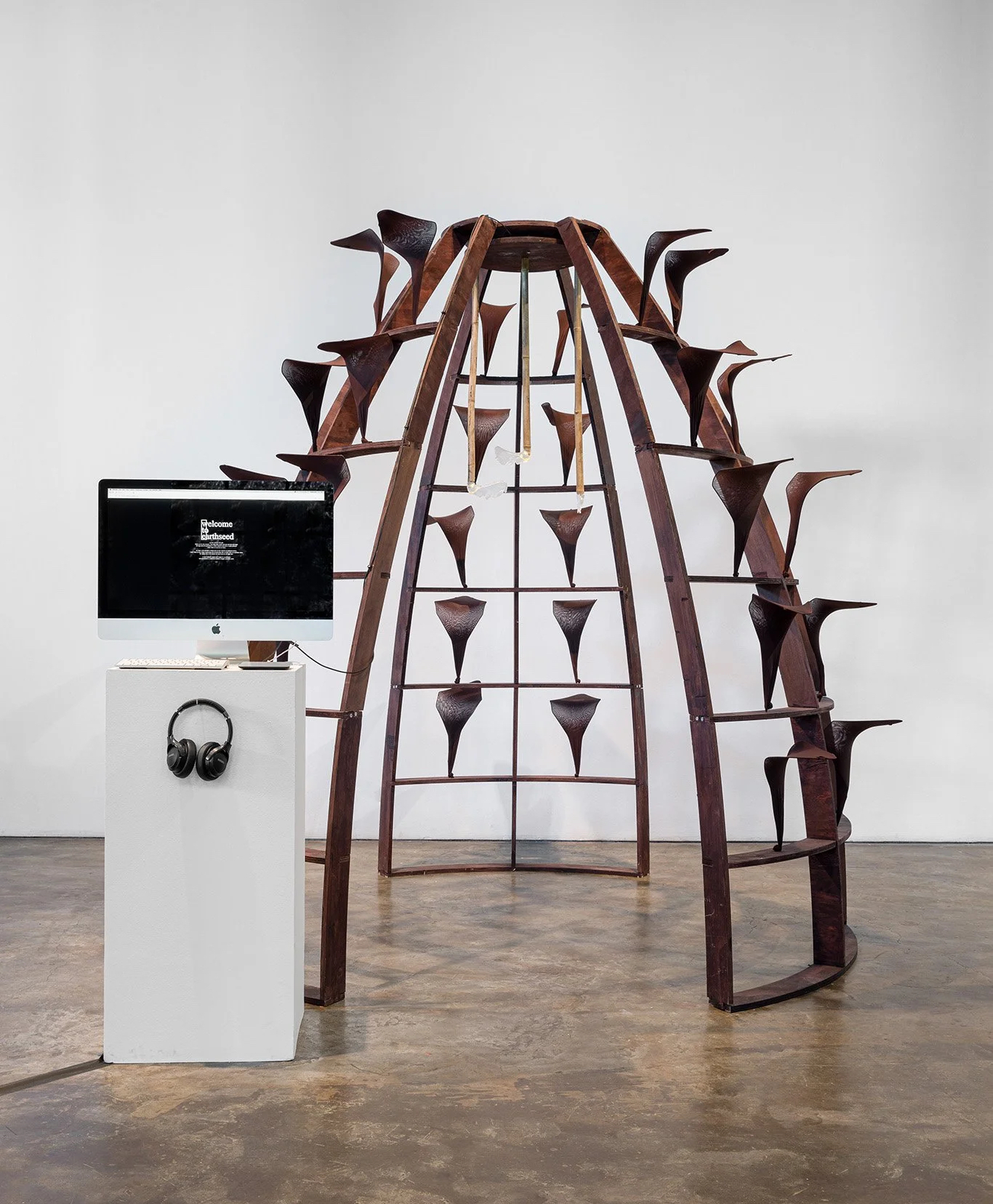
What drew me was their discretion. Pinecones have been doing the work of protection and discernment over its seeds for millennia — opening and closing according to conditions of temperature and humidity, sharing their seeds only when conditions are right. That mirrored something I was already thinking about: the way intimate knowledge moves selectively. The same story is told differently between close friends than it does between a grandchild and grandmother, or between strangers. We make these decisions all the time, discerning what to share, with whom, and when. The pinecone’s biomechanics became my muse for reimagining protocols of access. Rather than a direct reference to ceremony, we step into an eleven-foot pinecone, and the stories are encoded into seedpod lights suspended from the ceiling — activated by password and touch, revealing themselves only when conditions are met.

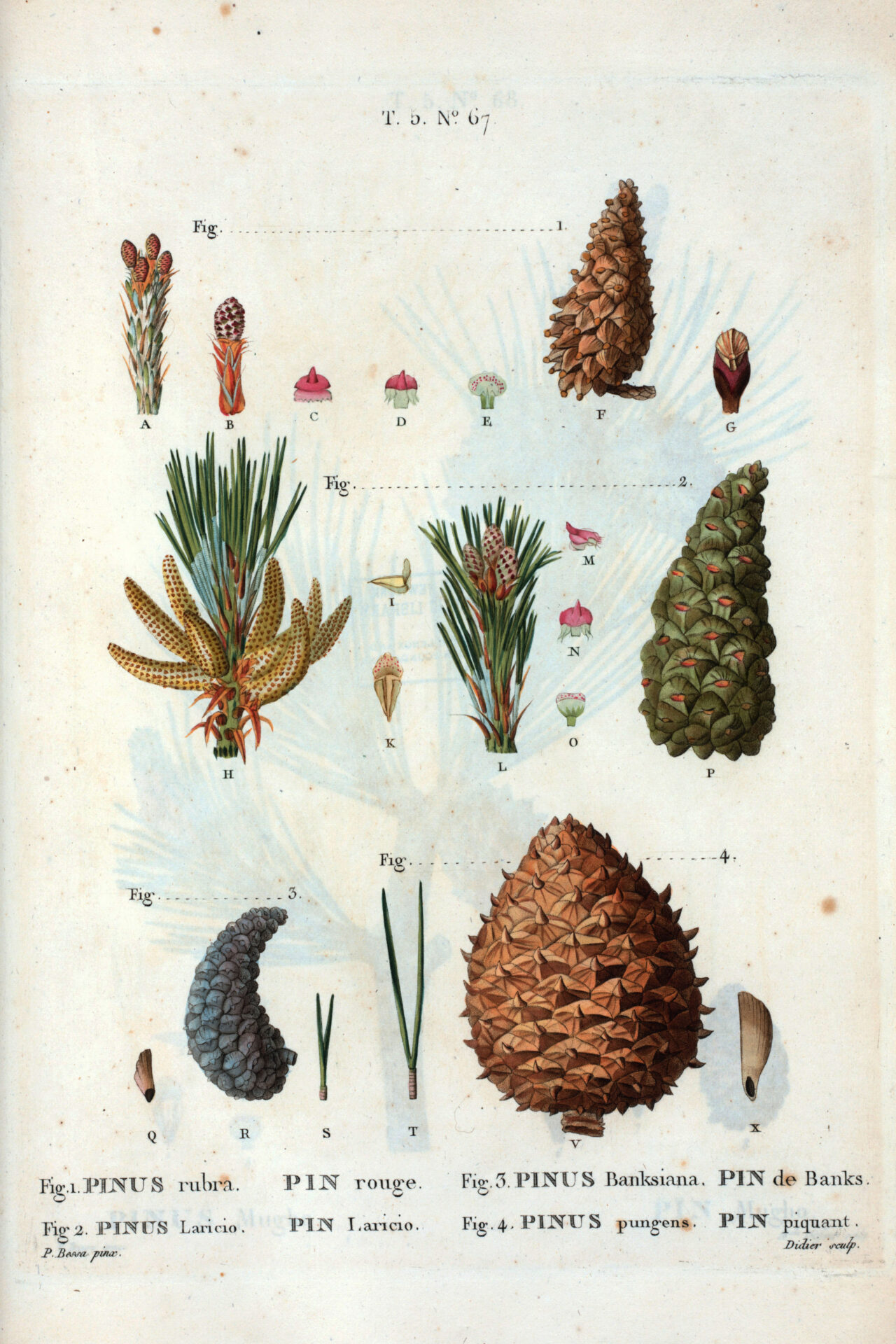
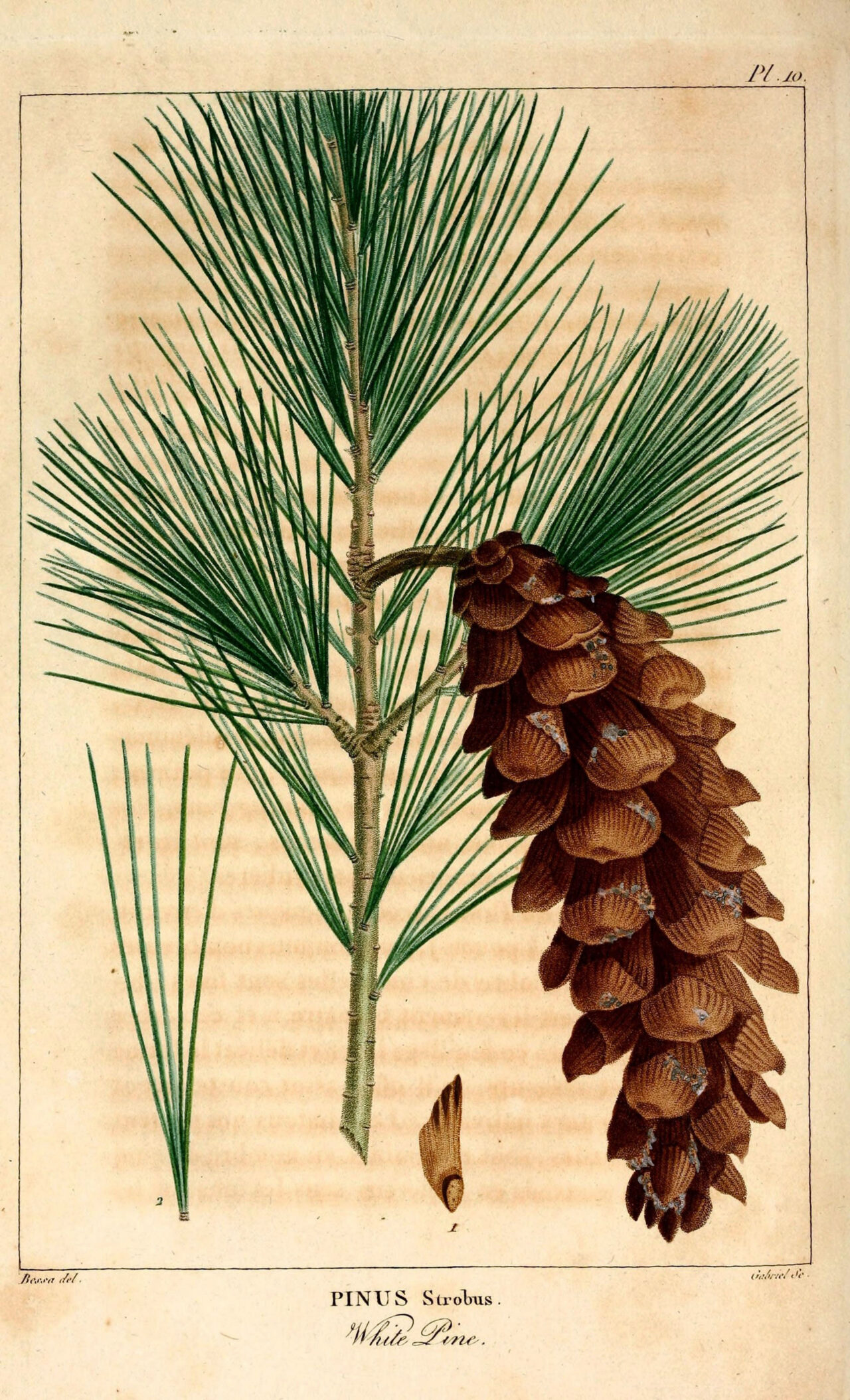
Botanical Illustration of Pine Cones

Picea rubens, commonly known as red spruce, is a species of spruce native to eastern North America, ranging from Nova Scotia to eastern Quebec and south-eastern Ontario, and south through the Adirondack Mountains and New England along the Appalachians to western North Carolina and eastern Tennessee.

Pinus strobus, commonly called the eastern white pine, northern white pine, white pine, Weymouth pine (British), and soft pine is a large pine native to eastern North America. It occurs from Newfoundland, Canada, west through the Great Lakes region to southeastern Manitoba and Minnesota, United States, and south along the Appalachian Mountains and upper Piedmont to northernmost Georgia and very rare in some of the higher elevations in northeastern Alabama.

For the interviews themselves, I wanted to work with someone I was already in deep relationship with — where there was enough trust for this sort of experimentation. Ximena Violante is a transmasc cultural organizer and musician rooted in son jarocho, an Afro-indigenous musical tradition from Veracruz, Mexico. We’ve been chosen family for over ten years as collaborators, witnesses to each other’s journeys of learning and unlearning. Just as land has been my teacher, music has been their compass toward reconnecting with ancestral traditions and building community power. Through a methodology of reciprocal oral history interviews, we reflected together on what the land, our bodies, and our friendship have taught us about our own respective path of reconnection and survivance. 

I’m grateful to Ximena for extending their trust in this experiment. And to the Oral History Summer School, whose methodologies pushed me to rethink, slow down, and honor smaller archives.

These interviews are collaged alongside excerpts of political speeches from Land Day protests in solidarity with Palestine. At a time when I was involved with student organizing, it felt important to make clear that landback is not only an aesthetic or a metaphor — it is material. Much of the first fabrication happened at NYU, and I wanted a vibe check built into the work. There’s a computer station at the entrance housing a website — and a passcode. To enter, visitors must complete the phrase: from the river to the sea, Palestine will be free.

Note for readers: pinecones (megastrobilus, seed cones) contain ovules, so when they’re fertilized by pollen, they become seeds. They can open and close in response to environmental conditions, especially to wind factors and humidity. When it’s warm and dry, pinecones open to release their seeds or take in pollen, and if it is wet and humid, any water that falls into the center through the scales causes the cone to close. They are open to sharing their seed, especially when the conditions are right

Installation view. dre jácome, ‘earthseed: kinship,’ 2024. Image courtesy of Smack Mellon. Photo by Etienne Frossard. Smack Mellon 2024 Emerging artists Summer exhibition.

How was the process of building out this newer structure for Earthseed?

DJ: As far as the physical build, it was a steep learning curve with Fusion 360, a cloud-based 3D design and product development tool. I’m forever thankful to the mentorship and technical advising from Vito Ciancia of NYU The LaGuardia Studio and Phil Caridi of NYU-ITP.

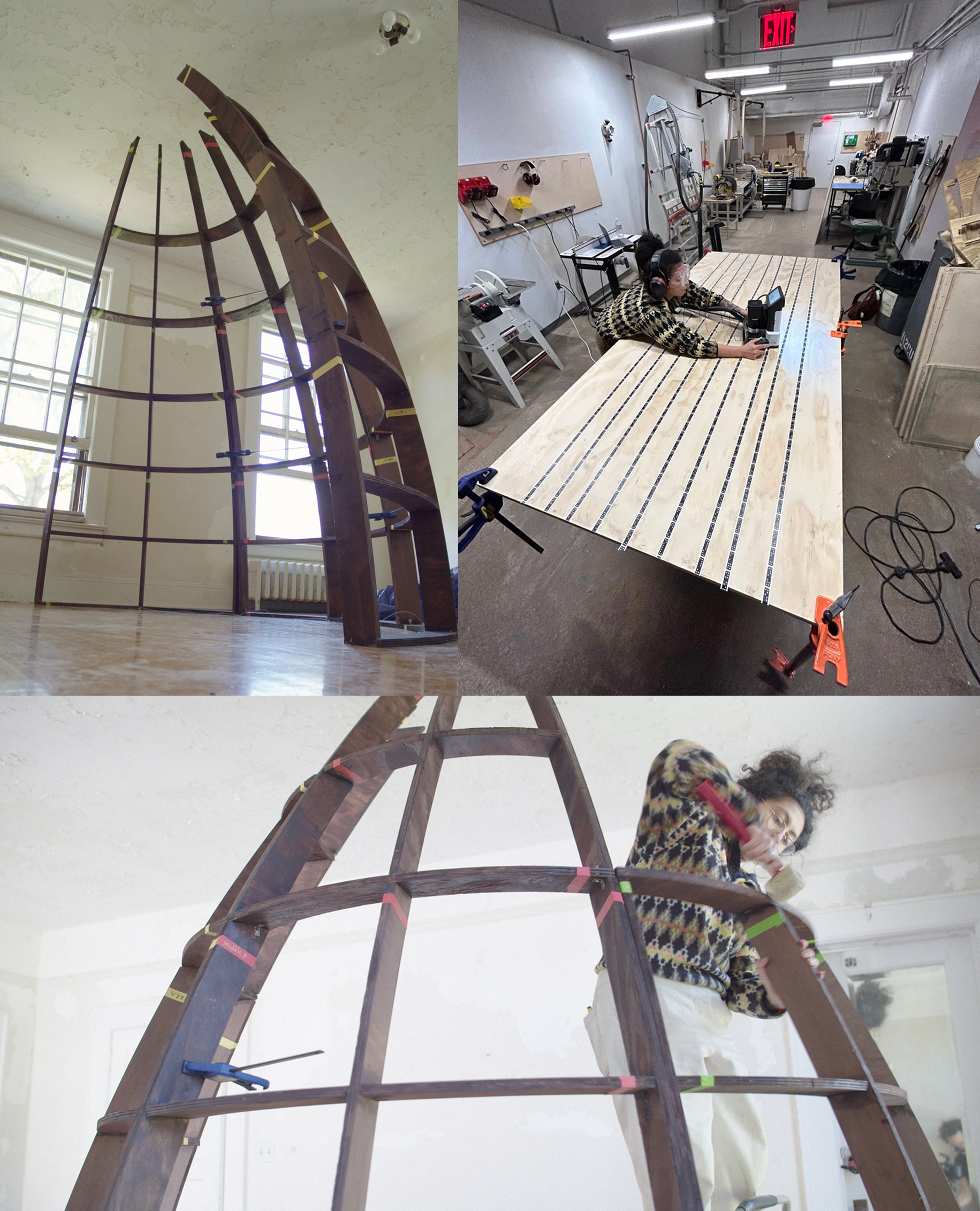
For the base structure, I was thinking through physical accessibility and modular systems. The prior structure was hard for folks with physical disabilities (my mom needs a wheelchair) so I wanted there to be an entrance of at least 46 inches in width. That meant the structure would proportionally have to be very large, and so I had to think through how to make it modular.

Behind the Scenes. dre jácome, ‘earthseed: kinship,’ 2024.

Both for the constraints of the CNC machine that would eventually make the cuts as well as future storage for myself since I don’t have a studio or car. The 3d render began with tracing the silhouette of a botanical illustration of a pinecone. And resulted in over 50 pieces that can all fit in a wagon. To evoke the scales of a pinecone, I dressed the base with scales I made with pantyhoses that dressed over clothing hangers, a soft nod to my origin story with the structure.

For the seedpods, these began as 3D scans of samara seeds that were later printed on translucent filament to allow light through. I made adaptations on the file so it could house a capacitive sensor as well as a LED. In fusion I also made a joint that would help connecting the seed with the bamboo—the main material suspending the seeds in the sculpture, but also a helpful medium through which the cables ran through the to microcontroller on the ceiling. 

As far as the touch-audio interaction, this was largely facilitated through serial communication between arduino and a website that hosted audio files on p5 from the interviews.

Interface Gate Screenshot. dre jácome, ‘earthseed: kinship,’ 2024.

Walk us through the user journey for Earthseed: Kinship.

DJ: There’s a terminal at the entrance, a computer on a podium with a website that offers context and instructions for the installation. It also serves as a vibe check. To access the stories, visitors are asked to complete the phrase beginning with “From the river to the sea.” If answered correctly, the seedpods light up and the website instructs visitors to put on bluetooth headphones and move through the space, touching the seedpods to hear the stories encoded within them. If the phrase isn’t completed correctly, a few pop-ups appear offering clues, and also context. It’s small education on Palestine on the call for sovereignty and on why uniting under Palestine calls for interplanetary solidarity


Entry: https://www.youtube.com/watch?v=Llmm2Og9xNE

No Entry Demo: https://youtu.be/A2S1ON2JWqU

What informs your thinking about (counter-)archive work?

DJ: Historically speaking, institutional archives have been sites of erasure and capture, not sovereignty. It has been wielded as a means of asserting dominion over property and people, a fundamental instrument for supporting colonial projects and the carceral state. 

Counter-archives for me is about memory work that reimagines methodologies of collections as well as methods of distribution in ways that are relational for community knowledge. And being okay with ephemerality.

In my creative practice, I’m less oriented toward preservation though I deeply respect the labor it takes. It’s simply a distinct practice. I’m grateful for the work of Dorothy Berry’s The House Archives Built and Other Thoughts on Black Archival Possibilities and Jennifer Ferretti Alvarez of We Here for making that labor legible– and the field of critical BIPOC archivists changing the field for the better. I encourage artists that are interested in “the archive” to learn from them.

Coming from popular education and interactive technology, I’m interested in speculating on different encounters with repositories, where information architectures that don’t rely on vertical files or computer screens / websites. Ones facilitated through physical computation, mirroring the ways plants and seeds store and share information. So much memory work was never meant for the archives, and archives don’t have a monopoly over how memory is transmitted.

What are your plans for Earthseed 3.0? How do you hope to advance this project during this residency? What does this residency allow you to do to build upon this work? 

DJ: I’m currently preparing for a fall exhibition at Flux IV, a project space by Flux Factory, as part of the Rhizome Fellowship showcase scheduled for the end of September 2026.

This iteration is anchored by a collaboration with Ayni Herb Farm. The founder, Amara Ullauri, is a longtime friend and farmer. We met in NYC community gardens when I was practicing as an herbalist educator, and they invited me to lead a workshop in their series, Runa Pacha. This iteration will invite more stories in, particularly from land workers, with Amara’s story featured alongside additional land worker friends. 

Artist dre jácome at Ayni Herb Farm. Photo courtesy of Ayni.

Last November, I had the chance to introduce the structure at their annual Garlic Fest, set up inside a greenhouse beside a beautiful community market raising funds for Palestinian and Sudanese farmers. It was a first feel for what needs adjusting when the work moves into community settings and outdoors. So far in the process, I’ve been thinking through how to adapt the protocols and build more flexible systems for community collaboration. 

The residency is giving me space to sit with questions I haven’t had time for. How might the access protocols shift depending on context? When are they actually not necessary? What would it take for Earthseed to work outdoors? How can I evolve the look and feel using different materials while keeping the same base architecture? 

I’m also exploring whether to move the tech onto a Raspberry Pi for iterations where a computer isn’t available, and thinking through lo-fi parafictive methods that could situate the archive in a speculative way without relying on a website which had done that work prior.

What does speculating on plurality mean to you?

DJ: Plurality, for me, is about survival. It’s an old practice that was interrupted. Much like biodiversity, it is a strategy for resilience. The Andes cultivated thousands of varieties of potato over millennia. When the potato reached Ireland, after contact with the Americas and under conditions of English occupation, only one variety was planted. The potato was survival food that could grow efficiently with minimal land, a necessity given the colonial dispossession of Irish land. But planting only one variety created a monoculture that left the crop catastrophically vulnerable when disease came. The Great Famine is an example not only of the fragility of a single monoculture, but of how that fragility is a product of colonial logic itself. 

So when it comes to storytelling, I’m curious about diverse tactics of knowledge transmission especially in a tech age where we are drowning in information and starving for wisdom. 

Among the many muses this project calls on are the Zapatistas, who rose on January 1, 1994, the day NAFTA took effect, calling for un mundo donde quepan muchos mundos: a world where many worlds fit. That call has been a quiet companion to Earthseed. The Zapatistas teach us that honoring diverse cosmologies is not a matter of representation. It requires shaping the material conditions and infrastructure that allow many worlds and stories to actually coexist and be held. 

Earthseed is my method. To oppose and propose on speculative infrastructure that houses oral histories. It’s been my sandbox for prototyping diverse tactics that let knowledge live and keep curiosity alive in our changing environments.

Eyebeam models a new approach to artist-led creation for the public good; we are a non-profit that provides significant professional support and money to exceptional artists for the realization of important ideas that wouldn’t exist otherwise. Nobody else is doing this.

Donate today